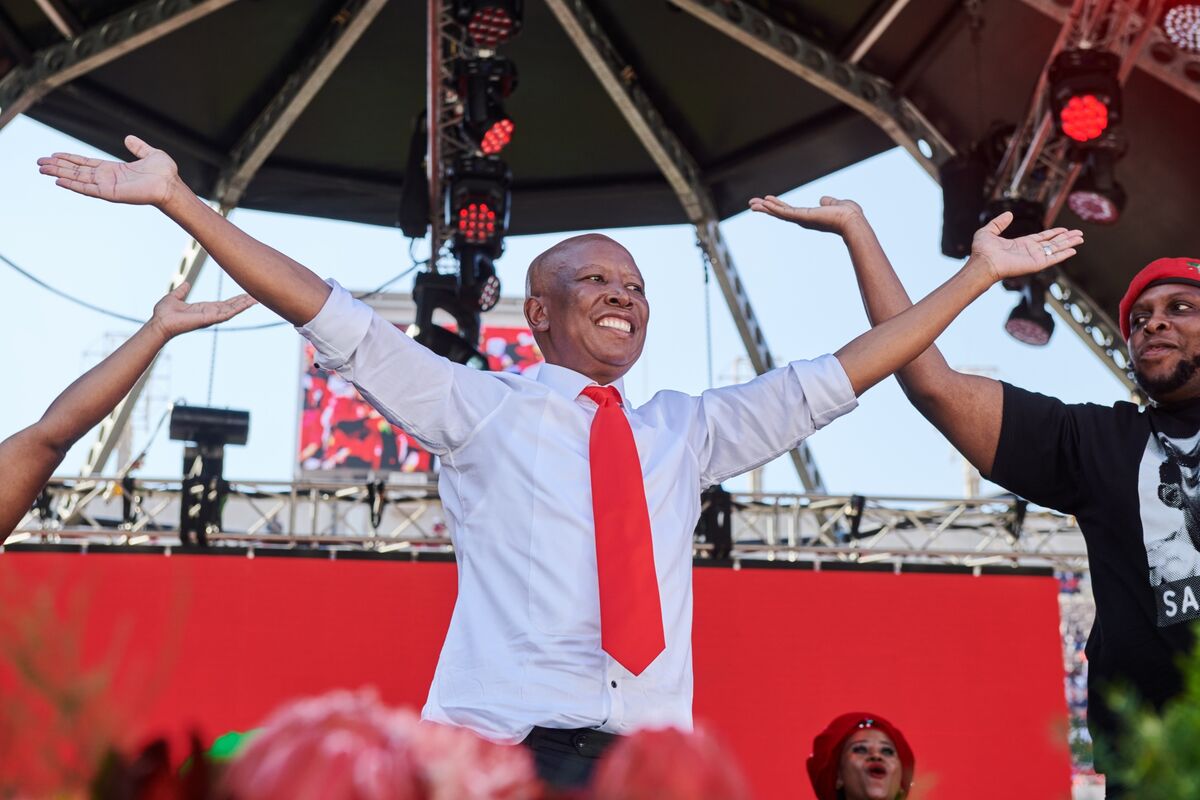
South African politician Julius Malema was sentenced to an effective five years in jail, with more than 12 months in prison and no fine option on key counts, after being found guilty of gun-law violations and other offenses. The ruling could disqualify him from serving in parliament unless overturned on appeal, which may take years. The case is primarily a domestic political and legal event with limited direct market impact.
This is less a market event than a governance shock: a major opposition figure facing legal incapacitation raises the probability of policy continuity in the near term, but also increases medium-term political fragmentation if the appeal process keeps the issue alive. For assets, the first-order effect is usually muted; the second-order effect is a higher country-risk premium through election noise, delayed reform, and greater odds of policy by headline rather than coalition discipline. That tends to hit domestic cyclicals and local-currency duration before it shows up in broad EM benchmarks.
The key window is months, not days. If the conviction survives appeal, the market should expect a more transactional legislature with reduced ability to mobilize street pressure, which can actually lower the probability of abrupt populist escalation in the short run. But if the case becomes a rallying point, the tail risk is protest-led instability, which would widen local funding spreads and pressure the rand via capital outflows rather than any immediate earnings channel.
The contrarian read is that markets may overestimate the negative because the removal of a polarizing firebrand can be institutionally bullish for reform, especially if it improves coalition arithmetic and reduces legislative brinkmanship. In that scenario, the real beneficiaries are not obvious political names but South African assets tied to lower sovereign risk: banks, retailers, and rand-sensitive importers. The downside is that the appeal process can drag on long enough to keep risk premia elevated without delivering a clean resolution, which is the worst setup for positioning because it suppresses valuation multiple expansion while leaving event risk unresolved.
AI-powered research, real-time alerts, and portfolio analytics for institutional investors.
Overall Sentiment
moderately negative
Sentiment Score
-0.45
