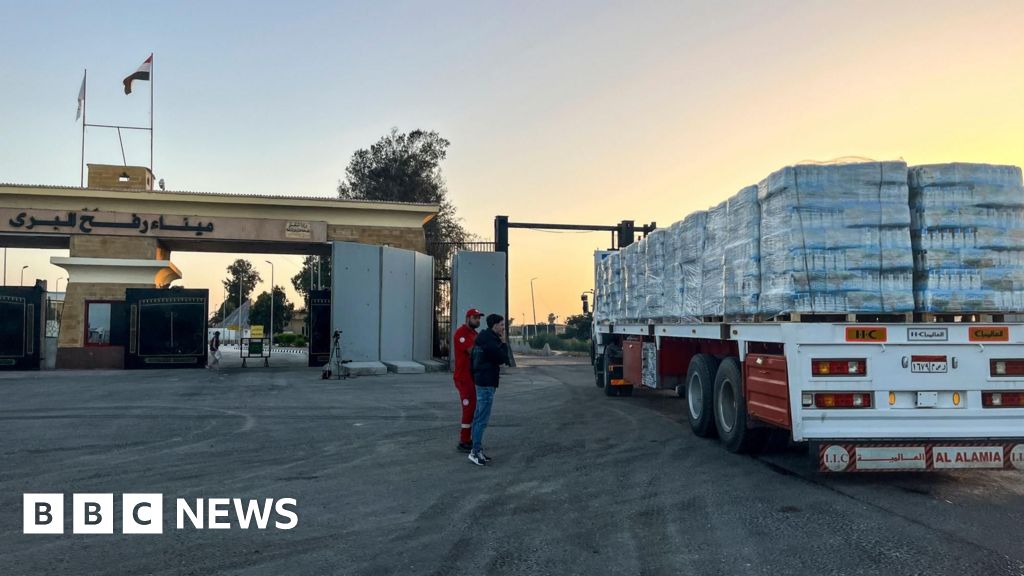
Israel announced it will reopen the Rafah crossing with coordination described as involving Egypt and EU supervision to allow Palestinians to leave Gaza, referencing the mechanism used during January’s ceasefire; Egypt denied coordinating directly with Israel. The move comes amid humanitarian pressure — the WHO says about 16,500 severely ill Palestinians await evacuation while only 235 patients have been evacuated since the ceasefire — and is politically fraught as Netanyahu resists Palestinian Authority involvement and has linked reopening to recovery of hostage remains. The report also notes previous hostage exchanges (all 20 living hostages released in October in exchange for Palestinian detainees) and continued high casualty figures in Gaza, underscoring ongoing regional risk and potential implications for risk-sensitive assets.
Market structure: A limited, supervised reopening of Rafah is a tactical de‑escalation signal that benefits humanitarian logistics providers, medical-evacuation networks and Egypt's port/transport corridors while keeping Israeli domestic sectors (tourism, local commerce) under pressure. Defense primes (LMT, RTX, NOC) face short-term headline risk if markets price a durable ceasefire, but multi-year procurement/backlog gives them pricing power regardless. Commodity flows: oil demand/price sensitivity is high to any regional escalation; a fragile ceasefire caps immediate upside but keeps a volatility premium.
Risk assessment: Tail risks include ceasefire failure → regional spillover (Israel–Lebanon/Iran) causing >$8/bbl oil spike and equity drawdown >5% in European/EM indices within days, or political shifts in Israel altering border policy and investor access. Immediate (0–7d): headline-driven asset moves; short (1–12 weeks): FX and sovereign spread repricing; long (6–24 months): reconstruction capex and defense budgets crystallize. Hidden dependency: hostage returns and US/Egypt diplomatic coordination are binary catalysts that can rapidly flip risk-on/off.
Trade implications: Cross-asset: expect Brent/gold volatility and ILS moves; bonds will either rally (flight) or sell off (risk‑on). Tactical trades should be volatility-focused (short-dated oil options), FX ILS directional trades tied to confirmed reopenings, and selective long exposure to reconstruction beneficiaries (heavy equipment, engineering). Monitor concrete triggers: EU mission confirmation, bilateral Egypt-Israel statements, and WHO medevac tallies over 7–14 days.
Contrarian angle: Consensus may underweight reconstruction and overpay near-term defense risk — defense equities can be sold down too far versus industrial cyclicals given long backlog. Markets may also overreact to incremental Rafah headlines: if crossings open in limited, supervised fashion (as in January) the upside for oil/equities should be muted — creating short-term mean-reversion opportunities. Historical parallel: January ceasefire opened similar windows with only transient commodity moves, not sustained regime shifts.
AI-powered research, real-time alerts, and portfolio analytics for institutional investors.
Request DemoOverall Sentiment
moderately negative
Sentiment Score
-0.35
