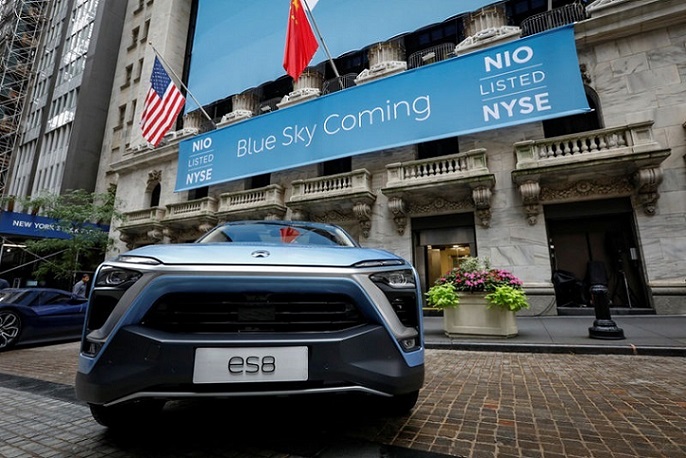
Nio reported Q4 2025 revenue of RMB34.7 billion, up 76% YoY and 59% QoQ, with deliveries at the high end of 125,000-unit guidance and 44% QoQ volume growth. Gross profit margin rose to 17.5% but missed expectations (BofA expected 18.5%) and vehicle margin was 18.1% versus an estimated 19.5%; non-GAAP net profit was RMB728 million (vs. a RMB1.0 billion estimate) after RMB529 million equity investment losses. Analysts nudged targets and ratings (BofA PT to $6.70, Macquarie upgraded to Outperform with $6.10 PT, Morgan Stanley maintained Overweight at $7.00), while management projects 40-50% CAGR in deliveries to 456–489k units by 2026 supported by new models.
NIO’s recent data cadence and analyst chatter have created a classic binary setup: the market is pricing improvement as durable while the operational levers that could sustain it remain execution-dependent. Margin mix, product ramp sequencing, and one-off equity mark movements are the high-leverage knobs — small shifts in any produce outsized P&L swings because fixed costs in EV R&D and sales stay elevated and scale benefits materialize non-linearly.
Supply-chain and competitor second-order dynamics matter more than headline unit growth. Premium configuration skew benefits suppliers of higher-content systems (battery chemistry, ADAS sensors, interior electronics) and pressures OEMs that compete on price rather than feature content, creating a window where component lead times and vendor pricing can transiently compress OEM margins even as toplines look healthy.
Key catalysts and risks are clustered by horizon: near-term volatility around guidance cadence and inventory disclosures (days–weeks), mid-term execution on new architectures and manufacturing yields (3–12 months), and structural demand shifts or policy change in China (12–36 months). Reversals will come from margin-normalizing mix shifts, renewed discounting by scaled rivals, or surprise impairments in minority investments — any of which can erase optimism quickly and re-rate cyclically exposed EV names.
AI-powered research, real-time alerts, and portfolio analytics for institutional investors.
Overall Sentiment
mixed
Sentiment Score
0.15
Ticker Sentiment
