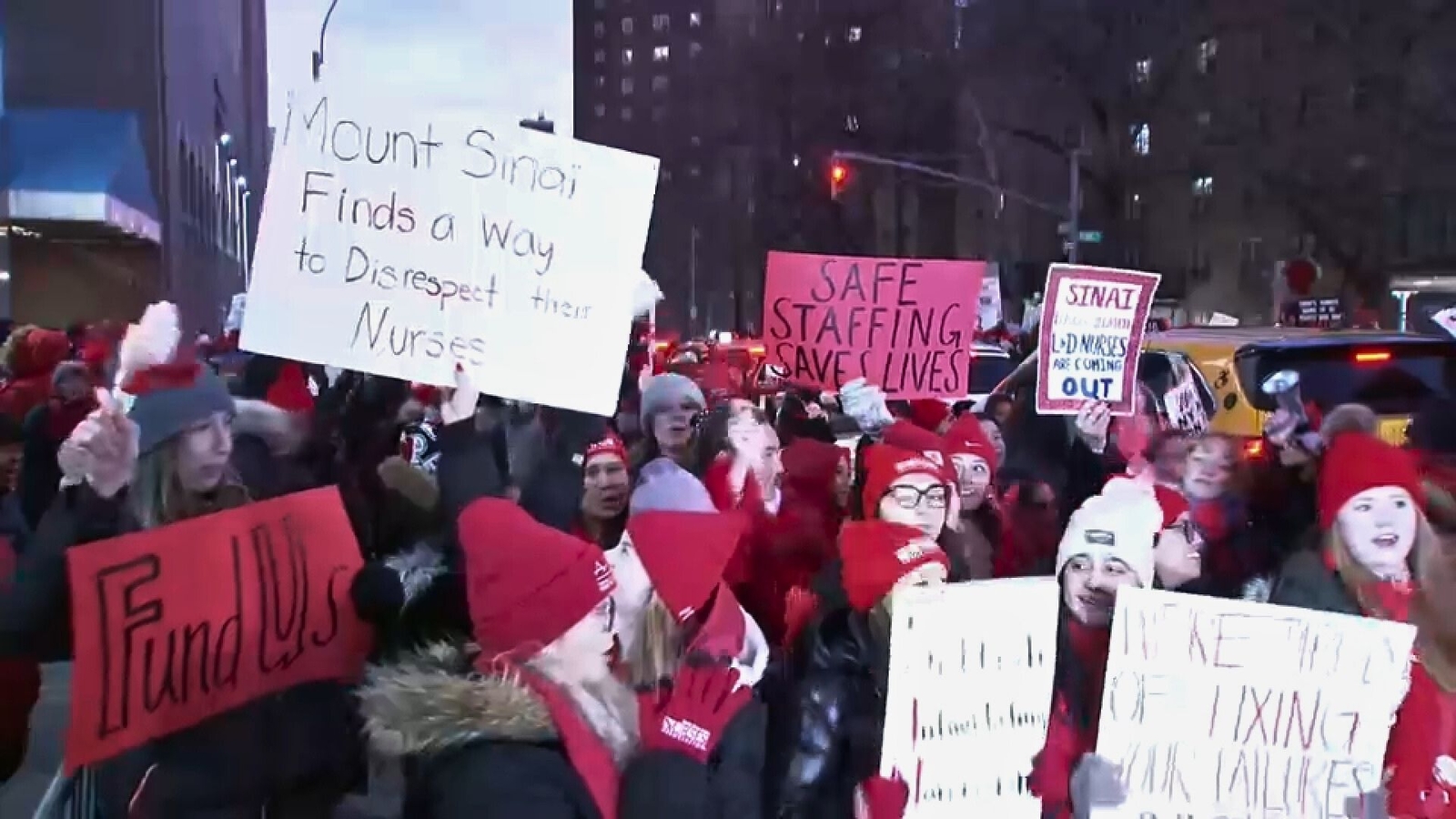
Nearly 15,000 New York City nurses have commenced the largest nurses' strike in the city's history after contracts expired Dec. 31, affecting major systems including Mount Sinai, Montefiore and NewYork-Presbyterian; the union is demanding higher pay and safer working conditions amid a historic flu surge. New York's governor declared a state of emergency and city leadership warned of potential care disruptions, while hospitals say they will remain open but are preparing for an indefinite work stoppage — a development that could pressure near-term operations, staffing costs and margins for the affected hospital systems.
Market structure: A prolonged NYC nurses strike is a net negative for acute-care hospital operators (HCA, UHS, TEN) via lost elective revenue and rising labor costs while staffing vendors and travel-nurse brokers (AMN, CCRN) stand to see immediate revenue/price power. Expect 1–3% near-term volume declines at exposed hospitals if the strike exceeds two weeks and incremental labor spend raising system-wide operating margins by 100–300 bps if costs are not passed through.
Risk assessment: Tail risks include government wage mandates or emergency requisitioning of staff (high impact, low prob) and a severe flu surge that prolongs walkouts; these would pressure credit metrics and widen hospital credit spreads by 50–200 bps. Immediate (days) effects: staffing demand/spot rates spike; short-term (weeks–months): contract settlements set wage floors; long-term (quarters+): structural wage inflation could compress margins and accelerate consolidation.
Trade implications: Favor tactical longs in staffing/telehealth (AMN, TDOC) and tactical protection/short exposure to hospital operators (HCA, UHS) via put spreads or widening-credit plays; municipal/healthcare credit shorts for weak balance-sheet hospitals if strike >21 days. Volatility will rise—buy 30–90 day call spreads on AMN and 30–90 day put spreads on HCA with defined risk.
Contrarian angles: Consensus may overstate systemic risk — most hospitals remained open and several systems already settled, suggesting strike risk is concentrated and transient. Conversely, staffing firms may be capacity-constrained so revenue wins could be muted; if strike resolves in <14 days, staffing stocks may sell off on mean reversion, creating short-term dip-buy opportunities in hospital operators post-settlement.
AI-powered research, real-time alerts, and portfolio analytics for institutional investors.
Request DemoOverall Sentiment
moderately negative
Sentiment Score
-0.40
