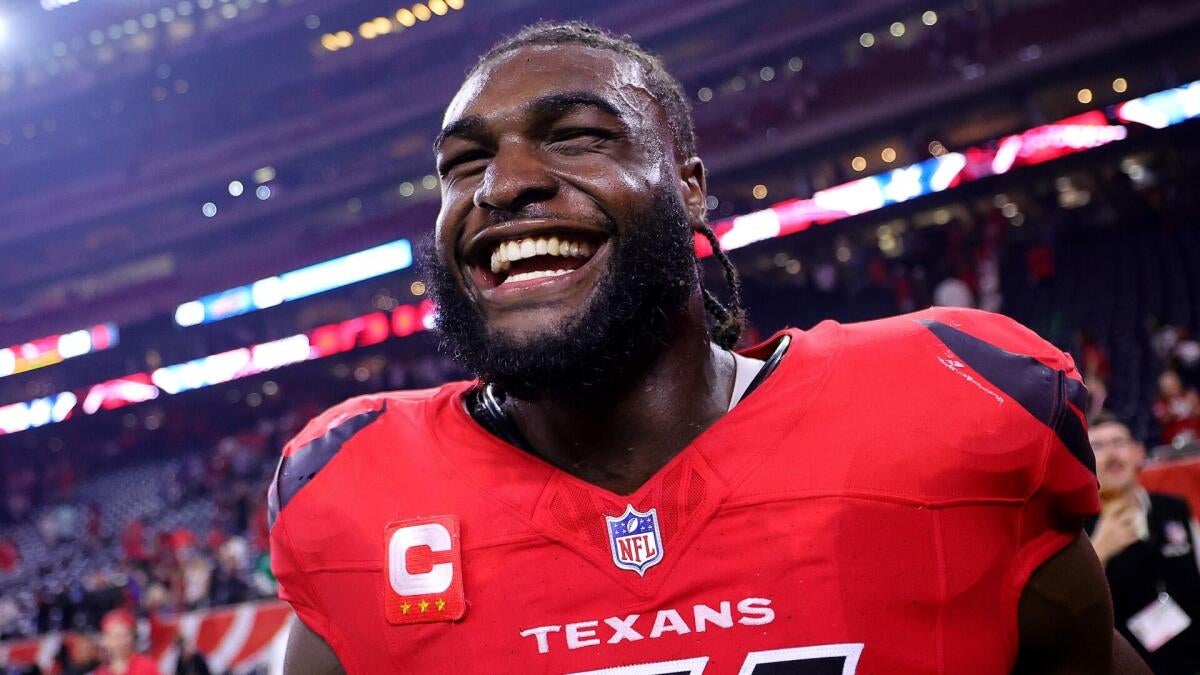
Will Anderson Jr. agreed to a 3-year, $150 million extension with $134 million guaranteed, making him the highest-paid non-quarterback in NFL history. The deal underscores his rapid emergence since being drafted No. 3 overall in 2023, including Defensive Rookie of the Year honors, two Pro Bowls, and a first-team All-Pro selection. The news is highly positive for Anderson and the Texans, but limited in broader market impact.
This is an unusually clean signaling event for Houston's front office: it telegraphs that they are choosing to concentrate scarce cap flexibility into a premium pass-rush engine rather than spread dollars across mid-tier starters. In a league where marginal defensive wins are often driven by disruption rate rather than sack totals, locking in an elite edge player for three years reduces the probability of a talent cliff and should stabilize the team’s baseline win expectation over the next 24-36 months. The no-trade protection also matters: it converts the asset from a tradable contract into a true franchise anchor, which usually lifts internal roster certainty but lowers optionality if performance normalizes.
The second-order market impact is on the rest of the roster construction. This type of mega-extension tends to force a sharper bifurcation between premium and replaceable roles, increasing the odds that Houston becomes more dependent on cheaper defensive line depth, rookie contracts, and opportunistic veteran minimums. If the team sustains contention, the main risk is not the superstar deal itself but the compounding cost of keeping the supporting cast intact; that pressure usually shows up 12-24 months later through secondary departures and thinner injury insulation.
From a football-operations lens, the obvious contrarian angle is that record-setting edge prices can become a ceiling if they reset internal benchmarks for other young stars. If the next premium defender points to this contract, the Texans could face a short-cycle cap squeeze that limits flexibility on offense and in the secondary. The more important catalyst is whether Houston converts defensive dominance into top-tier playoff efficiency; if not, the deal will be read less as a bargain and more as evidence that they chose one elite position over balanced roster economics.
AI-powered research, real-time alerts, and portfolio analytics for institutional investors.
Request TrialOverall Sentiment
strongly positive
Sentiment Score
0.78
