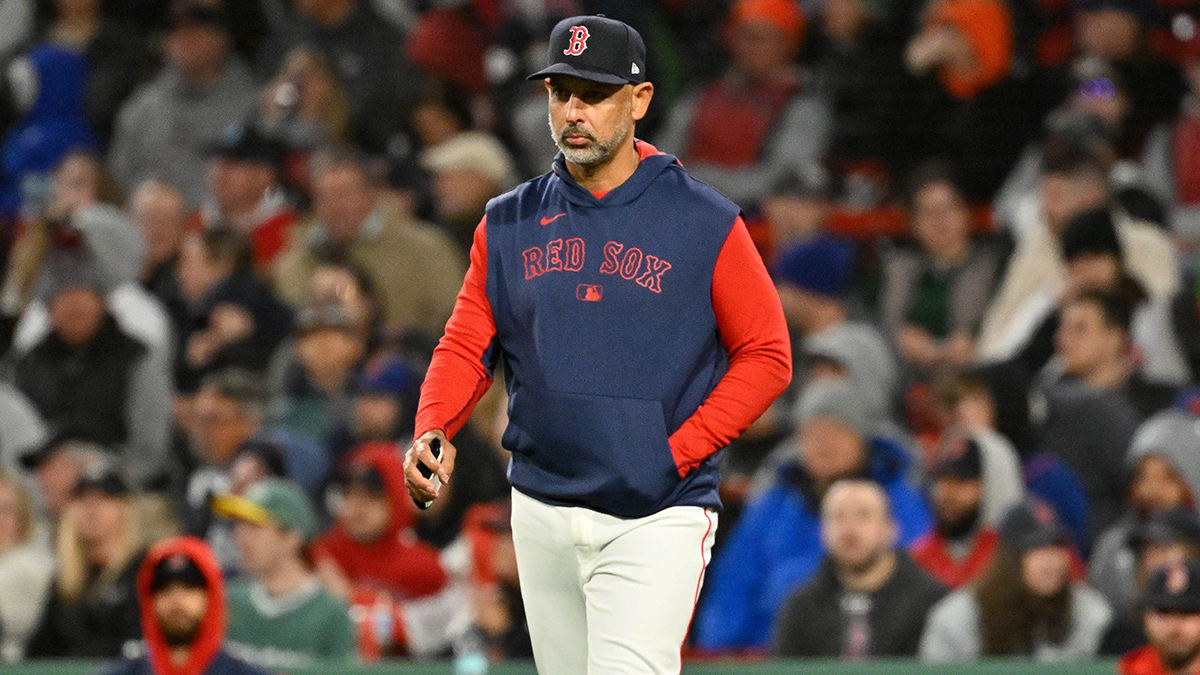
The Boston Red Sox fired manager Alex Cora after a 10-17 start to the 2026 season and also dismissed four other coaches, while reassigning Jason Varitek and naming Chad Tracy interim manager. The shakeup follows a poor team performance across key offensive categories, including 18 homers, 112 runs scored, and a .667 OPS, ranking near the bottom of MLB. The move is a significant organizational reset but is unlikely to have broad market impact beyond the team and its baseball operations.
This is a governance reset, not a performance tweak. When a club removes the manager and most of the on-field decision layer at once, it signals the front office is trying to transfer accountability upward and change the information flow around roster usage, not merely improve a few tactical edges. The near-term effect is usually a short-lived morale bounce, but those bounces tend to decay quickly unless the underlying player mix becomes more coherent.
The second-order issue is that the baseball problem is increasingly a construction problem. A front office that built a crowded, role-conflicted roster now has to prove it can convert “optional” talent into a clean depth chart; until that happens, the new interim regime will likely optimize around ambiguity rather than solve it. That creates a persistent drag on offensive consistency, because young players generally underperform when playing time is unstable and role definitions keep shifting week to week.
The market-like setup is that the most obvious bearish reaction is often already priced in by the time a high-profile firing happens, while the less obvious risk is a disappointing post-change stabilization rather than an immediate collapse. If the club strings together even a decent 10-15 game stretch, the narrative can flip toward “internal reset worked,” which would reduce pressure on the front office and postpone broader changes. If not, the next catalyst is not more coaching turnover; it is an eventual roster-level sell-off that would be more consequential over a 1-3 month horizon.
Contrarian read: the consensus will likely over-attribute outcomes to leadership and underweight roster fit. The coaching change may improve execution marginally, but it cannot fix a lineup that lacks clean platoon structure and a pitching staff built on fragile preseason assumptions. In that sense, the real trade is not on the immediate managerial change; it is on the probability of a deeper organizational shakeup if the next 20-30 games fail to materially improve run production.
AI-powered research, real-time alerts, and portfolio analytics for institutional investors.
Request DemoOverall Sentiment
strongly negative
Sentiment Score
-0.50
