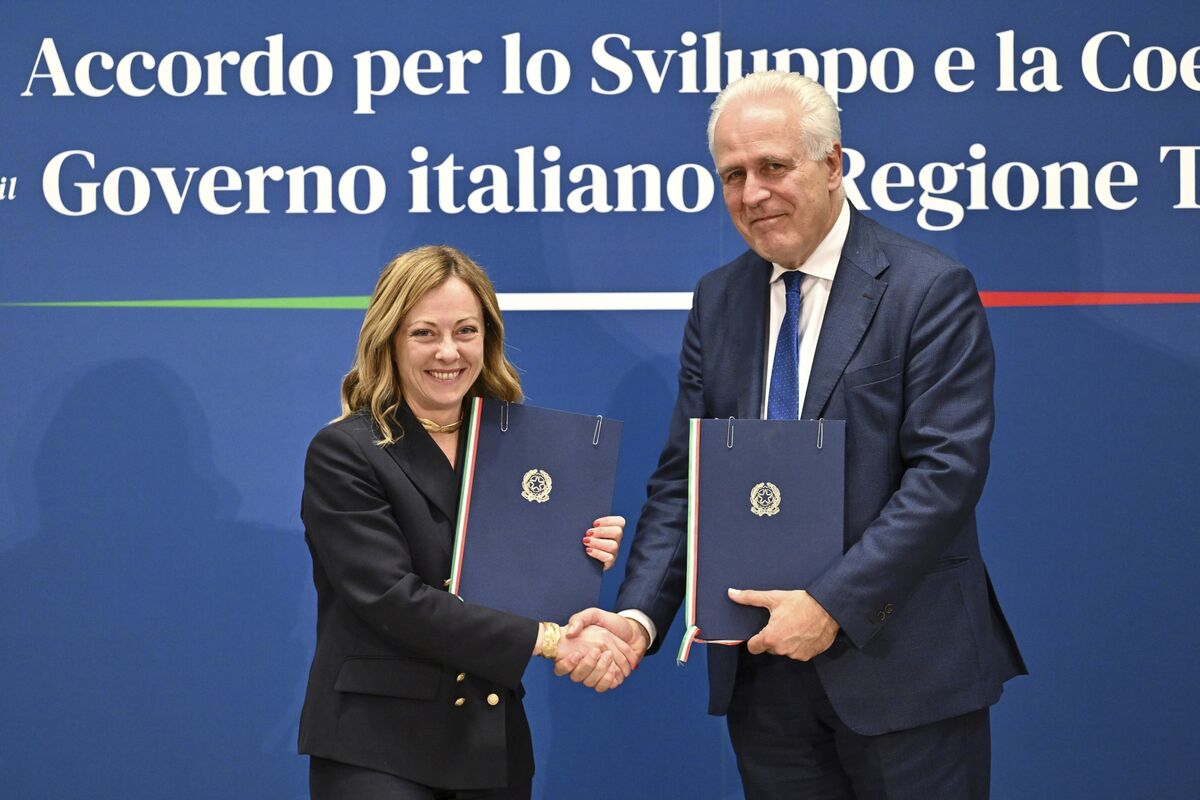
Incumbent governor Eugenio Giani is projected to secure a second term in Tuscany's regional election with 52%-56% of votes, according to exit polls. This victory is considered a significant boost for Elly Schlein, leader of Italy's national opposition Democratic Party, potentially strengthening the party's political standing.
Eugenio Giani, the incumbent governor of Tuscany, is projected to secure a second term, receiving 52% to 56% of votes according to an Opinio Italia exit poll for state broadcaster RAI. This outcome ensures continuity in regional governance for Tuscany.
The re-election is viewed as a significant boost for Elly Schlein, leader of Italy's national opposition Democratic Party. This result potentially strengthens the opposition party's political standing within the national landscape.
Despite the political implications, the market impact of this regional election is assessed as very low, with a neutral sentiment score and a market impact score of 0.05. This suggests that investors do not foresee immediate or substantial economic policy shifts or market reactions directly attributable to this specific regional result.
AI-powered research, real-time alerts, and portfolio analytics for institutional investors.
Request DemoOverall Sentiment
neutral
Sentiment Score
0.00
Ticker Sentiment
