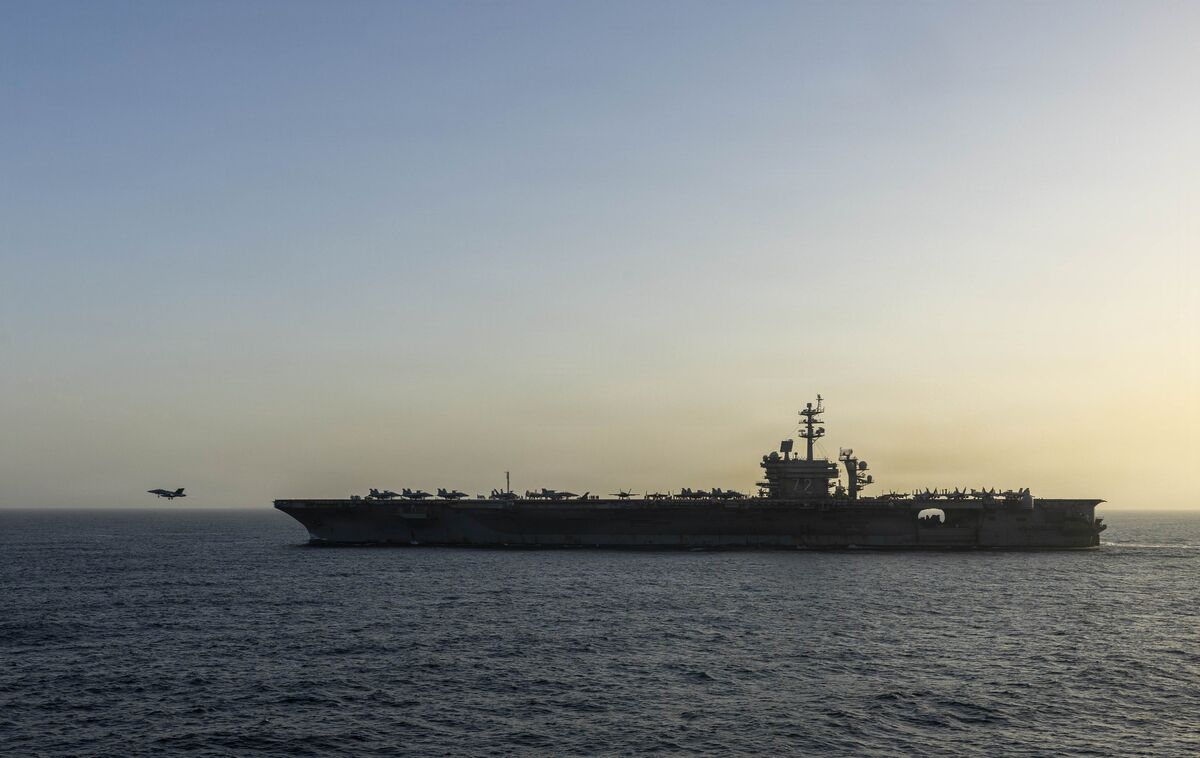
The US military disabled the Iran-flagged tanker M/T Hasna after it attempted to dock at an Iranian port in violation of the US blockade, with an F/A-18 from USS Abraham Lincoln firing 20mm rounds to disable the vessel's rudder. CENTCOM said the blockade on ships traveling to and from Iranian ports remains in full effect. The incident heightens Strait of Hormuz tensions and raises risk to regional shipping and energy flows.
This is less about the single tanker and more about the market learning that the rules of engagement around Iranian shipping have shifted from passive deterrence to active interdiction. That raises the probability of opportunistic “probing” behavior by other hulls, which means a non-linear increase in insurance, routing, and delay costs even if there is no sustained kinetic escalation. The second-order winner is any logistics or defense asset tied to maritime surveillance, escort, and contested-area protection; the loser set is broader Gulf-connected shippers, refiners dependent on just-in-time imports, and any operator with weak balance-sheet capacity to absorb war-risk premiums.
The near-term catalyst window is days to weeks: the immediate risk is copycat behavior or a response from Iran that targets signaling rather than throughput. The more important medium-term question is whether this becomes a de facto shadow embargo that doesn’t require a full chokepoint closure to tighten physical balances; even a modest increase in transit friction can remove effective supply by extending voyage times and reducing tanker availability. That tends to be bullish crude, refined product cracks, and LNG shipping optionality, but the first move is often strongest in freight and insurance before it fully propagates into commodity prices.
Consensus may be underestimating how quickly the market can normalize the headline while underpricing the persistence of operational disruption. If this remains a one-off enforcement event, the trade fades; if the US starts routinely disabling vessels, the regime shifts from geopolitical noise to a structural logistics tax. The asymmetry is that upside in energy and defense can re-rate immediately, while downside in transport and chemical margins emerges with a lag as contracts reset and spot availability tightens.
The contrarian risk is escalation fatigue: if the US does not follow through, Iran may call the bluff and traffic normalizes, causing a sharp mean reversion in war-risk premiums. In that case the best signal is tanker rate and crude backwardation action over the next 5-10 sessions; if those don’t confirm, the geopolitical premium should be sold rather than chased.
AI-powered research, real-time alerts, and portfolio analytics for institutional investors.
Request DemoOverall Sentiment
moderately negative
Sentiment Score
-0.45
