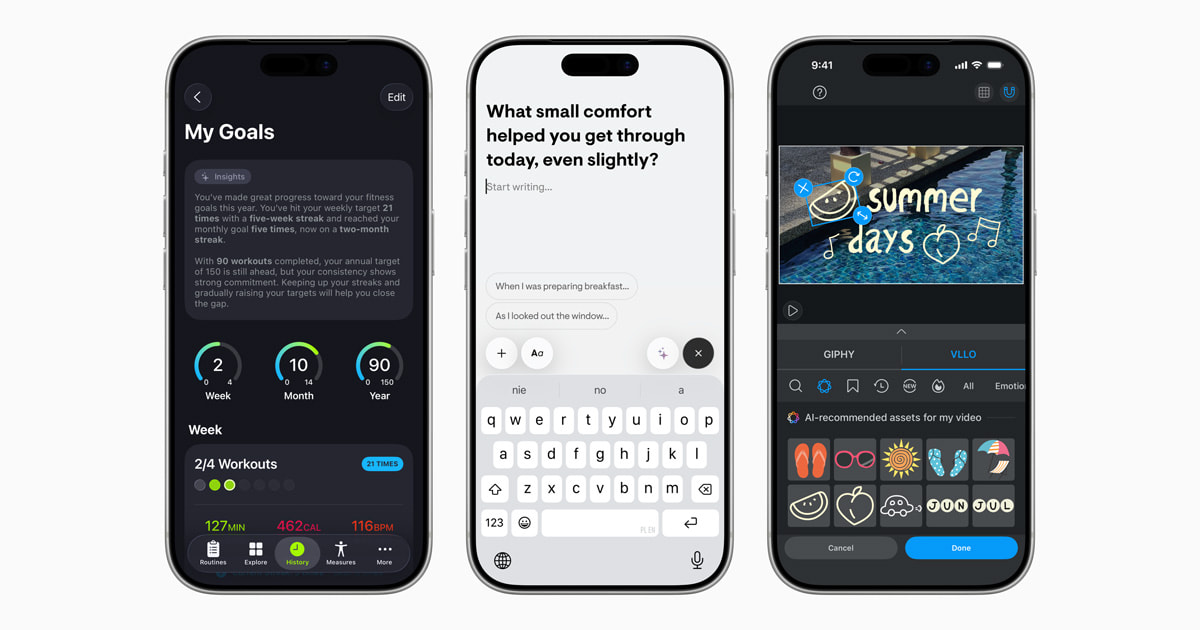
Apple has launched its Foundation Models framework with iOS 26, iPadOS 26, and macOS 26, enabling developers to integrate on-device large language models into apps for free, with privacy protection and offline functionality. This strategic move is driving significant innovation across health, education, and productivity applications, as evidenced by numerous developer examples, and strengthens Apple's ecosystem by embedding advanced, private AI directly into user experiences, enhancing platform value and user retention.
Apple's release of its Foundation Models framework with iOS 26 represents a significant strategic initiative to embed proprietary AI capabilities deeply within its ecosystem. By offering developers a 3 billion parameter on-device large language model at no cost, Apple is lowering the barrier to AI integration and directly incentivizing development on its platform. The key differentiators are privacy and performance; on-device processing ensures user data remains secure and enables offline functionality, a distinct competitive angle against cloud-dependent AI services. The article provides substantial evidence of rapid and positive developer adoption across diverse sectors, including health (SmartGym), education (CellWalk), and productivity (Stuff), with testimonials highlighting the framework's ease of implementation and its ability to enable powerful features without costly backend infrastructure. This strategy effectively strengthens Apple's competitive moat by making its platform more valuable for both developers and users, fostering stickiness and reinforcing the value proposition of its integrated hardware and software. The requirement for 'Apple Intelligence-compatible' devices suggests this software advancement is also designed to catalyze a hardware upgrade cycle.
AI-powered research, real-time alerts, and portfolio analytics for institutional investors.
Overall Sentiment
strongly positive
Sentiment Score
0.85
Ticker Sentiment
