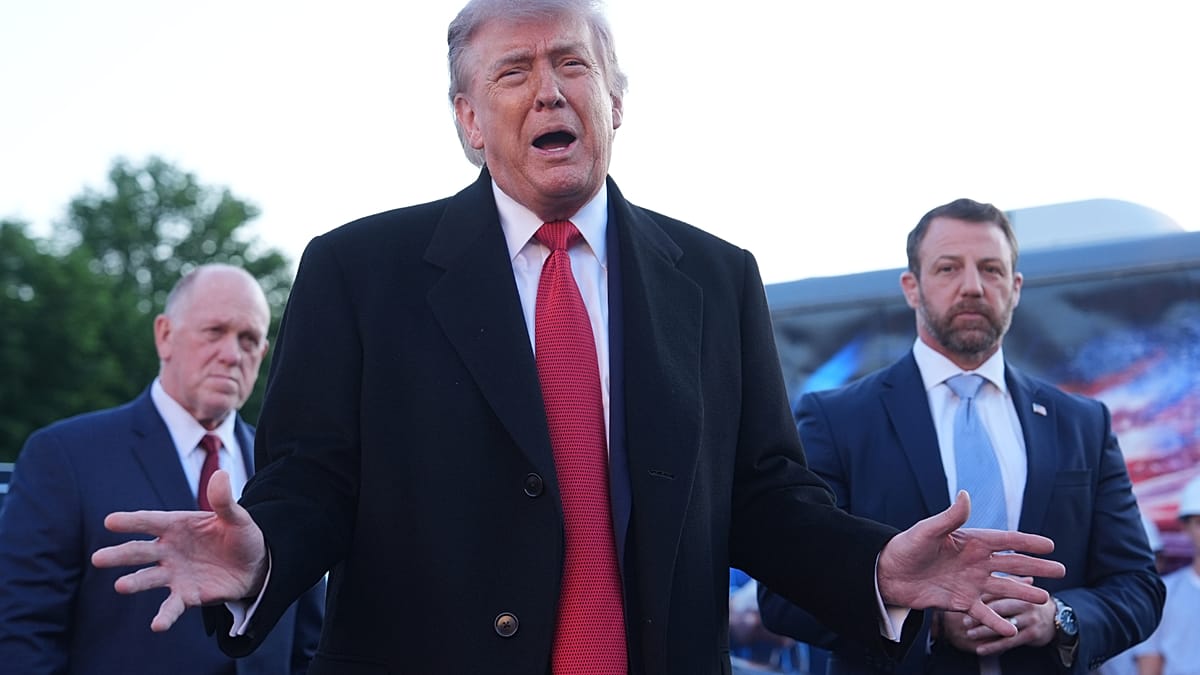
US President Donald Trump announced a 3-day ceasefire covering 9-11 May, paired with a prisoner swap of 1,000 prisoners from each side, ahead of Russia's Victory Day parade in Moscow. Ukraine signaled it would limit any truce to central Moscow/Red Square rather than the wider country, while Russia has tightened security and redeployed air defenses to the capital. The situation remains fragile, with Kyiv accusing Moscow of violating ceasefire demands and several Russian regions canceling public events over security concerns.
This is less a de-escalation signal than a stress test of Russia’s internal security architecture. The market-relevant takeaway is that Moscow is being forced to concentrate scarce air-defense and counter-UAS assets around a single political theater event, which implicitly widens the vulnerability of regional logistics hubs, military-industrial nodes, and rail infrastructure outside the capital over the next 1-2 weeks. That creates a second-order asymmetry: the parade may proceed safely enough for optics, but the rest of the country absorbs the security cost.
The bigger medium-term implication is reputational rather than tactical. If Ukraine can demonstrate reach into deep rear areas with low-cost systems while Russia diverts high-value defenses toward symbolic protection, the deterrence balance shifts in favor of persistent pressure campaigns. That is supportive for Western defense names tied to drones, EW, air defense, and ammunition resupply, because the conflict is increasingly about layered attrition and replacement demand rather than platform-heavy maneuver warfare.
The ceasefire itself is fragile and probably market-negative for any thesis that assumes a clean diplomatic inflection. A short truce around a ceremonial window is exactly the type of event that can produce headline risk without changing force posture; any violation, even localized, would likely reprice expectations back toward prolonged attrition within hours. The more important catalyst is whether Moscow’s reallocation of defenses leads to visible disruptions or successful strikes in the regions, which would validate the idea that the security burden is becoming structurally expensive.
Contrarianly, the consensus may be overpricing the signaling value of a brief pause and underpricing the operational lesson: asymmetric drone capability and homeland defense pressure are both improving for Ukraine. That is bullish for suppliers with exposure to interceptors, sensors, and loitering munitions, but bearish for any assumption that Russian rear-area sanctity is being restored. The tradeable edge is not a peace premium; it is a higher steady-state demand curve for defense spending in Europe and NATO-aligned procurement cycles.
AI-powered research, real-time alerts, and portfolio analytics for institutional investors.
Request DemoOverall Sentiment
mildly negative
Sentiment Score
-0.15
