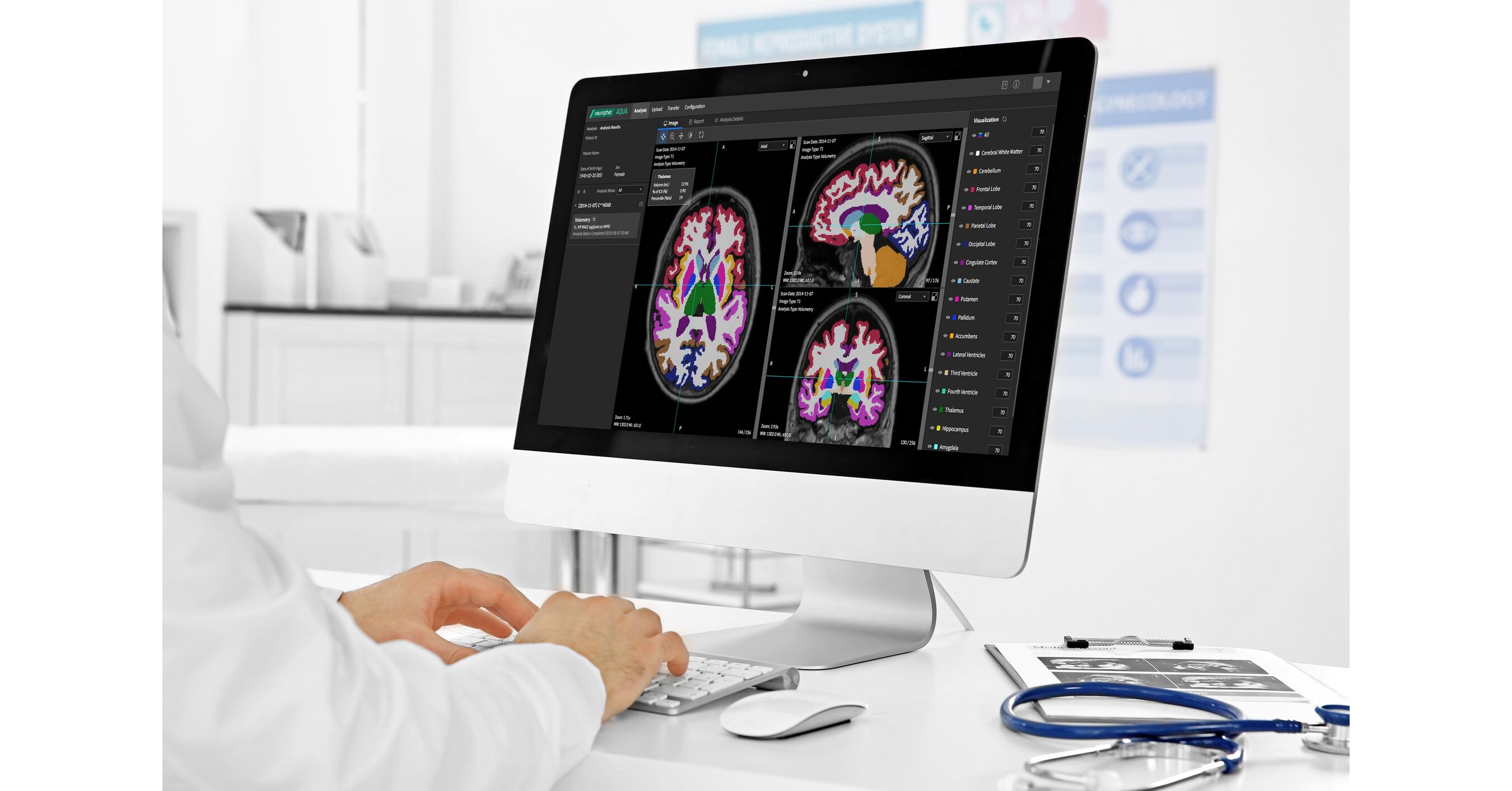
Neurophet, an AI brain-disorders diagnosis company, signed a supply agreement with Singapore’s Raffles Medical to deploy its Neurophet AQUA software for ultra-fast quantitative MRI analysis. The tool quantifies brain atrophy and white matter degeneration to support assessment of diseases such as Alzheimer’s and vascular dementia, with customized patient reports. The announcement is a step forward for commercialization and adoption within Raffles’ >100-clinic network, though no financial terms were disclosed.
This is more valuable as a validation point than as a revenue event. In medtech AI, the first meaningful signal is not contract size but whether a tier-1 operator will embed the workflow into everyday imaging, because that determines whether the product becomes sticky enough to support expansion into adjacent modules and geographies. If Neurophet can turn one healthcare group into a repeatable reference across Southeast Asia, the optionality is in distribution leverage, not near-term EBITDA.
For RAFLF, the economics are likely modest in year one, but the strategic effect is better utilization of MRI capacity and a small lift in diagnostic differentiation in a field where patient acquisition is increasingly tied to specialty depth. The second-order winner could be radiology workflow software broadly: once one platform is approved for neurodegenerative screening, competitors in imaging AI will need local clinical references, which raises the cost of entry for smaller vendors and supports a consolidation premium for proven platforms.
The consensus risk is overestimating how fast this converts to earnings. Unless the announcement is paired with reimbursement coverage, per-scan pricing, or a measurable increase in study volume, it is mostly a credibility catalyst that can fade within days. The real reversal trigger would be evidence that deployment is limited to pilot use, or that the software fails to move throughput, referral capture, or clinician adoption over the next 1-3 quarters.
Contrarian view: this may actually be more important for Neurophet than for RAFLF. In healthcare AI, reference logos are currency; a single marquee deployment can improve win rates across hospitals far more than it changes current revenue. If follow-on wins appear in Singapore or neighboring markets, the stock reaction in the vendor side could be underappreciated, but absent that pipeline evidence, this remains a watchlist item rather than a high-conviction trade.
AI-powered research, real-time alerts, and portfolio analytics for institutional investors.
Request DemoOverall Sentiment
mildly positive
Sentiment Score
0.25
Ticker Sentiment
