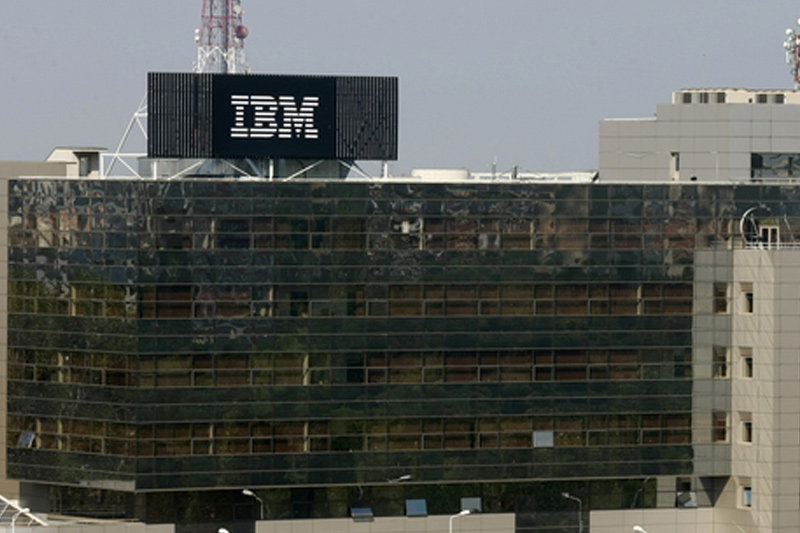
Software stocks sold off sharply after disappointing reactions to earnings from ServiceNow and IBM, with ServiceNow down 18%, IBM down 9.25%, Salesforce down 9.4%, and the iShares Expanded Tech-Software ETF off about 5%. ServiceNow cited U.S.-Iran war tensions as a headwind to quarterly subscription revenue, while broader concern intensified that AI tools from Anthropic and OpenAI could pressure traditional cloud subscription models. The sector remains under heavy pressure, with the software ETF down roughly 18% year to date.
This is less a single-name earnings miss than a regime shift in how software multiples should be underwritten. The market is discounting a double hit: cyclical budget caution from geopolitics now, and structural margin compression later if AI agents start unbundling seat-based pricing. That combination is toxic because it destroys the usual defense that software names get relief from recurring revenue quality during macro slowdowns.
The first-order losers are the horizontal workflow and back-office franchises most exposed to “good enough” automation. The second-order winners are not necessarily the hyperscalers themselves, but the infra layers that monetize usage, distribution, and model access rather than per-seat subscriptions; that supports relative strength in platform AI names versus application-layer SaaS. Expect enterprise buyers to stretch implementation cycles over the next 1-2 quarters, which disproportionately hits net-new ACV and elevates churn risk in smaller vendors before it shows up in headline growth.
The setup into big tech earnings is asymmetric: if the cloud/platform cohort can show AI is accretive to spend and not just cannibalistic, the entire software de-rating can pause for 2-4 weeks. If not, the selloff broadens from multiple compression to estimate cuts, which is where drawdowns get larger and faster. The key is that the market is already pricing a lot of bad news; the next leg depends on whether management teams can credibly frame AI as margin expansion rather than product substitution.
Contrarian take: the move may be too indiscriminate in the highest-quality franchises. Names with embedded mission-critical workflows, high switching costs, and strong free cash flow can absorb pricing pressure better than the market is implying, while weaker mid-cap SaaS remains vulnerable to valuation air pockets. The risk is not that software goes to zero; it is that dispersion explodes and investors stop paying for growth without proof of AI durability.
AI-powered research, real-time alerts, and portfolio analytics for institutional investors.
Request TrialOverall Sentiment
strongly negative
Sentiment Score
-0.62
Ticker Sentiment
