
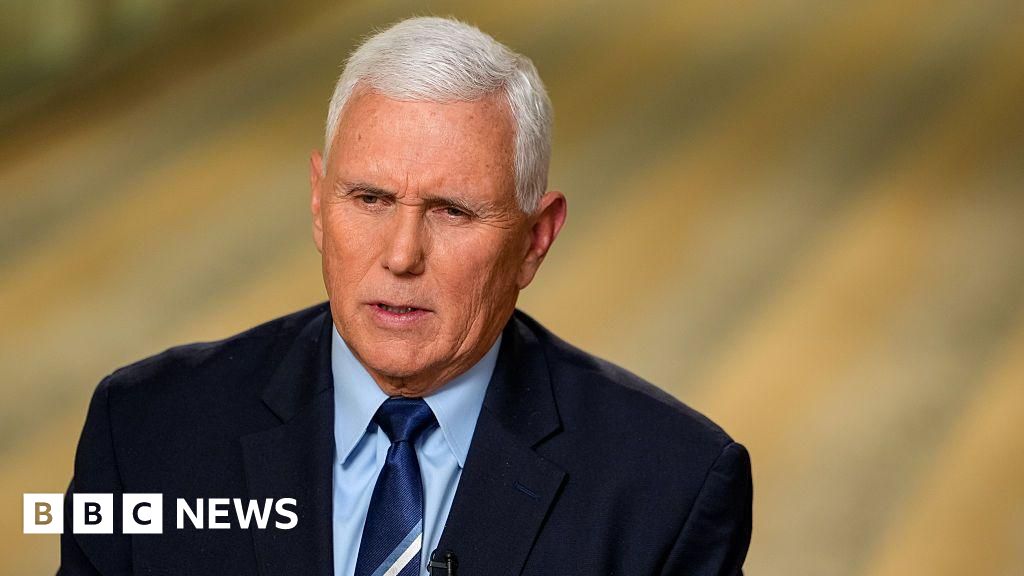
The Trump administration's $1.8bn anti-weaponisation fund is facing bipartisan criticism and a federal judge has temporarily blocked it ahead of a June 12 hearing. Mike Pence called the fund "deeply offensive," while Republican leaders including John Thune, Mitch McConnell and Thom Tillis also attacked the plan. The issue centers on whether people prosecuted over the January 6 Capitol riot could receive compensation, with roughly 1,600 people charged and about 140 officers injured.
The bigger market signal is not the fund itself but the accelerating probability of a legal/appropriations fight that drags the IRS into a broader executive-power dispute. That makes the policy path nonlinear: even if the administration wins the substantive argument, the timing likely shifts into weeks-to-months of injunctions, hearings, and disclosure demands, which raises headline risk for agencies tied to politically charged enforcement. For markets, that tends to widen the valuation discount on entities with direct federal payment exposure, while rewarding names that benefit from procedural delay rather than final policy victory.
Second-order, this is a negative for the administration’s credibility on governance and budget discipline, which can bleed into broader risk premia around rule-of-law and fiscal management. The irony is that the more the fund is framed as restitution, the more it invites a flood of claims from a much larger universe than the initial political base; that creates open-ended liability optics even if actual payouts are ultimately capped. The resulting uncertainty is more damaging than the dollar size, because it can force the Treasury/IRS to devote bandwidth to eligibility design, appeals, and litigation rather than enforcement efficiency.
The contrarian angle is that the market may be underpricing how quickly Republican institutional resistance can turn this into a self-limiting proposal. If Senate leadership and House moderates coalesce behind procedural blockers, the probability-weighted fiscal impact falls sharply and the trade becomes a volatility event rather than a structural one. But if the administration successfully narrows eligibility to a small set of claimants, the controversy fades faster than headlines suggest, leaving only a modest reputational overhang for the IRS rather than a recurring balance-sheet issue.
AI-powered research, real-time alerts, and portfolio analytics for institutional investors.
Request TrialOverall Sentiment
mildly negative
Sentiment Score
-0.10
Ticker Sentiment
