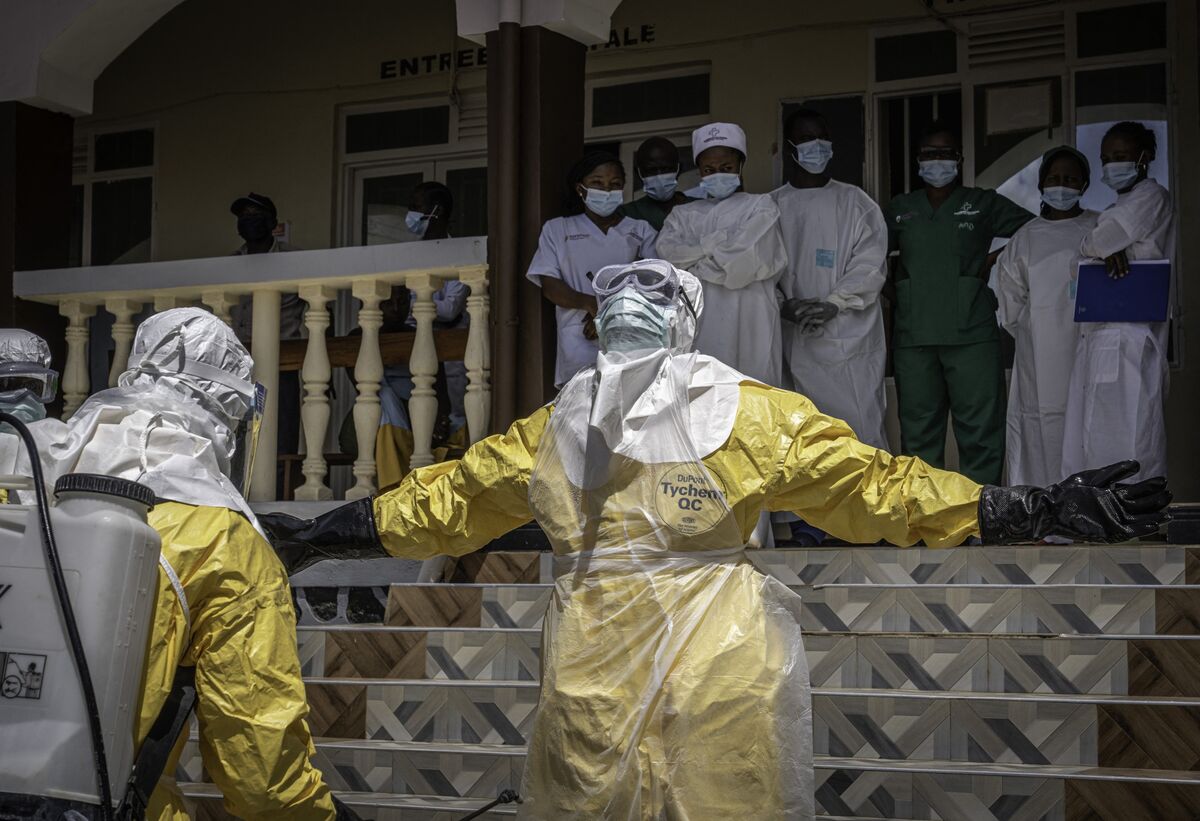
Congo's Ebola outbreak has reached 101 confirmed infections, 930 suspected cases and 221 suspected deaths, with the WHO warning the spread is outpacing responders. More than 2,200 contacts have been identified across 11 affected health zones in Ituri, North Kivu and South Kivu, while attacks on treatment centers are worsening containment efforts. The escalation raises regional humanitarian and public health risks, especially in the conflict-hit east of the Democratic Republic of Congo.
The immediate market impact is less about a direct Ebola trade and more about an additive risk premium on an already fragile eastern DRC macro complex. Any prolonged containment failure raises the odds of localized mobility restrictions, border frictions, and NGO/security spending that can depress regional commerce and delay mining/logistics activity — especially for operators with exposure to North Kivu/Ituri supply corridors. The second-order winner set is limited: security contractors, medical logistics, and select air/charter operators may see episodic demand, but this is typically too small and too politically constrained to matter at portfolio scale. The more important lens is healthcare optionality. Outbreaks that outpace responders tend to pull forward procurement of diagnostics, PPE, cold-chain, and outbreak-response therapeutics, which can benefit diversified tools suppliers more than pure-play vaccine names because spend arrives in waves and is often financed by governments/NGOs. If the situation deteriorates over the next 2-6 weeks, the trade can broaden into risk-off EM positioning as markets price in weaker local tax receipts, disrupted mineral exports, and higher sovereign funding stress for the DRC and neighboring states. The consensus may be underestimating how much conflict changes the transmission curve: attacks on clinics and patient flight make standard containment tools less effective, so the tail risk is not just more cases but a longer-duration endemic-like drag that is harder to model. That argues for treating the event as a months-long policy and supply-chain nuisance rather than a short-lived headline shock. Conversely, if secure corridors are reopened and contact tracing improves within days, the market should fade the alarm quickly because the direct global read-through remains limited.
AI-powered research, real-time alerts, and portfolio analytics for institutional investors.
Request DemoOverall Sentiment
strongly negative
Sentiment Score
-0.85
