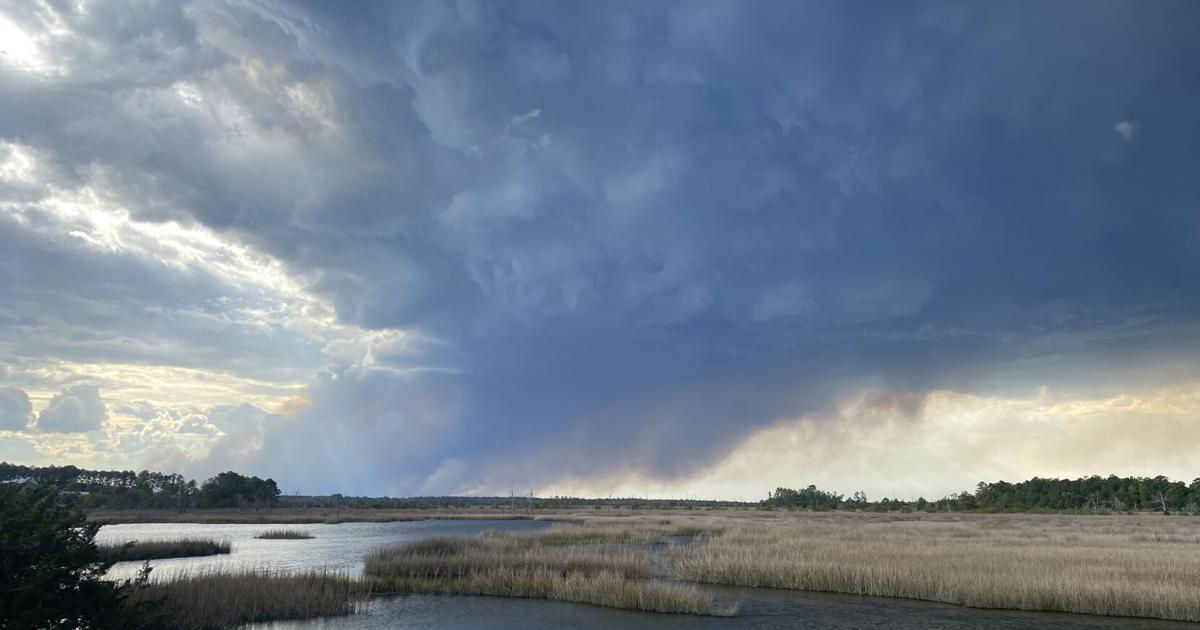
The Brantley County wildfire has burned more than 21,000 acres and destroyed over 100 homes and businesses, while coming within about 2.5 miles of the Glynn County line. Mandatory evacuations were issued for parts of Glynn County, but officials said the fire had not entered the county as of Sunday evening. The blaze, sparked by a mylar balloon hitting a powerline, remains a significant local emergency with limited direct market impact.
The key market consequence is not the fire itself but the probability of a cascading response: utility outages, road closures, labor displacement, and insurance loss amplification as the perimeter shifts. Even if the blaze never crosses the county line, a multi-day evacuation zone tends to depress local commerce, disrupt trucking/last-mile delivery, and create temporary demand spikes for generators, fuel, water, hotel inventory, and remediation services. The first-order damage is local, but the second-order effect is that each additional day of containment uncertainty raises the odds of broader infrastructure stress and higher loss-adjustment expense.
The more interesting trade is in the insurance and reinsurance pass-through. Wildfire headlines usually underprice tail severity because the market focuses on acreage, not the combination of wind shifts, dry fuel load, and proximity to insured structures; that mix can turn a contained event into a reserve pressure story. For insurers with meaningful southeastern homeowners exposure, this is a near-term earnings volatility catalyst rather than a thesis breaker, but repeated regional fire events would push pricing harder at renewal and support underwriting discipline across property catastrophe lines.
A contrarian read is that the immediate equity impact may be too small for broad beta shorts, but too large to ignore in localized names tied to the affected geography. The setup favors event-driven, short-duration positioning: the highest payoff comes if evacuation expands or if containment stalls for several days, while the downside case is a rapid weather-assisted break in the fire front. Because the article implies a narrow geographic footprint, the risk/reward is best expressed via pairs and options rather than outright index hedges.
AI-powered research, real-time alerts, and portfolio analytics for institutional investors.
Request DemoOverall Sentiment
moderately negative
Sentiment Score
-0.45
Over a 1-3 month horizon, watch for contractor mobilization, debris removal contracts, and rebuilding demand if structures continue to be lost. Over 6-12 months, the bigger implication is state-level mitigation spending and harder insurance terms, which would incrementally benefit infrastructure hardening vendors while pressuring exposed P&C carriers. If the fire is eventually contained without entering adjacent populated areas, the trade should mean-revert quickly; the market is likely to give back most of the event premium within days.
