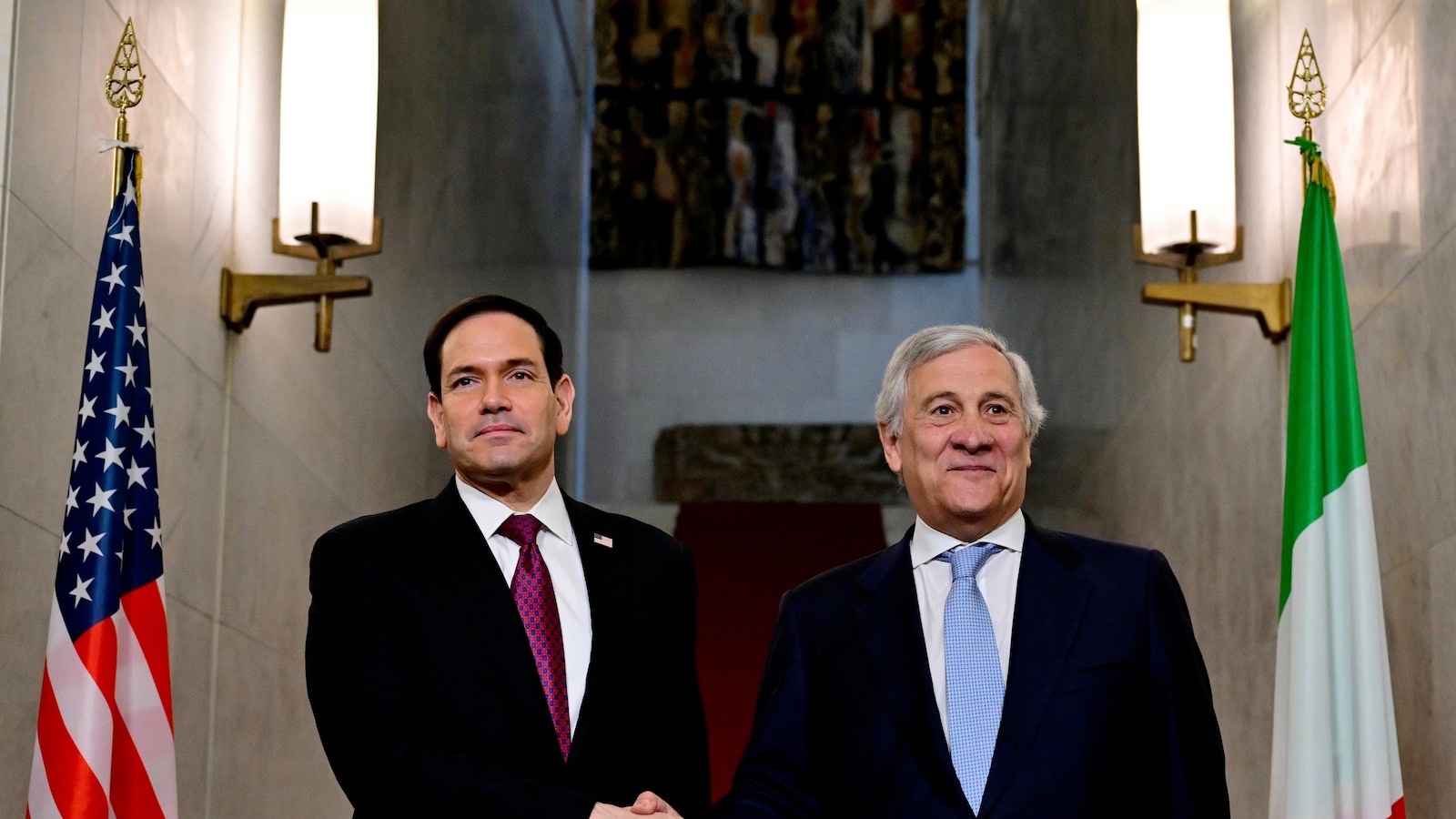
Italy and the U.S. held high-level talks aimed at easing tensions over the Iran war, NATO burden-sharing, and trade frictions, with Rome reiterating support for U.S. troops in Europe and readiness to help demine the Strait of Hormuz after a ceasefire. The article also flags potential troop reductions in Italy and Germany, as well as risks to energy costs and Italy’s export economy from Hormuz disruptions and tariff threats. The meeting lowers some diplomatic heat but leaves major geopolitical, defense, and energy risks unresolved.
The key market implication is not the diplomatic reset itself, but the growing probability of a more fragmented NATO burden-sharing regime in the Mediterranean. If U.S. force posture in Italy/Germany is trimmed, the first-order losers are not broad European equities but the logistics, basing, and dual-use infrastructure ecosystem that depends on predictable U.S. throughput; second-order winners are local sovereign-led defense and port modernization spend, which can be funded even when headline defense budgets look flat.
The energy angle is more tradable than the geopolitics. Any sustained threat to Hormuz keeps a geopolitical risk premium embedded in LNG, refined products, and European power prices, but the real asymmetry is in downstream European industrial margins: Italy, Spain, and Germany are more exposed to imported energy shock than the U.S., so the trade is less “long oil” and more “short energy-intensive Europe vs long U.S. energy self-sufficiency.” A ceasefire or naval demining operation would compress the premium quickly; absent that, the market is likely to underprice recurring disruption risk over the next 1-3 months.
The contrarian point is that investor consensus may be too focused on overt escalation and not enough on bureaucratic friction. Italy’s legal constraints on base use and parliamentary approval requirements create a slow-motion optionality trap: even if political rhetoric improves, operational access can remain constrained, reducing U.S. flexibility in a crisis and increasing the value of pre-positioned assets elsewhere. That favors contractors tied to base-hardening, ISR, and maritime security over broad Europe defense proxies, which may see only modest budget translation.
From a macro perspective, the dispute is also a tariff and supply-chain signal: if the White House links security cooperation to trade concessions, European exporters face a more persistent margin tax than the market currently discounts. That would hit autos, industrial machinery, and luxury goods via both tariffs and higher logistics insurance/freight costs, while supporting domestic U.S. import substitution and select defense-adjacent manufacturing. Expect the market to reprice this in waves, not in one move, as each political headline changes the odds of troop redeployment or tariff retaliation.
AI-powered research, real-time alerts, and portfolio analytics for institutional investors.
Request DemoOverall Sentiment
neutral
Sentiment Score
-0.10
