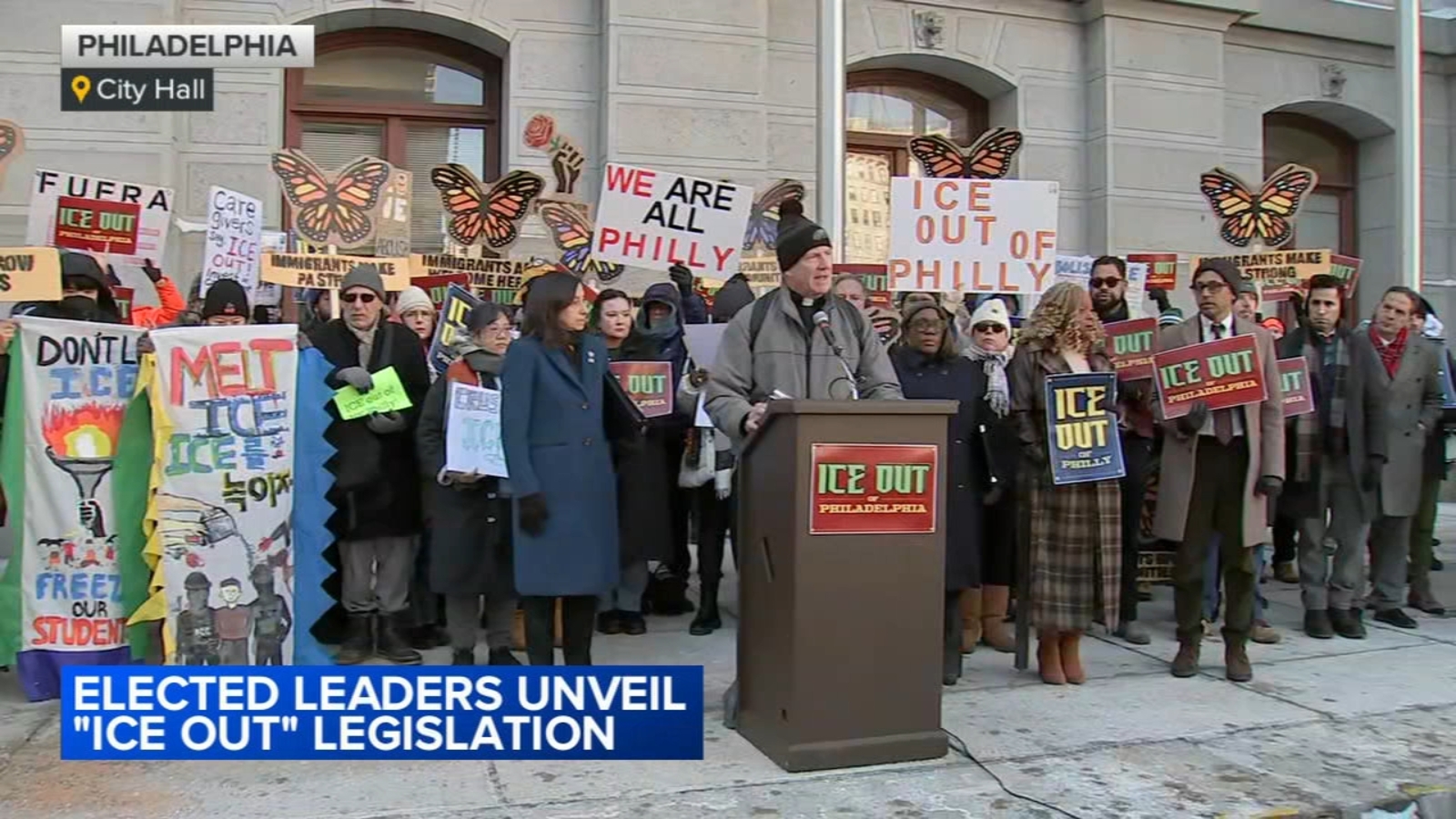
Philadelphia elected leaders unveiled a proposed “ICE Out” legislative package to codify the city’s "welcoming city" policies and set clear limits on Immigration and Customs Enforcement activity, motivated by recent tensions in Minneapolis. The bills, modeled on national and municipal precedents, prioritize protections for immigrants and may affect city–federal law enforcement cooperation and invite legal challenges or federal funding disputes, but are unlikely to have material near-term market impact.
Market structure: This is a localized regulatory shock with concentrated winners (immigration legal services, community NGOs, and private-security/translation vendors servicing advocacy groups) and potential losers (City of Philadelphia credit, city-contracted service providers). Expect limited national market impact but a plausible 5–25 basis-point widening in Philadelphia GO spreads vs. comparable munis over 1–3 months if litigation or unfunded mandates escalate. Local labor-sensitive sectors (restaurants, construction) could see constrained labor supply/pricing pressure over quarters if policies materially change worker flows.
Risk assessment: Tail risks include federal litigation or targeted withholding of grants (low probability, high impact) that could push Philly muni spreads +50–100bps and force budget cuts; operational risk includes increased city legal/settlement costs (~$10–100m range depending on suits). Immediate impact (days) is headline-driven volatility; short-term (weeks–months) centers on council votes and lawsuits; long-term (years) depends on enforcement and demographic shifts altering tax base by tenths of a percent. Hidden dependencies: state preemption suits, bank concentration of Philly muni holdings, and city pension funding interplay.
Trade implications: Tactical defensive posture — de-risk city-specific muni exposure and hedge regional-bank/REIT exposure tied to Philly real estate. Use liquid, diversified muni ETFs to replace idiosyncratic city bonds; buy short-dated protection on bank/regional-financial ETFs to cap tail losses if spreads widen. Catalyst windows: 30–90 days around council votes, litigation filings, and any DOJ statements — these will drive spread moves and option vega trades.
Contrarian angles: Consensus will treat this as political noise; risk is underestimating litigation cadence — if courts enjoin aspects it could actually compress uncertainty (tighten spreads). Conversely, overreaction risks mispricing: unless federal action occurs, municipal credit impact likely <100bps. Historical parallels (Sanctuary city legal fights) show 2–6 week spread windows where selective muni shorts or hedges paid off; asymmetry favors small hedges over large directional bets.
AI-powered research, real-time alerts, and portfolio analytics for institutional investors.
Request DemoOverall Sentiment
neutral
Sentiment Score
0.00
