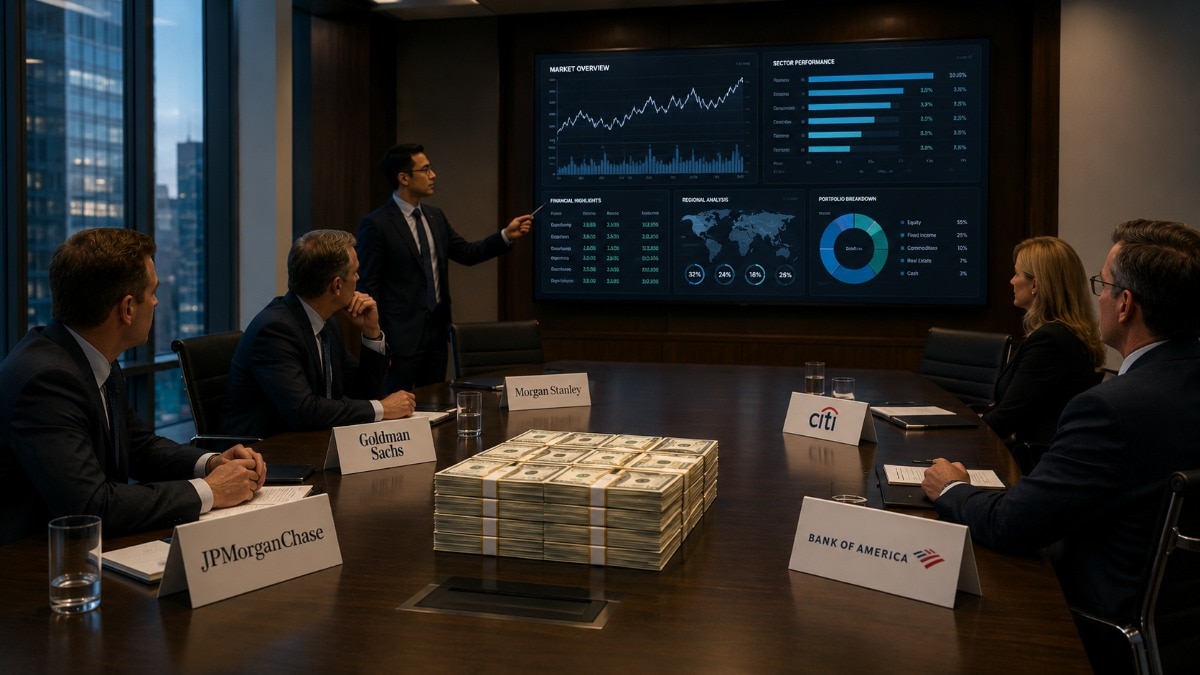
Wall Street Prompt is charging $25,000, or nearly Rs 24 lakh, for a one-day AI workshop as banks race to train staff on tools like ChatGPT, Claude and Gemini. The article highlights banks cutting jobs while simultaneously investing in AI, with examples including JPMorgan's LLM Suite rollout, Goldman Sachs' Anthropic partnership and Bank of America citing 20-25% developer productivity gains. The broader takeaway is that AI fluency is becoming a competitive necessity in finance, potentially reshaping hiring and junior analyst demand.
The market implication is not that AI training is a new revenue line; it is that banks are formalizing a two-speed labor market. The near-term winners are the model/platform owners and the distribution layer inside large financial institutions, while the first-order loser is low-value analytical labor: junior research, support, and operations roles are the easiest budget line to compress over the next 12-24 months. That creates a second-order benefit for firms that can sell enterprise AI under compliance constraints, because once a bank proves productivity gains internally, procurement expands from pilots to seat-wide deployments.
The more interesting read-through is margin leverage, not just headcount cuts. If developers are really moving 20-25% faster, the operating leverage shows up in product cycles, risk reporting, and internal tooling long before it shows up cleanly in earnings, which means consensus may underappreciate the earnings durability of the largest diversified banks versus smaller institutions that lack scale to absorb the change. JP Morgan, Goldman, and Bank of America look better positioned than Citi and Wells Fargo because they can amortize AI spend across larger revenue bases and convert process gains into pricing power, faster underwriting, and lower cost-to-serve.
The contrarian view is that the market may be overestimating how quickly productivity gains flow through regulated finance. Compliance, data hygiene, and model-risk governance will slow deployment, and a lot of the visible gains are likely “presentation efficiency” rather than fully realized P&L impact for several quarters. The real catalyst is not the workshop demand itself but the next 2-3 earnings cycles, when banks begin quantifying cost saves and disclosing role redesign; if those numbers disappoint, the AI premium in financials could compress even as usage continues rising.
AI-powered research, real-time alerts, and portfolio analytics for institutional investors.
Request DemoOverall Sentiment
mildly positive
Sentiment Score
0.15
Ticker Sentiment
