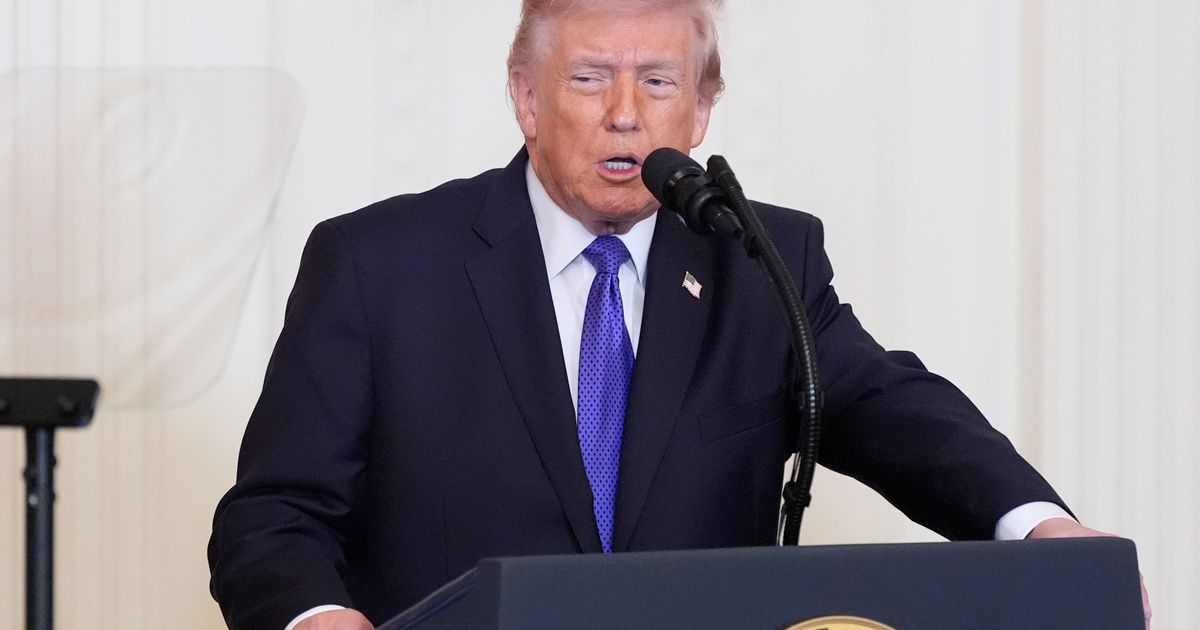
Congress is again contesting presidential war powers as the GOP-controlled House prepares to debate limits after the Senate rejected a Democratic resolution 47-53 to constrain President Trump’s authority in U.S.-Israeli operations against Iran. The piece highlights Trump’s recent unilateral military actions — including strikes and a naval blockade related to Venezuela and a sweeping bombing campaign in Iran that has resulted in six U.S. service-member deaths — and notes historical context: 11 formal war declarations (none since WWII), the 1973 War Powers Resolution intended as a check, and repeated presidential circumvention of congressional authorization. For investors, the story underscores persistent political and constitutional uncertainty around U.S. use of force, with potential episodic geopolitical risk to markets rather than an immediate systemic shock.
Market structure: A sustained executive-first war posture is a clear positive for defense contractors (especially prime integrators with backlog and classified program exposure) and for energy producers if supply routes are threatened. Expect 3–6 month revenue tailwinds for LMT, RTX, GD and select MROs as procurement urgency increases; airlines (DAL, UAL) and cruise operators face near-term demand destruction if escalation widens. Commodities: oil + gold are the first-order beneficiaries; a breach of $85–90/bbl materially re-rates E&P free cash flow expectations.
Risk assessment: Tail risks include kinetic escalation to a wider Gulf conflict or blockade (low probability, high impact) that could push Brent above $120/bbl and cause a >50bp shock to risk-free rates via stagflation fears. Immediate (days) risks: headline-driven volatility and flight-to-quality; short-term (weeks) risks: sanctions and disrupted shipping; long-term (quarters) risks: defense budget reprioritization or Congressional restriction dynamics that could change procurement timing. Hidden dependency: defense capex is lumpy and depends on appropriations cycles and export approvals—delivery and revenue recognition may lag headlines by 6–18 months.
Trade implications: Favor 1–3% tactical longs in large-cap defense (LMT, RTX) and commodity producers (XOM, CVX) with 3–12 month horizons; hedge with 0.5–1% VIX call or long-TLT positions for immediate protection. Consider pair trades: long LMT vs short UAL (1–2% each) to capture relative defense/airline divergence; use options to cap downside and leverage event-driven upside (3–6 month calls). Key catalysts: Congressional votes (30–90 days), casualty counts (>20 US KOs triggers risk repricing), shipping lane incidents.
Contrarian angles: Consensus may overpay primes already priced for “permanent” higher defense spend; mid-cap systems suppliers (LHX, SAIC) with lower multiples and faster revenue recognition may outperform. Markets underreact to the lag between authorization and revenue—buy on drawdowns of 10–15% in selected primes or 20% in mid-caps. Unintended consequence: a quick congressional clampdown or negotiated pause would sharply compress defense trading multiples—keep exits disciplined at 8–12% stop-losses on tactical positions.
AI-powered research, real-time alerts, and portfolio analytics for institutional investors.
Request TrialOverall Sentiment
moderately negative
Sentiment Score
-0.40
