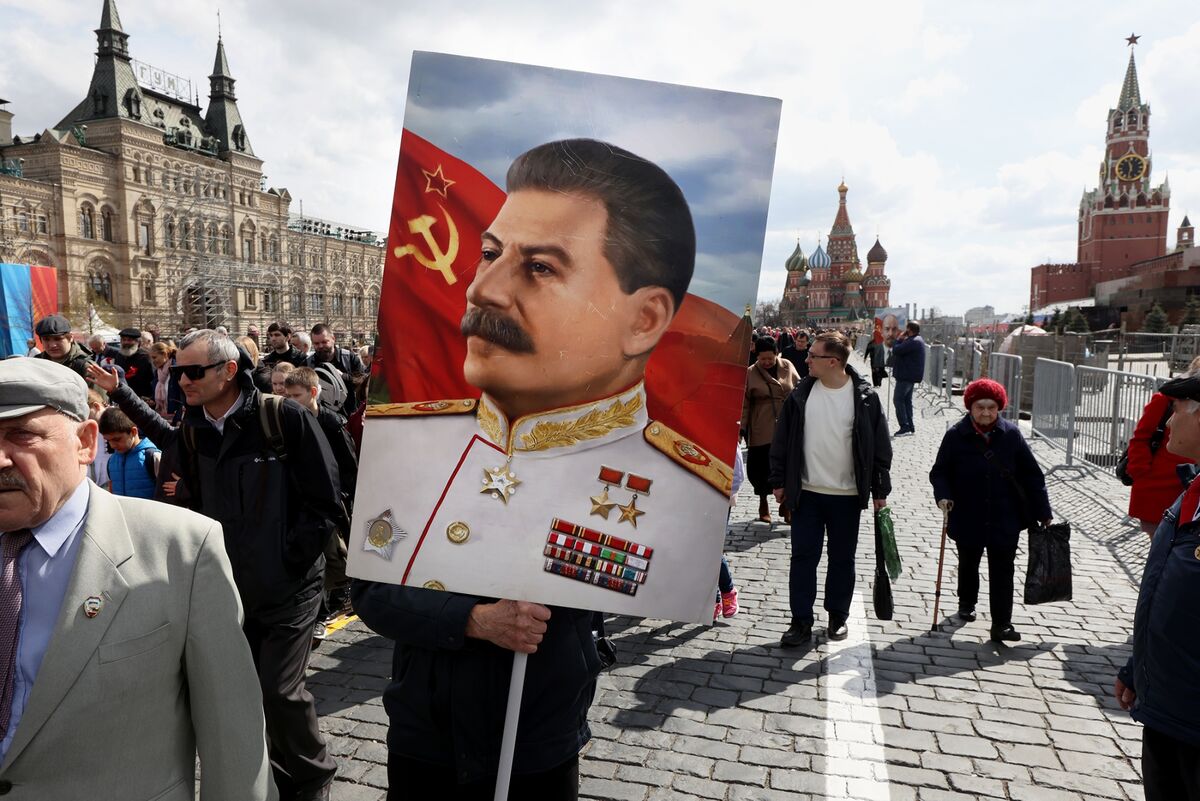
Amidst President Putin's escalating crackdown on dissent during the Ukraine conflict, Joseph Stalin's image is undergoing a significant rehabilitation in Russia, exemplified by a newly restored monument in Moscow and the Communist Party's push for his full political reinstatement. This re-framing of Stalin as a victorious World War II leader, rather than a mass murderer, signals a tightening of state control and a deliberate historical narrative shift, potentially impacting the perceived political risk and long-term operating environment within Russia.
The political rehabilitation of Joseph Stalin in Russia, occurring in concert with President Putin's intensified crackdown on dissent during the Ukraine war, signals a significant hardening of the domestic political environment. This trend is evidenced by tangible state-endorsed actions, such as the restoration of a monument at Moscow's Taganskaya metro station and the Communist Party's formal initiative to seek Stalin's full political reinstatement. The deliberate reframing of Stalin as a victorious World War II leader, while omitting his responsibility for millions of deaths, represents a strategic revision of the national narrative to bolster state control and justify current authoritarian measures. For investors, this ideological shift is a critical indicator of escalating political risk, suggesting a long-term trajectory toward a more insular and unpredictable operating environment where state ideology supersedes legal and economic norms.
AI-powered research, real-time alerts, and portfolio analytics for institutional investors.
Request DemoOverall Sentiment
neutral
Sentiment Score
0.00
