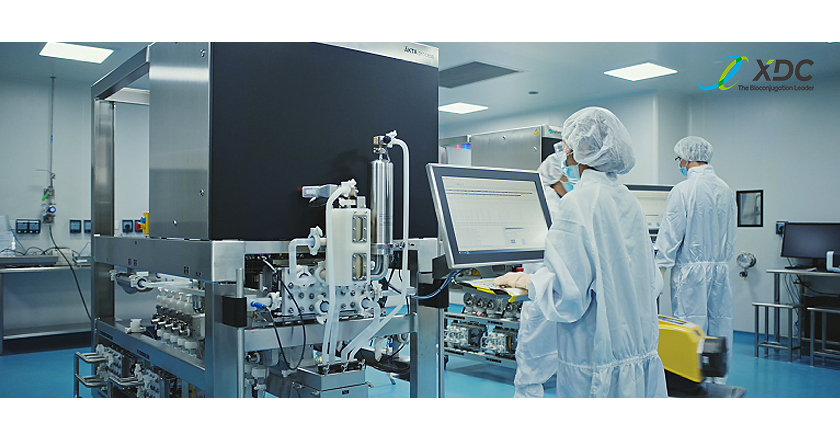
WuXi XDC (2268.HK) announced GMP release for its Singapore BCM3 dual-function production line, enabling commercial manufacturing for antibody intermediates and conjugated drug substances. The line supports batch sizes of 200L–2,000L (intermediates) and up to 2,000L (conjugated drug substances) and is positioned as its first overseas GMP-released facility, expanding global capacity via a “China + Singapore” dual-site network. Construction-to-GMP execution took 2.5 years, with its DP4 drug product filling line still planned to achieve GMP release by end-August 2026.
This is less about near-term revenue and more about de-risking the addressable market. A Singapore foothold matters because it lets the company sell supply-chain resilience to multinational pharma that increasingly wants non-China manufacturing optionality for commercial-stage ADCs; that can improve win rates and negotiation leverage even before meaningful volume lands. The first-order P&L impact is likely modest until utilization ramps, but the second-order effect is a lower geopolitical discount on the franchise and a better shot at becoming a preferred dual-source partner.
The competitive read-through is more interesting than the plant itself: specialized bioconjugate capacity outside mainland China is scarce, so this can pressure smaller niche CDMOs that lack integrated intermediates-to-drug-substance capability, and it may force larger peers to accelerate overseas capacity plans. Over the next 1-3 months, the stock will likely trade on follow-through signals, not the press release—new client wins, validation batches, and the next manufacturing milestone. If those do not appear, the market will treat this as expensive optionality rather than earnings power.
The contrarian view is that investors may be overpricing the strategic halo. Singapore capacity does not automatically solve demand, tech-transfer, or regulatory execution risk, and a specialized facility can still run underutilized if the ADC funding backdrop softens or commercial conversions slow. The thesis is falsified if the company fails to show backlog conversion/utilization improvement by the next earnings cycle, or if the follow-on release slips; that would imply capex drag with little operating leverage.
AI-powered research, real-time alerts, and portfolio analytics for institutional investors.
Request DemoOverall Sentiment
mildly positive
Sentiment Score
0.25
