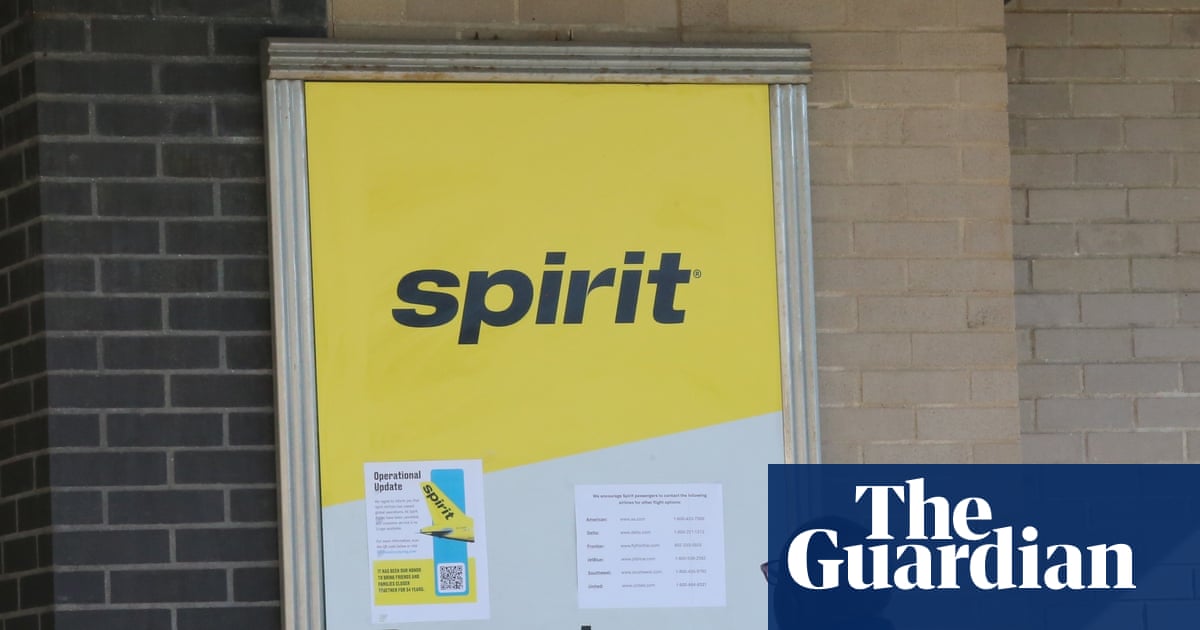
Spirit Airlines has nearly finished refunding customers after abruptly canceling weekend flights and beginning a wind-down, with about 4,000 flights originally scheduled through 15 May. The airline said surging oil prices and other pressures left it with no additional funding and forced liquidation after years of losses and two failed restructurings. The shutdown also reignites political blame over the blocked JetBlue merger, with Sean Duffy criticizing the Biden administration and Elizabeth Warren defending the antitrust ruling.
The immediate equity read-through is not the demise of a single discount carrier; it is a capacity shock to the most price-sensitive end of domestic leisure demand. That matters because low-fare carriers discipline pricing across short-haul leisure routes even when they are not the dominant operator, so their removal typically lifts fare realization for larger networks before traffic volumes fully adjust. The second-order winner is not just the closest ultra-low-cost peers, but also the legacy carriers that can reprice basic economy and checked-bag bundles into a tighter competitive set over the next 1-2 booking cycles.
The bigger macro implication is that fuel is now the marginal stress test for weaker balance sheets in travel, transportation, and other non-investment-grade cyclicals. When oil spikes abruptly, the damage is rarely linear: it compresses demand, worsens working capital, and cuts off refinancing windows at the same time, which can trigger a faster-than-expected liquidation cascade in subscale operators. That raises tail risk for ancillary vendors tied to distressed airlines and for regional airports dependent on discount traffic, where landing fees, concession spend, and local hospitality demand can soften with a 1-2 quarter lag.
Politically, the blame-shifting around merger policy versus energy costs highlights that antitrust outcomes will increasingly be judged through a consumer-prices lens, not a competition-process lens. The market is likely underestimating how quickly this event can become a template for future consolidation debates: if fares rise after a failed low-cost carrier exits, policymakers may face less resistance to selective capacity rationalization elsewhere. The contrarian point is that the closure is not automatically bullish for all airlines; if fuel remains elevated, the winners may be the better-capitalized carriers, while the sector as a whole still faces margin compression and possible follow-on weakness in demand elasticity.
AI-powered research, real-time alerts, and portfolio analytics for institutional investors.
Request DemoOverall Sentiment
extremely negative
Sentiment Score
-0.95
