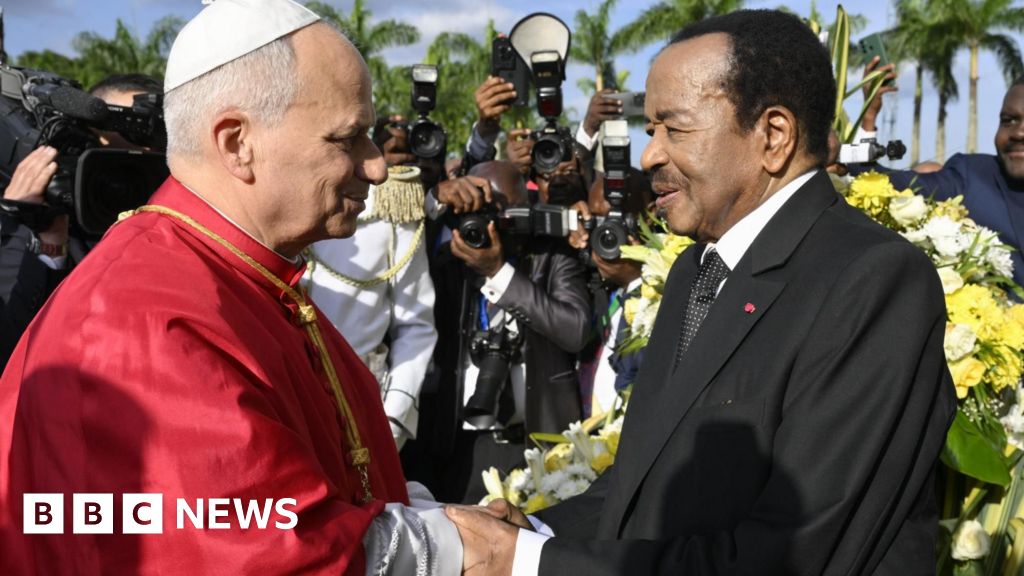
Pope Leo XIV used his Cameroon visit to call for an end to corruption, warning that graft, conflict, and mismanagement are undermining peace and credibility in the country. He highlighted the devastating 6,000-plus death toll in Cameroon's Anglophone insurgency and urged greater investment in youth and women as part of a peace agenda. The piece is largely political and humanitarian rather than market-sensitive, with limited direct asset impact.
The market impact is not in Cameroon itself but in the signaling effect across frontier sovereigns: public pressure on corruption and conflict raises the probability of delayed project execution, procurement scrutiny, and episodic social unrest in other low-transparency EMs. That tends to widen the political-risk discount on local-currency debt, domestic contractors tied to state capex, and banks with concentrated exposure to public-sector payrolls or SOE receivables. The first-order move is usually negligible; the second-order effect is a slower, more expensive funding cycle for governments already dependent on external financing.
The bigger medium-term implication is for infrastructure and security spending mix. When legitimacy is challenged, governments typically respond by leaning into visible, quick-turn projects and security outlays rather than productivity-enhancing reforms, which supports defense and communications procurement but leaves power, transport, and education investment underfunded. That is bearish for long-duration concession models and contractors reliant on clean permitting, but constructive for vendors that sell surveillance, border control, and armored logistics with short cash-conversion cycles.
A contrarian read is that the rhetoric may actually accelerate incremental reform pressure if it is absorbed by domestic elites as a governance warning rather than a direct political threat. In that case, the near-term headline risk could fade within days, while the real catalyst becomes the cabinet reshuffle and any changes to procurement enforcement over the next 1-3 months. The key is whether speech translates into budget reallocations and anti-corruption action; without that, the trade is mostly a sentiment shock, not a fundamental regime shift.
AI-powered research, real-time alerts, and portfolio analytics for institutional investors.
Request DemoOverall Sentiment
mildly negative
Sentiment Score
-0.15
