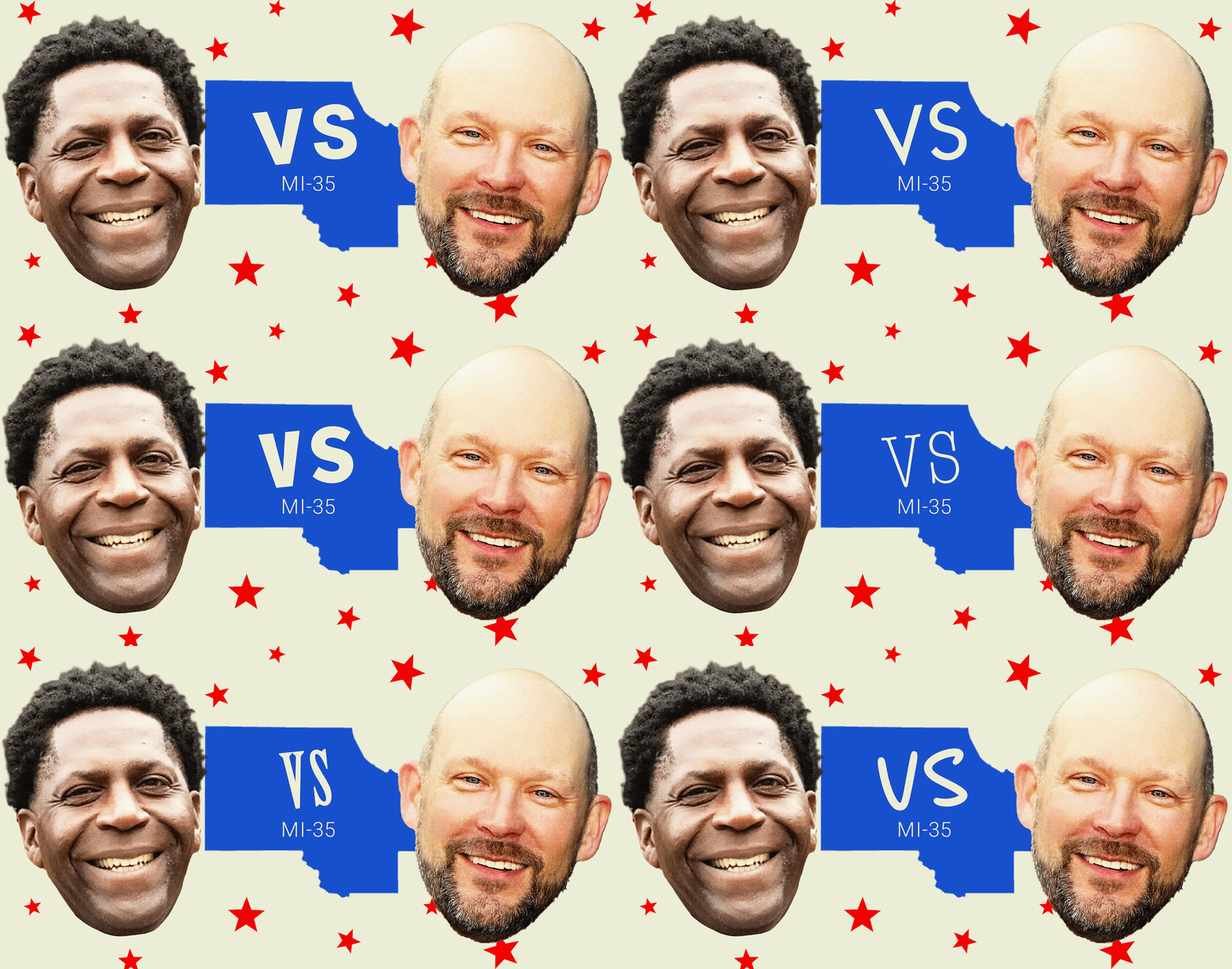
Democrats held Michigan Senate District 35 in a special election, preserving a 20-18 state Senate majority and avoiding a 19-19 split. The result is being read as an early indicator for the 2026 midterms, with affordability, gas prices, and grocery costs emerging as key voter concerns. While politically important, the article implies limited direct market impact beyond broader sentiment around Michigan and the national election outlook.
This result is more important as a read-through on governing credibility than as a single-seat update. The immediate market implication is that the “anti-affordability” frame remains the dominant organizing principle in battleground politics, which raises the odds that fiscal and regulatory proposals in Michigan stay consumer-sensitive rather than pro-tax/pro-spend. That matters for local economic cyclicals: anything exposed to household discretionary stress, utility bills, or fuel sensitivity should assume a more hostile political backdrop into 2026 unless inflation visibly cools.
The second-order effect is on energy and consumer psychology, not just electoral math. When voters anchor on gasoline and grocery inflation, short-cycle spikes in energy prices can become politically self-reinforcing, increasing pressure on state and federal policymakers to lean against price increases through rhetoric, release of reserves, or slower enforcement on supply bottlenecks. That’s a near-term headwind for retailers and consumer durables, because affordability narratives typically lag actual prices by 1-2 quarters and then show up in traffic, basket size, and promo intensity.
The bigger medium-term signal is that Democrats now have proof of concept that turnout and persuasion can still work in a Trump-won state even after a long vacancy, which improves the probability of a competitive 2026 map. But the market should not extrapolate too far: special elections overstate enthusiasm effects, and the real determinant will be inflation versus wages into the summer. If energy prices stabilize, this whole thesis loses force quickly; if they re-accelerate, affordability becomes a broader macro trade, not just a political one.
Contrarian view: the consensus is likely overpricing the idea that this is an early blue-wave confirmation. The more actionable interpretation is that both parties are now converging on cost-of-living politics, which compresses ideological differentiation and favors incumbents with concrete income support or pricing power. That is bearish for pure discretionary beta and bullish for companies that can pass through inflation without volume loss.
AI-powered research, real-time alerts, and portfolio analytics for institutional investors.
Request DemoOverall Sentiment
neutral
Sentiment Score
0.15
