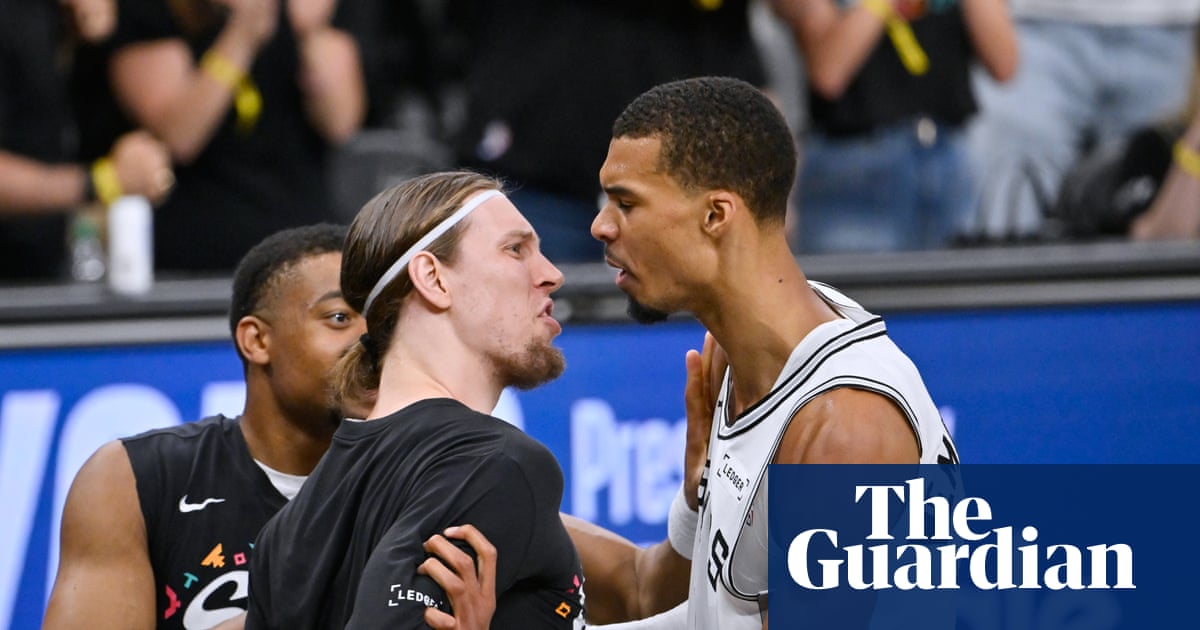
Victor Wembanyama delivered 33 points in 31 minutes, including a 43-foot buzzer-beater, as the San Antonio Spurs won Game 4 by 21 points to tie the Western Conference Finals 2-2. The article frames Wembanyama’s impact as decisive but notes the Spurs still need herculean performances from him because their supporting cast is compromised and the Thunder appear deeper overall. This is sports commentary rather than market-moving news, so broader financial impact is minimal.
The market takeaway is not simply that a superstar is carrying a series; it is that scarcity of elite talent can overwhelm structural depth gaps for longer than consensus expects. In media terms, this is the same dynamic that keeps live-sports narratives monetizable: a single transcendent figure materially increases viewer retention, highlight velocity, and conversational dominance even when the underlying team context is unfavorable. That creates a real but often underappreciated feedback loop for the league, broadcasters, and second-screen platforms that monetize attention spikes around singular moments.
The competitive read is that depth wins most series, but “generational volatility” can still flip short windows when one side can compress minutes and force opponent rotations into low-leverage exposures. The second-order effect is that the better-built team may still be the worse bet in-game if the market overweights roster completeness and underweights how one player can erase possession quality at both ends. Over a series horizon, however, that advantage usually reasserts itself unless the supporting cast stabilizes; the key catalyst is whether the star can maintain this usage without a fatigue/injury cliff over the next 7-14 days.
The contrarian view is that the current emotional premium may be slightly overdone in the short run: spectacular individual performances do not necessarily improve true championship probability if they are masking a fragile underlying roster. That means the right trade is not to chase the narrative blindly, but to own the monetization of the narrative while fading any overextension in the team-specific asset. If the series extends, the deeper, more physical club should regain edge as opponent shot quality and turnover pressure normalize.
For investors, the real beneficiaries are media inventory, ad-supported sports distribution, and sports-betting engagement more than any on-court asset; the risk is that hype cools quickly if the next game reverts to the depth gap. The best setup is a short-duration attention trade rather than a long-duration fundamental thesis.
AI-powered research, real-time alerts, and portfolio analytics for institutional investors.
Request DemoOverall Sentiment
mildly positive
Sentiment Score
0.20
