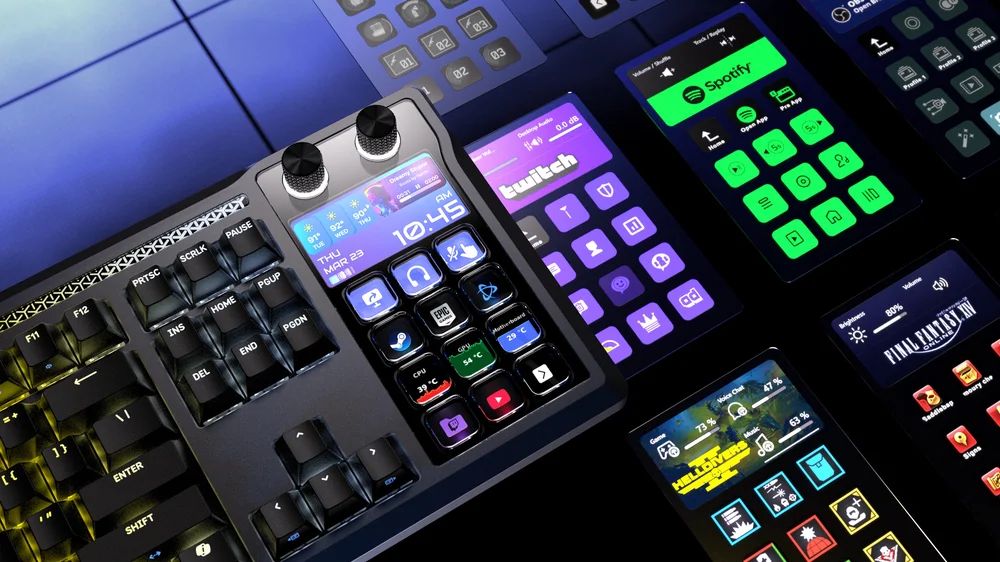
Corsair launched the Galleon 100 SD, a premium $349.99 keyboard that integrates a 12-key LED Stream Deck, a main 720×1280 display, two dials and hot‑swappable Corsair MLX pulse linear switches with gasket mounting and six layers of dampening; units are slated to ship Jan. 30–Feb. 2. The product bundles functionality (Corsair notes a standalone Stream Deck is roughly $135) and supports Elgato Marketplace plugins for Twitch, YouTube, OBS and games, positioning Corsair to capture streamer/creator spend and differentiate its peripheral lineup, though the announcement is unlikely to meaningfully move markets in the near term.
Market structure: Integrated peripherals (Corsair/Elgato ecosystem) are the direct beneficiaries, as bundling a $135 Stream Deck into a $349 keyboard implies a $214 convenience premium that should capture mainstream streamers and prosumers first. Incumbents with scale (Logitech, ticker LOGI) gain pricing power and SKU leverage; small standalone peripheral makers (small-batch Stream Deck clones, niche boutique keyboard makers) are at risk of margin pressure and share loss over 6–12 months. Supply/demand: initial ship window (Jan 30–Feb 2) and plugin ecosystem readiness suggest demand is supply-constrained only by displays/switches — expect 10–20% higher ASPs for premium keyboards if run rates hold.
Risk assessment: Tail risks include manufacturing/firmware failures, low consumer uptake at $350, or rapid competitive cloning that collapses ASPs; regulatory risk is minimal. Time horizons: immediate (days) — sentiment bump for peripherals; short-term (weeks–months) — retail sell-through and reviews will determine order cadence; long-term (12–24 months) — potential structural shift toward integrated control surfaces. Hidden dependencies: Elgato plugin ecosystem is the adoption hinge; without third‑party dev momentum, migration stalls. Catalysts: first-month sell-through, Steam/YouTube streamer adoption metrics, competitor product launches (Finalmouse in Sep).
Trade implications: Tactical longs: overweight LOGI (2–3% portfolio) for 3–9 months to capture channel consolidation and ASP expansion; pair trade: long LOGI vs short Turtle Beach (HEAR) equal-dollar to exploit scale/branding gaps. Options: buy 3-month 25‑delta LOGI calls or a 3–6 month call spread (size 0.5–1% portfolio) ahead of Q1 retail data; small speculative 1% allocation to SPOT near-term call spread keyed to streaming integrations if integration announcements accelerate engagement. Rotate sector exposure from small-cap gaming peripherals into large-cap incumbents over the next 3–6 months.
Contrarian angles: Consensus underestimates the risk of commoditization — if competitors produce lower-cost integrated units within 6–9 months, ASPs could compress >15%, hurting small players but benefiting component suppliers initially. Historical parallel: Art Lebedev’s Optimus failed despite tech lead due to price and ecosystem; this time Elgato’s plugin marketplace is decisive — monitor active plugin installs (>10k installs per major plugin within 60 days) as a leading adoption indicator. Unintended consequence: integrated units may cannibalize standalone Stream Deck sales but increase software lock-in; winners will be platform owners, not hardware-only makers.
AI-powered research, real-time alerts, and portfolio analytics for institutional investors.
Request DemoOverall Sentiment
mildly positive
Sentiment Score
0.25
Ticker Sentiment
