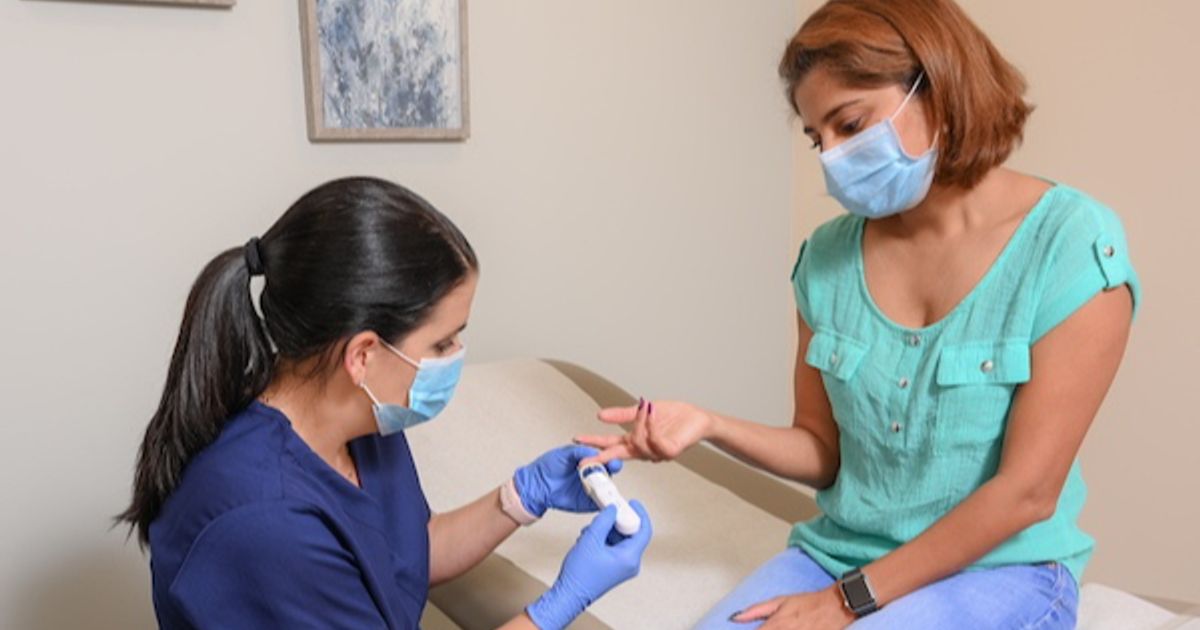
Lumos Diagnostics reported FY26 revenue up 6% to US$13.2M, driven by an 875% surge in FebriDx revenue to US$3.9M, alongside US$15.4M cash and US$2.7M operating cash inflow in the June quarter (vs a US$1.7M outflow a year earlier). Commercial rollout is expanding post-CLIA waiver, with FebriDx live in 30+ US urgent care sites and progressing across three additional major healthcare groups covering 430+ potential locations and ~2.6M acute respiratory infection presentations annually. The company also received an A$709,837 R&D tax refund, supporting further development of its point-of-care reader technology.
This is more valuable as a distribution proof-point than as an earnings event. Once a point-of-care test gets embedded in group-owned urgent care, the economics tend to follow a land-and-expand curve: initial placements are uneconomic for the buyer unless the test reduces downstream cost, then utilization can compound quickly if clinicians standardize on it. That creates a second-order tailwind for LDXHF’s consumables and a potential headwind for send-out respiratory panels and slower PCR workflows used by independent labs and reference-testing businesses.
The key risk is not technical approval; it is utilization and reimbursement. CLIA-waived products can still stall if per-site test frequency is too low, payer coverage is uneven, or physicians only use the assay as a sporadic triage tool. Over the next 1-3 months, the market will focus on conversion of the 230-site validation pipeline into repeat orders; over 6-18 months, the question is whether the model scales beyond a few flagship accounts or becomes another pilot-heavy story.
Consensus may be overextending the TAM narrative: a large presentation count is not the same as addressable test revenue, and urgent care adoption can be capped by workflow friction. The balance sheet is currently better than feared, which reduces near-term dilution risk and gives management a few quarters to prove repeatability. The stock can re-rate sharply if account conversion translates into measurable quarterly revenue acceleration; absent that, the move should fade back to a cash-burning microcap range.
AI-powered research, real-time alerts, and portfolio analytics for institutional investors.
Request DemoOverall Sentiment
moderately positive
Sentiment Score
0.45
Ticker Sentiment
