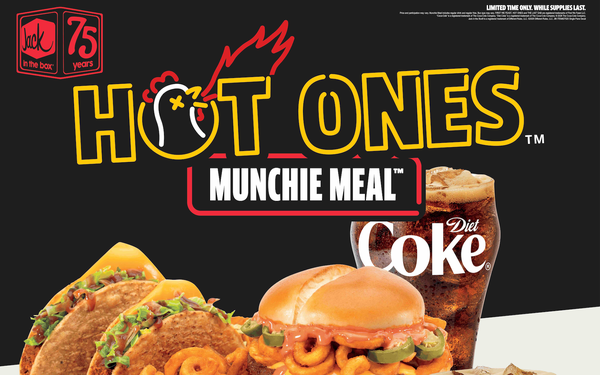
Jack in the Box launched a limited-time Hot Ones collaboration starting June 1, featuring the Hot Ones Munchie Meal, Sauced & Loaded Fries, and new Sriracha/Buffalo menu items available through July 22. The promotion adds themed collectibles and leverages the Hot Ones media brand’s 27 million-follower audience to drive traffic and engagement. This is positive for short-term consumer interest, but the likely market impact is limited.
This is a small but useful traffic-acquisition play for JACK rather than a meaningful fundamental reset. The second-order value is that the brand is buying relevance with a younger, digitally native audience at a time when QSR traffic is increasingly won through novelty, not price alone; that can support mix and check even if unit economics on the promo items are only average. The collaboration also gives JACK a lower-cost media substitute versus paid social, because the distribution engine is the partner’s audience, which matters more in a fragmented attention market than the menu innovation itself. The bigger question is whether this is a one-off spike or a repeatable cadence. If the promotion lifts transactions without forcing excessive discounting, the operating leverage can be meaningful over the next 30-60 days because fixed labor and occupancy are already in place; if it mainly cannibalizes existing visits, the P&L benefit fades quickly. Watch for any read-through into same-store sales and late-night mix, since Munchie Meal-style bundles are most likely to incrementally improve ticket rather than true unit volume. Competitively, this is less about stealing share from burger peers on product quality and more about owning a cultural moment. The risk for JACK is that limited-time collaboration fatigue can set in if consumers perceive the brand as leaning too heavily on gimmicks, which would cap repeat visitation and make each subsequent launch less incremental. The contrarian view is that the market may underappreciate how inexpensive these media-led launches can be versus traditional advertising, so even modest sales lift can matter disproportionately for a smaller-cap operator with operating leverage. Key tail risk is demand normalization after July 22: if the promo is not extended or sequenced with a follow-on campaign, the sales pop can reverse sharply on a comp basis in late Q3. A broader risk is that spicy/novelty products over-index to one customer cohort and don’t broaden the base, limiting durability. For suppliers, the incremental mix likely favors higher-margin sauces and branded packaging more than core protein demand, so the supply-chain benefit is real but not transformative.
AI-powered research, real-time alerts, and portfolio analytics for institutional investors.
Request DemoOverall Sentiment
mildly positive
Sentiment Score
0.20
Ticker Sentiment
