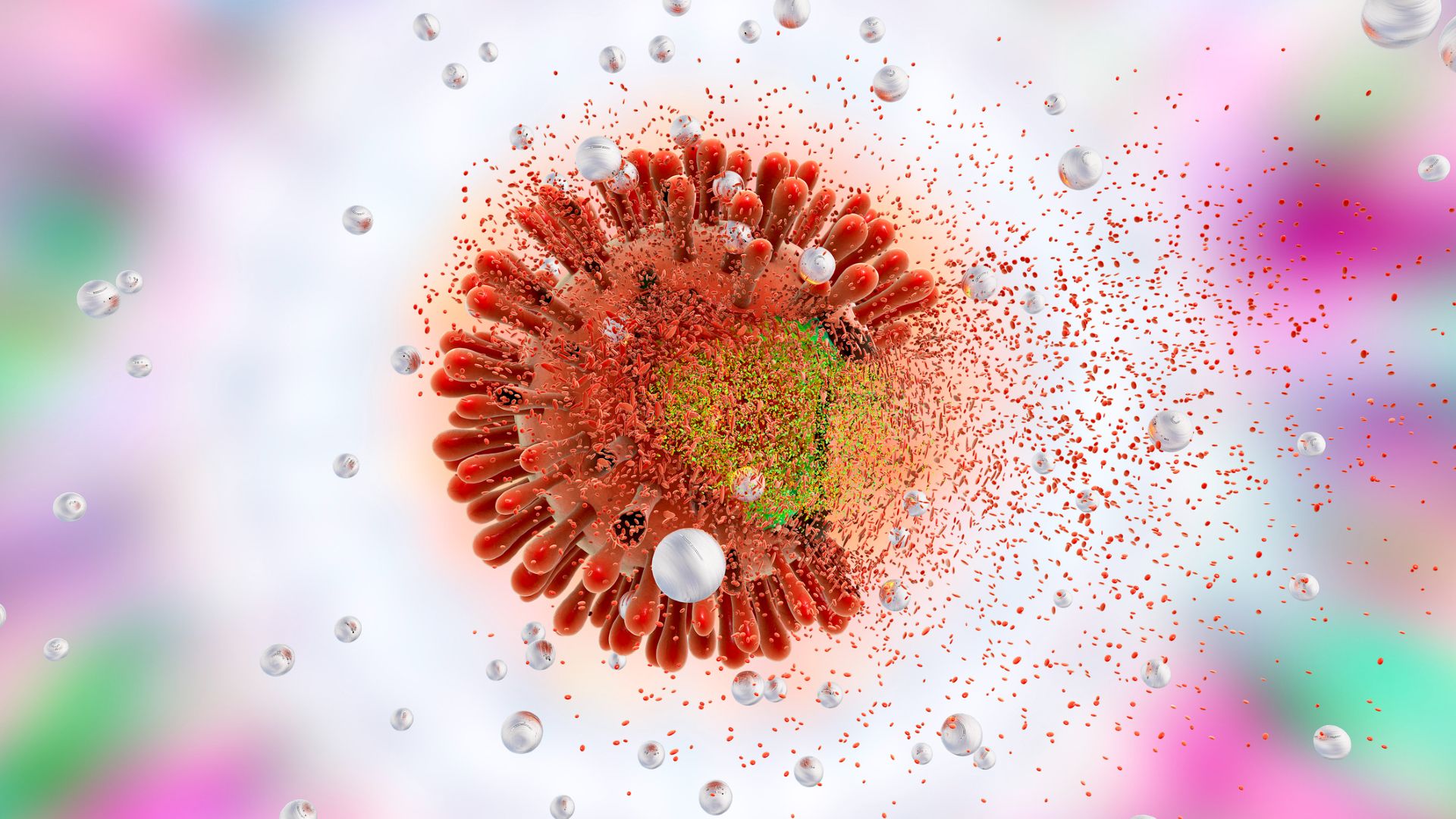
A 63-year-old man known as the Oslo patient is likely cured of HIV after an allogeneic stem-cell transplant from his brother, who carried two copies of the CCR5 delta 32 mutation that confers HIV resistance. The patient stopped antiretroviral therapy 24 months after transplant and has shown no viral rebound, with tests finding no replicating HIV in 65 million CD4 T cells and no virus in gut tissues. The case strengthens evidence that CCR5Δ32/Δ32 sibling donors can enable sustained HIV remission, though the result is unlikely to have immediate broad market impact.
This is not a commercial HIV market catalyst so much as a signal on the long arc of “functional cure” R&D. The key second-order effect is that it strengthens the mechanistic credibility of CCR5-pathway disruption as a durable control strategy, which modestly improves the probability-of-success for gene-editing, antibody, and cell-therapy programs that aim to recreate the biology without a transplant. The market usually prices these as distant science projects; incremental proof from a real-world human case can matter for platform valuation, especially for companies already building around durable receptor blockade rather than short-acting suppression. The bigger practical implication is competitive: transplant-based cure is an impossibly narrow wedge, but it validates the target architecture. That should help investors distinguish between programs that only reduce viral load transiently and those designed to enforce long-duration immune evasion. The beneficiaries are likely the platform names with differentiated delivery/editing tech and oncology-grade manufacturing capabilities, because the bar for an HIV cure analogue is a durable, system-level intervention — not a conventional small-molecule antiviral. Risk-wise, the headline can overstate near-term translation. This remains a one-patient proof point in a highly selected, medically extreme setting; any read-across to a broad outpatient HIV market is years away and could be reversed by safety constraints, especially around immune reconstitution, off-target edits, and durability in older patients. The most important catalyst window is 12-24 months: watch for additional human data that shows whether CCR5 blockade works outside transplant contexts, because without replication the enthusiasm will fade back into “interesting case report” territory. Contrarian view: the market may be underestimating the signaling value for enabling technologies while overestimating the speed of HIV-specific commercialization. If this drives multiple expansion, it is likely to accrue first to broad platform gene-editing names rather than pure-play HIV developers; the real upside is in a reusable delivery/editing stack that can be applied across infectious disease and oncology.
AI-powered research, real-time alerts, and portfolio analytics for institutional investors.
Request DemoOverall Sentiment
moderately positive
Sentiment Score
0.60
