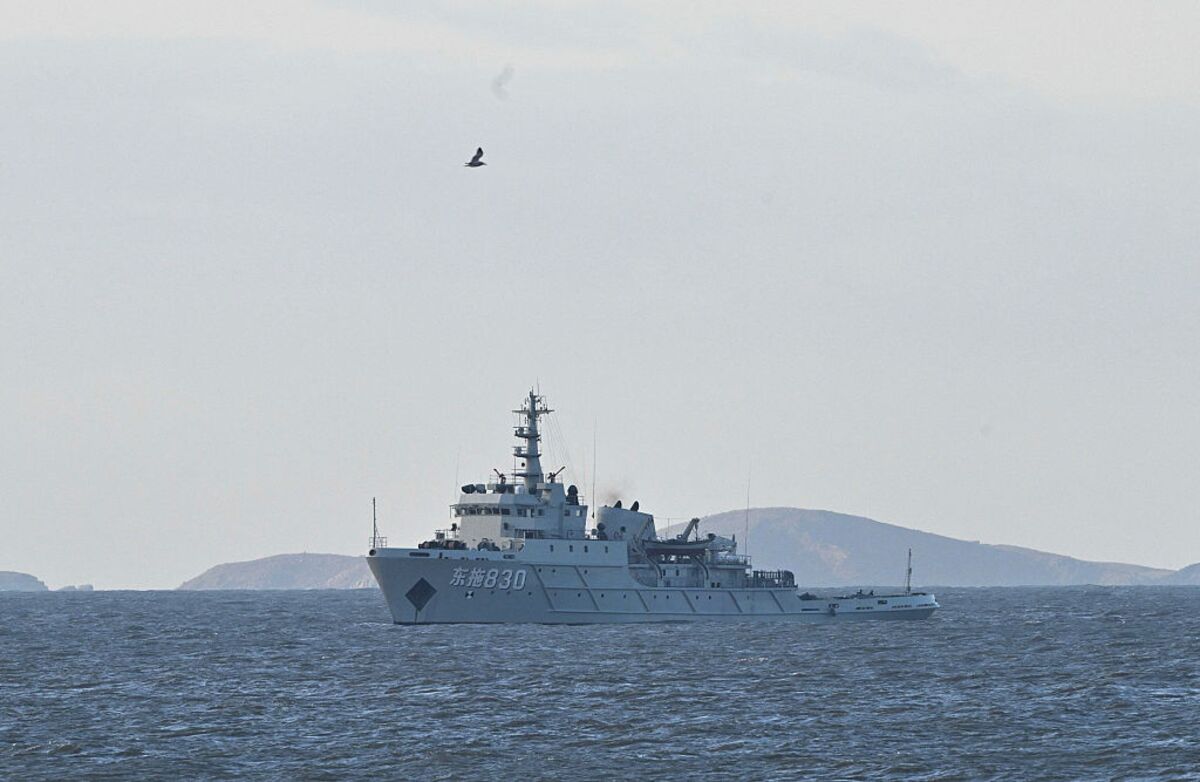
China’s PLA Eastern Theater Command said it conducted routine joint naval and air readiness patrols in the East China Sea on Saturday, as part of its annual plan. The drills were described as a capability test aimed at safeguarding sovereignty, security, and regional stability. The report is largely factual and reflects ongoing military posturing rather than a new escalation.
The key market impact is not the patrol itself, but the signaling that military readiness in the East China Sea is now being treated as a low-friction, repeatable baseline rather than a one-off event. That keeps a modest but persistent geopolitical risk premium embedded in Northeast Asia logistics, with the first-order beneficiaries likely to be defense primes, surveillance, EW, and maritime systems suppliers rather than conventional industrials. The second-order effect is on capital allocation: regional governments and shippers will keep spending on redundancy, inventory buffers, and route optionality even if headlines stay quiet, which is supportive for infrastructure security vendors and port/telecom hardening names over a 6-18 month horizon.
The main loser is not an obvious single listed company, but the efficiency of trade flows through the region. Any incremental uncertainty around air and naval activity tends to raise insurance costs, slow scheduling, and nudge higher-value supply chains to diversify away from just-in-time exposure to the Taiwan/Japan corridor. That is mildly bearish for regional exporters with thin margins and for logistics operators whose pricing power is capped by competition, while being indirectly bullish for companies that sell resilience: satellite comms, secure networking, drones, sensors, and dual-use electronics.
The contrarian read is that this is likely still underpriced because investors often dismiss routine military language as noise, but “routine” is exactly how normalization happens. The tail risk is not immediate kinetic escalation; it is a steady ratchet that forces procurement and inventory decisions before there is any visible crisis, creating a slow-burn demand cycle for defense and critical infrastructure. A catalyst would be any follow-on exercise, live-fire drill, or coincident diplomatic deterioration; conversely, sustained high-level bilateral engagement could compress the premium over the next 1-3 months, but is unlikely to unwind the structural spend trend.
AI-powered research, real-time alerts, and portfolio analytics for institutional investors.
Request TrialOverall Sentiment
neutral
Sentiment Score
0.00
