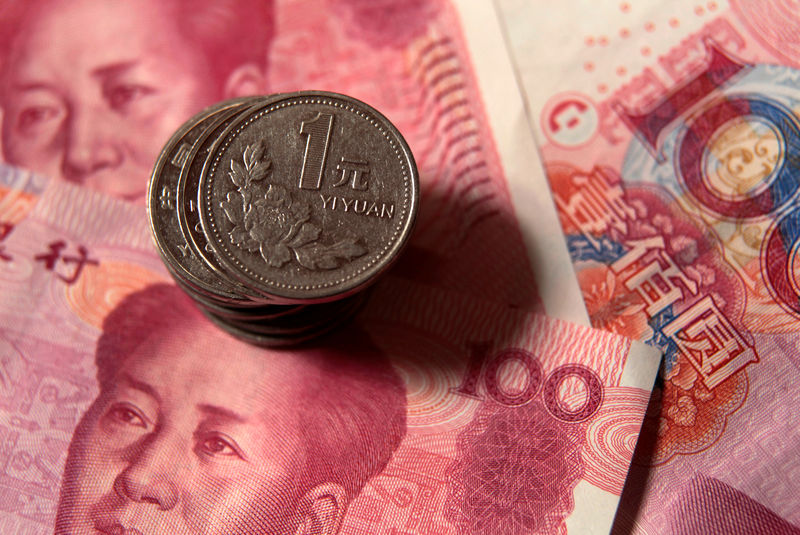
Goldman Sachs raised its yuan forecasts, now seeing USD/CNY at 6.80 in 3 months, 6.70 in 6 months, and 6.50 in 12 months, versus prior estimates of 6.85, 6.80, and 6.70. The bank says the yuan remains more than 20% undervalued and should benefit from China’s large external surplus and export competitiveness, though higher energy prices and weaker trading-partner growth may be short-term headwinds. China’s April exports rose 14.1%, reinforcing the constructive FX view.
The key second-order setup is not just FX appreciation, but a squeeze on the entire Asia supply chain that priced itself for a weaker yuan and easy external demand. A stronger renminbi lowers imported input costs for Chinese manufacturers while simultaneously raising the local-currency value of their overseas sales, which is supportive for exporters with pricing power and hard-currency revenues; that combination is especially favorable for firms leveraged to clean-energy equipment, industrial automation, and advanced manufacturing. If this trend persists for 3-12 months, it also raises the odds of capital rotating out of pure dollar-duration and into EM beta, particularly where earnings sensitivity to FX translation is underappreciated.
The market is likely underestimating how asymmetric the move is for U.S. multinationals versus China-facing value chains. A firmer yuan compresses the relative cost advantage of U.S. sourcing and makes incremental reshoring less economically urgent, which could be a mild headwind for domestic reindustrialization beneficiaries with weak near-term pricing power. At the same time, higher energy prices from geopolitical disruption are a drag on the near-term China trade balance, but they accelerate the longer-cycle thesis: China’s clean-tech export complex becomes more strategically valuable as energy-security capex rises globally.
For GS specifically, the message is less about near-term trading revenue and more about positioning itself as the house view for a structurally weaker dollar regime versus China. The more interesting catalyst window is the next 1-3 months: any U.S.-China diplomatic headline may trigger an overshoot in CNY, but the durable move would require foreign inflows and policy tolerance in Beijing. If that happens, the trade stops being a headline beta call and becomes a sustained factor rotation into EM cyclicals and away from dollar beneficiaries.
The article also has a subtle implication for AI/data-center winners cited in the promo copy: stronger China FX plus higher energy-security capex can support the capital-expenditure cycle for semis, power infrastructure, and industrial compute over the next 12-24 months. That is where the indirect winners sit, not in the headline FX move itself.
AI-powered research, real-time alerts, and portfolio analytics for institutional investors.
Request DemoOverall Sentiment
mildly positive
Sentiment Score
0.25
Ticker Sentiment
