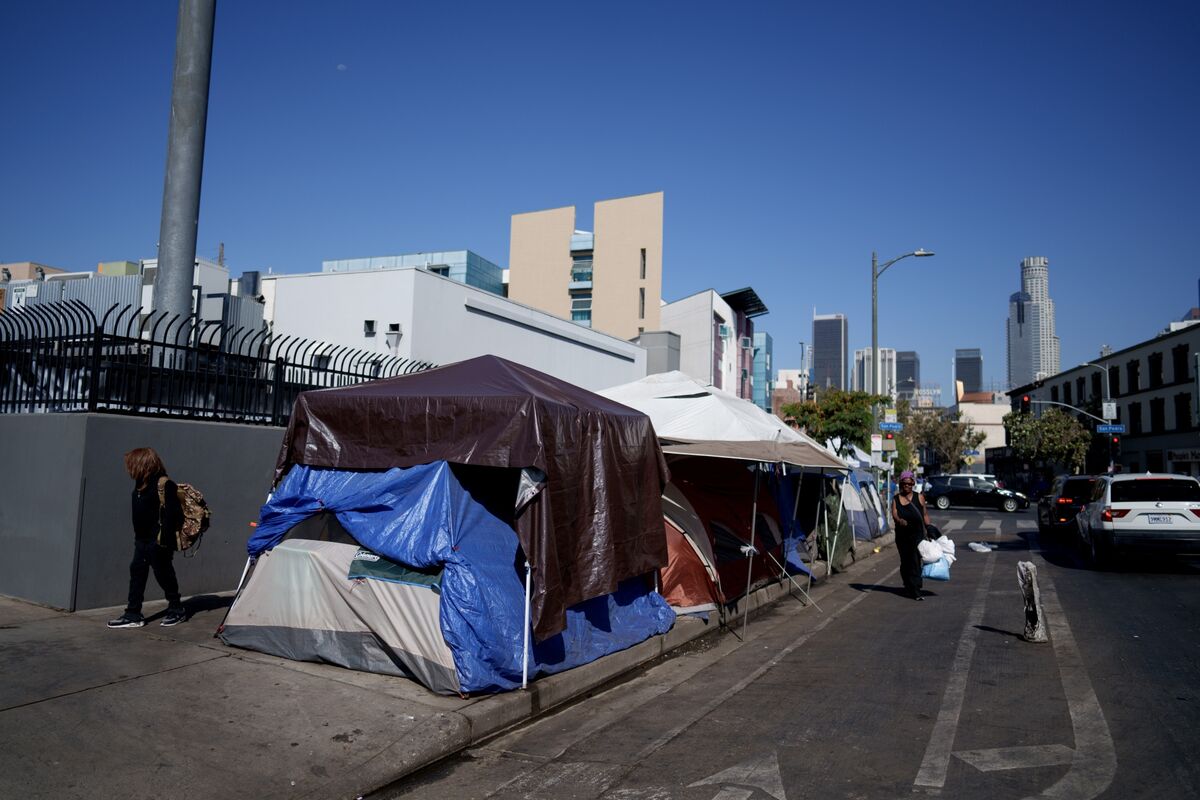
The US Department of Housing and Urban Development suspended federal funding for the Los Angeles Homeless Services Authority, alleging a "clear pattern of fraud" after the agency received more than $1 billion in public funds over the past five years. The move raises governance and oversight concerns around homelessness spending in Los Angeles, where more than 40,000 people are reportedly sleeping in tents, cars, or temporary shelter. The news is negative for the agency and could prompt broader scrutiny of publicly funded housing and homelessness programs.
This is less about one agency and more about the political repricing of municipal administrative risk. Once a federal sponsor publicly alleges fraud, every downstream participant in the local homelessness ecosystem—operators, subcontractors, consultants, auditors, and municipal allocators—faces a higher cost of capital in the form of delayed reimbursements, tighter compliance, and more intrusive procurement reviews. The immediate loser is not just the named authority; it is the entire class of nonprofit-heavy service providers that depend on opaque pass-through funding and weak outcome verification.
The second-order effect is a likely budget pivot from discretionary social service grants toward higher-audit, lower-flexibility channels and, eventually, enforcement-oriented solutions. That tends to benefit firms tied to shelters, property management, monitoring, and technology-enabled verification rather than pure service delivery; the market will increasingly reward organizations that can document unit economics per bed, per placement, or per client-day. Over the next few months, watch for contract pauses, vendor insolvencies, and forced consolidation among smaller operators that lack balance sheet resilience.
The contrarian risk is that this becomes a headline event with limited real funding impact if the federal government reinstates money after a remediation plan. That would leave the structural homelessness demand unchanged while only modestly improving governance, which means the tradeable effect may fade quickly after 30-90 days. The deeper bear case is that this sets a precedent for federal audits in other high-spend blue-state social programs, amplifying political pressure on local budgets into the 2026 appropriation cycle.
AI-powered research, real-time alerts, and portfolio analytics for institutional investors.
Request DemoOverall Sentiment
strongly negative
Sentiment Score
-0.55
