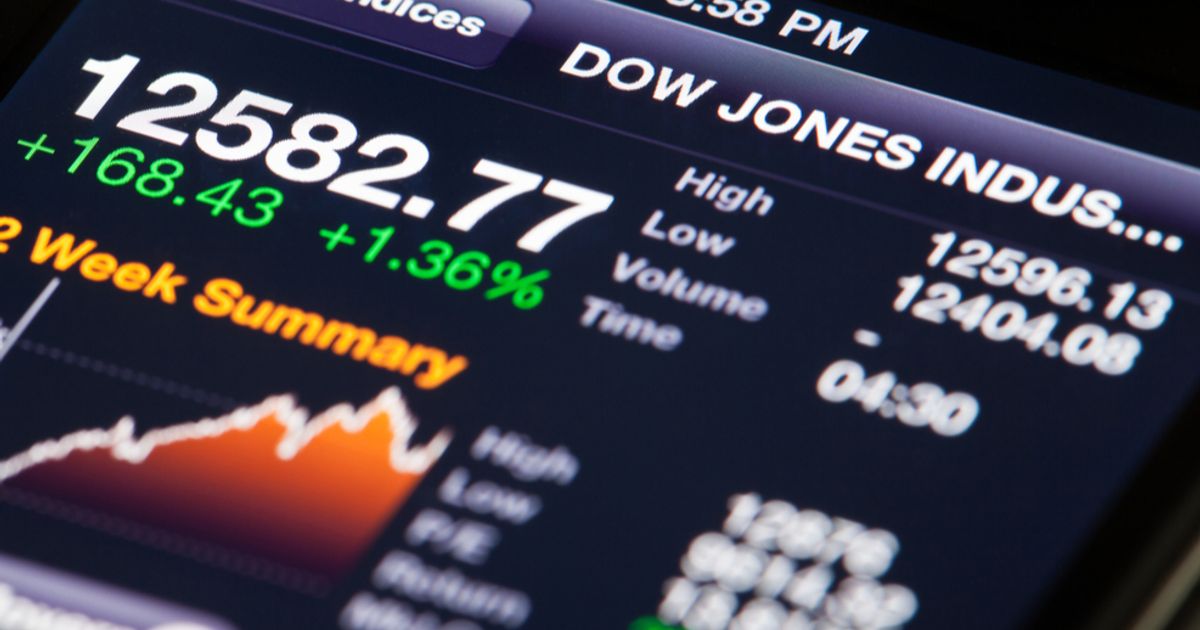
U.S. equity futures edged about 0.2% lower as Wall Street entered the final trading day of 2025 after three consecutive losing sessions, with holiday-thinned volumes and many portfolios already positioned for year-end. Fed minutes from December described the policy decision as a close call and signaled several officials expect “some time” before rate cuts, while markets price roughly an 85% chance of rates holding at the January meeting; weekly initial jobless claims due at 8:30 a.m. ET are the key economic data point to watch for any near-term market reaction.
Market structure: A slower path to Fed cuts favors cash/short-duration bonds and financials/value cyclicals over long-duration growth. Exchanges and market-structure providers (NDAQ) are exposed to lower trading volumes and may see sequential revenue downside for 1–3 quarters as listings and transaction fees soften; expect 3–7% EPS risk versus consensus if volumes remain depressed. Cross-asset: front-end U.S. yields are likely to stay elevated (2s/5s pressure), USD carry stays supportive, option skews rise into early-Jan events and commodity cyclicals underperform if risk premium re-prices.
Risk assessment: Immediate (days) — choppy, low-liquidity moves around jobless claims and holiday flows; short-term (weeks) — positioning ahead of Jan FOMC and payrolls could trigger 3–8% swings in growth names; long-term (quarters) — delayed cuts compress discounted cash flows, potentially re-rating high-multiple names by 10–30% if cuts push into 2H26. Tail risks: a hawkish Fed surprise, a sudden liquidity squeeze from dealers, or a marked deterioration in labor (claims >300k) that forces a rapid rebalancing. Hidden dependency: exchange revenues hinge on volatility and market structure changes (maker/taker), not just equity prices.
Trade implications: Tactical plays for 1–3 months: pair long financials (XLF) vs short tech (QQQ) — target 2–4% net portfolio exposure, enter Jan 2–10 as flows resume. Take a targeted short in NDAQ (ticker NDAQ) of 1–2% notional with a 6% stop and 12–15% downside target over 3–6 months, reflecting listing/volume risk. Use options: buy 1–2 month put spreads on QQQ (2–4% OTM) sized to cost 0.5–1% portfolio as a cheap hedge; sell covered calls on high-conviction long names to harvest premium while volatility is elevated.
Contrarian angles: The market is pricing a high probability of no January cut but underweights a soft-labor surprise that would re-accelerate risk-on and steepen curves — that scenario benefits long-duration tech and long TLT into 1–3 months. Volatility is compressed in thin holiday markets; selling premium and buying asymmetric tail protection is more attractive than directional naked shorts. Historical parallel: 2019 Fed pause saw pronounced equity multiple expansion once cuts resumed; if claims spike >300k or Jan payrolls <+100k, prepare to flip the long/short book quickly.
AI-powered research, real-time alerts, and portfolio analytics for institutional investors.
Request DemoOverall Sentiment
mildly negative
Sentiment Score
-0.25
Ticker Sentiment
