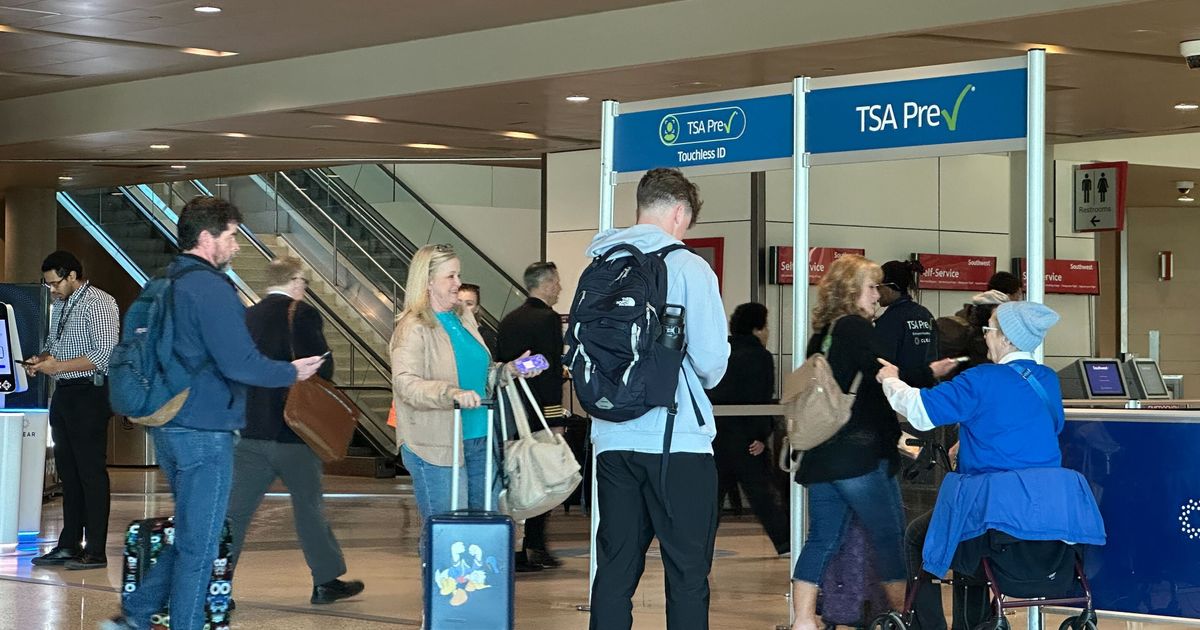
TSA announced that its PreCheck lanes will remain operational despite an earlier DHS notice to suspend PreCheck and CBP Global Entry amid a partial government shutdown that began Feb. 14; DHS had warned of service rollbacks to conserve funds. More than 20 million Americans are enrolled in PreCheck, Global Entry status was left unclear, and the suspension of courtesy escorts plus a major East Coast winter storm (with roughly 90% of flights out of JFK, LaGuardia and Boston canceled Monday) heightens near-term travel disruption and operational risk for carriers and airports.
Market structure: The immediate market effect is concentrated on travel & airline throughput rather than broad macro — expect localized capacity/turnaround stress at major hubs (JFK/LGA/BOS) with potential 1–3% shortfall in daily departures at peak disruption days and a 5–15% intra-day spike in airline IRRs/turnaround times. Winners are low-touch digital travel platforms (BKNG, EXPE) and legacy carriers with slack schedule flexibility (LUV); losers are capacity-constrained network carriers (AAL, UAL) and airport retail/short-term parking revenue. Across assets, expect a small flight-to-quality into US Treasuries (5–15bp compression in front end during acute headlines), slight USD support, and near-dated spikes in airline implied volatility (IV up 10–30%).
Risk assessment: Tail risk is a prolonged (>7–14 days) DHS funding gap that leads to broad PreCheck/Global Entry suspension, causing cumulative Q1 revenue hits to US network carriers of ~2–4% and higher opex from rebooking/cancel penalties; reputational losses could depress near-term demand by 1–3% if compounded by winter storms. In the next 48–72 hours expect operational noise; over 2–8 weeks political negotiation outcomes and weather will drive resolution; over quarters the risk is cyclical/tied to consumer confidence. Hidden dependencies include intermodal cascading (ground transport, TSA contractor payroll) and election-driven policy shifts that can weaponize agencies as bargaining chips.
Trade implications: Tactical defensive moves favored: short-duration Treasury exposure (TLT outperformance via duration) and targeted downside protection on airlines/JETS ETF via 30–45 day put spreads sized 1–2% AUM; buy-side booking platforms should be bought on >5% pullbacks within 2 weeks (BKNG, EXPE, 1–3% each). A relative-value pair: long EXPE/BKNG vs short AAL/UAL (1:1 notional) for 30–90 day window—bookers capture demand stickiness while network carriers absorb operational churn. Options: use calendar or 30–45d put spreads on JETS (buy 1–2% OTM, sell 8–10% OTM) to cap cost while benefiting from headline-driven IV.
Contrarian angles: The consensus overstates systemic risk — historical DHS shutdowns (2013, 2019 analogs) produced transitory operational impacts but limited long-term demand destruction; if PreCheck remains functional, any sell-off in regional airports/airlines is likely overdone and test-buy worthy. Watch thresholds: if cancellations at major NYC/BOS hubs exceed 5% national average for >72 hours or PreCheck/Global Entry suspension exceeds 7 days, then downside is real and increase hedges to 3–5% AUM. Unintended opportunities include security/biometric vendors (private/early-stage) and niche airport service REITs that trade off short-term noise but have durable cashflows.
AI-powered research, real-time alerts, and portfolio analytics for institutional investors.
Request DemoOverall Sentiment
mildly negative
Sentiment Score
-0.25
