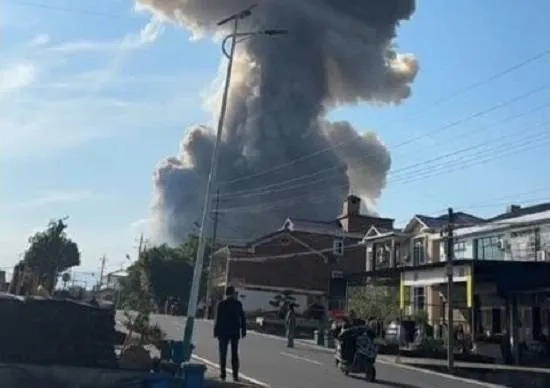
A fireworks factory explosion in Liuyang, Hunan province killed 26 people and injured 61 others, with authorities saying search and rescue is basically complete. Chinese officials have ordered fireworks makers in Changsha to halt production ahead of safety inspections, while police have detained the company management and investigations continue. The incident underscores ongoing industrial safety risks in China, especially in the fireworks sector.
This is less a one-off tragedy than a supply-chain shock to a highly concentrated local industry. When one county effectively becomes the national choke point for both domestic and export fireworks, a shutdown wave can propagate well beyond the site through inventory restocking, contract fulfillment, and pricing power for surviving producers. The near-term loser set is broader than the factory operator: smaller distributors, seasonal retailers, logistics providers, and local governments will face cash-flow stress as inspections and permit delays ripple through peak-order windows.
The second-order effect is regulatory, not industrial. Expect a tightening cycle that lasts weeks to months: plant-level audits, more stringent storage/transport rules, and temporary suspension of permits are the usual political response after high-visibility fatalities. That tends to reduce output faster than demand falls, which can create a short-lived margin lift for compliant operators while also increasing working-capital needs as buyers front-load orders ahead of inspections.
The market is likely underpricing the legal and insurance overhang. Management detentions and accountability language imply a longer investigation window, and in China these episodes often translate into forced remediation capex, higher bonding/insurance costs, and collateral damage to local officials who may overcorrect. The contrarian angle is that the sector’s earnings hit may be temporary if exports are tightly concentrated and global substitution is limited; the real trade is not on fireworks demand disappearing, but on whether compliance costs permanently re-rate the segment and compress smaller players out of the market.
For macro traders, this is a localized negative for China industrial confidence, but not a broad China growth signal. The real implication is heightened policy sensitivity in labor-intensive, accident-prone manufacturing clusters: if authorities use this to showcase enforcement, similar inspection waves can spread to adjacent chemical, storage, and pyrotechnic supply chains over the next 1-3 months.
AI-powered research, real-time alerts, and portfolio analytics for institutional investors.
Request DemoOverall Sentiment
extremely negative
Sentiment Score
-0.85
