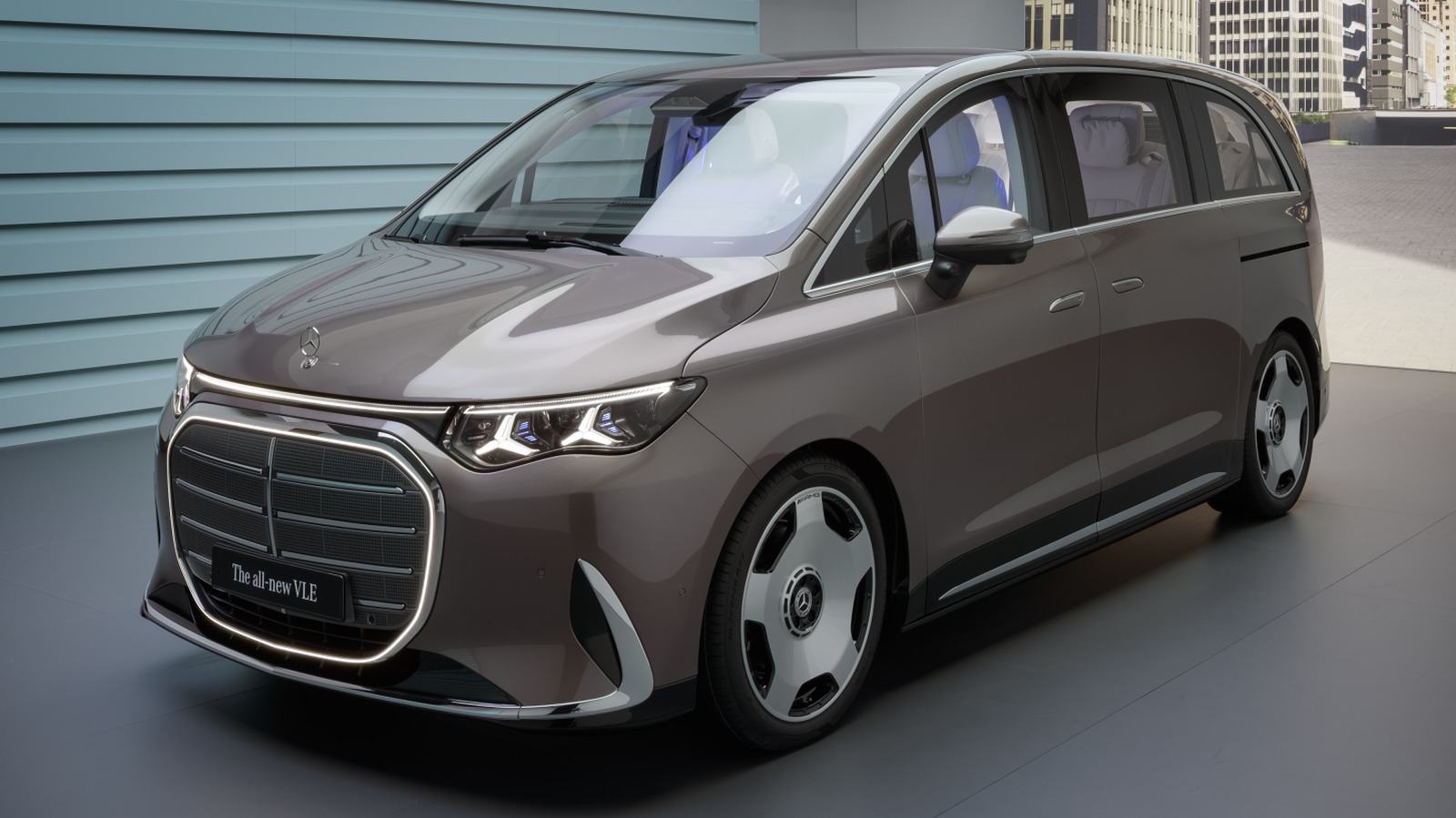
Mercedes-Benz is bringing the all-electric VLE to the U.S., with a 115‑kWh usable battery (VLE300 ~268 hp; VLE400 409 hp, 0‑60 mph in 6.4s). Mercedes claims the VLE300 achieves ~435 miles WLTP (~~380 EPA estimate) and both models support >400 kW DC fast charging (up to 220 miles WLTP added in 15 minutes) and bidirectional charging. The vehicle emphasizes luxury features (31.3‑inch 8K rear screen, remote-controlled Grand Comfort seats, optional 22‑speaker Burmester Dolby Atmos) and modular interiors; short/long wheelbases measure 209"/215". U.S. launch likely in the latter half of the year, pricing not yet announced but expected north of the current EQV250 base (~€50k / ~$58k).
This product launch is less about a single model and more about a template shift: OEMs pushing high-voltage, software-defined vehicle platforms increase recurring software, mapping and telemetry revenue that sits squarely in Google’s sweet spot. Expect incremental monetization opportunities (maps, navigation payload, in-car services, data licensing) to scale over 12–36 months as Mercedes and peers roll OTA features and fleet services — a low-single-digit percentage revenue tailwind for Google but a disproportionately high-margin one.
Second-order winners include high-voltage power-electronics and fast-charging ecosystems; suppliers with scalable silicon-carbide and >350 kW inverter expertise gain pricing power. Conversely, bespoke luxury-interior suppliers face inventory/calendar risk if adoption is lumpy; dealers absorb optionization complexity which can compress used-vehicle residuals and increase F&I dispersion in the near term.
Main risks are adoption and macro sensitivity: high-option vehicles trade like discretionary goods so a 100–300bps rise in real borrowing costs or a 10–15% hit to high-net-worth consumption could materially slow take-up within 6–18 months. Key catalysts to watch are U.S. pricing and fleet partnerships (0–12 months), supplier contract announcements (3–12 months), and charging-network tie-ups that enable true long-range commercial use (6–24 months).
Contrarian read: the market understates platform leverage — if Mercedes scales the 800V architecture into higher-volume commercial vans, per-unit software and parts margin could expand materially, turning an apparent niche halo car into a multi-year OEM re-rating catalyst. The counter is concentration risk: a handful of suppliers and charging nodes dominate the value chain, so single-supplier shocks could invert the bullish base case quickly.
AI-powered research, real-time alerts, and portfolio analytics for institutional investors.
Request DemoOverall Sentiment
moderately positive
Sentiment Score
0.35
Ticker Sentiment
