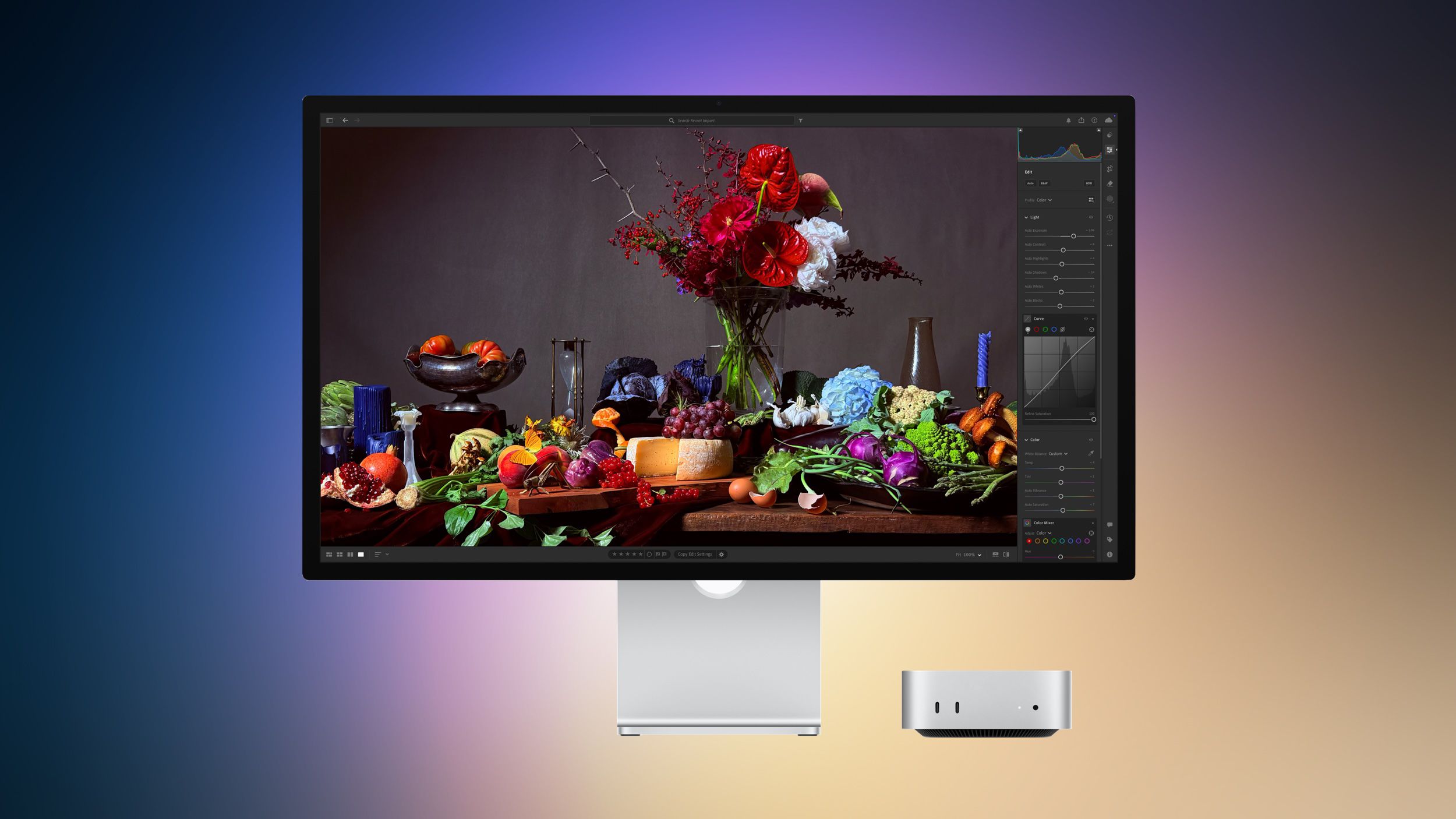
Apple announced two display technologies: a forthcoming Full Calibration feature (hardware-level recalibration of white point, primaries, luminance and gamma via compatible spectroradiometer) coming in a future macOS update, and Apple CMF 2026, a new color measurement model designed to improve visual consistency versus the legacy CIE 1931. The Studio Display XDR ships factory-calibrated using Apple CMF 2026 and is the first Apple display to support it; Apple will keep CIE 1931 presets for workflow compatibility and is engaging the CIE to pursue a broader industry standard.
Apple’s move to hardware-level, instrument-driven calibration is a strategic productization of what has been a services/consulting niche. That raises the effective switching cost for studios and agencies that standardize on Apple’s pipeline: once grades, LUTs and QA baselines reference a single, factory-calibrated metric, migrating to non‑Apple displays imposes measurable revalidation costs (person-hours, equipment, delivery delays) that compound across large projects. Expect adoption to proceed project-by-project: marquee studios and streaming houses could drive commercial signaling within 6–18 months, after which slower adopters follow if client specs demand it.
Operationally, this increases demand for high-accuracy measurement tools and tighter panel tolerances. Vendors of spectroradiometers and test equipment will see higher enterprise purchasing cadence and recurring calibration service revenue; panel suppliers that can consistently hit narrower chromatic bins will capture share, and OEMs that can’t will either face higher scrap or be forced into certification partnerships. The net is modest near-term revenue for Apple but meaningful margin and ecosystem stickiness over 1–3 years as workflows embed the new metric.
Key risks: standards inertia and fragmentation. Broad CIE adoption could take years and requires buy-in from camera, VFX and broadcast toolchains; refusal by independent color labs to certify to a new metric would blunt adoption and create a two‑track market. Watchables that would flip this thesis faster than expected are a macOS SDK rollout, a major post house or streaming platform embedding the new metric into delivery specs, or CIE-style endorsement — any of which could accelerate capture over 6–12 months.
The market is underweight the behavioral lock-in effect. Most models price this as a modest product feature; instead, treat it as a low-cost, high-friction ecosystem wedge that monetizes indirectly (higher device attach, accessory and certification spend) and defensively (reducing churn in professional accounts). Position sizing should therefore be conviction-weighted and time‑phased around the macOS release and early‑adopter announcements.
AI-powered research, real-time alerts, and portfolio analytics for institutional investors.
Request DemoOverall Sentiment
neutral
Sentiment Score
0.00
Ticker Sentiment
