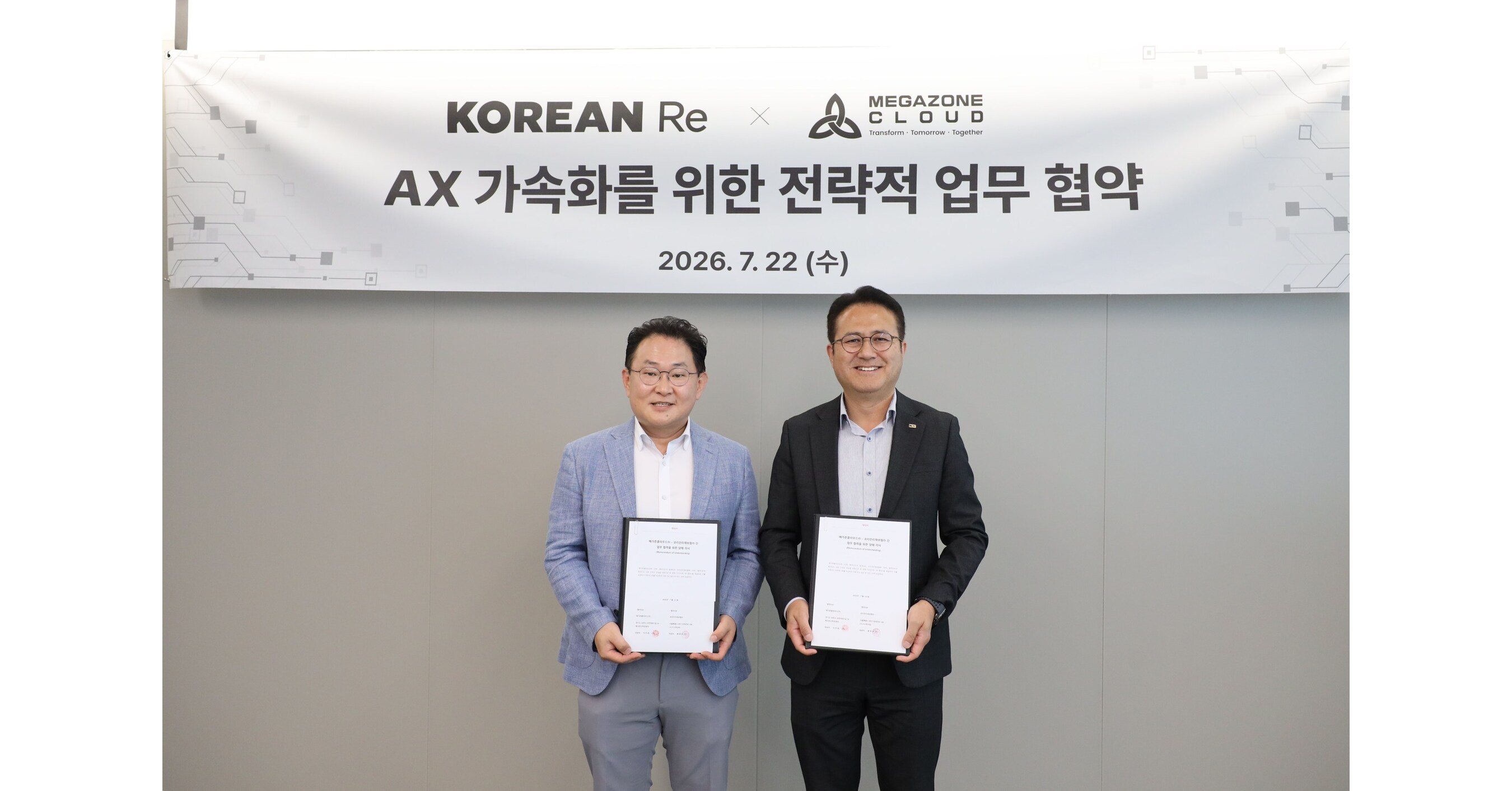
MegazoneCloud signed an MOU with Korean Reinsurance to accelerate AI transformation (AX) across reinsurance operations, targeting upgrades to underwriting/rate-setting, risk prediction, and AI-enabled enterprise automation (including AI RPA). As part of the first joint effort, the firms are developing an “AI Assistant for Commercial Insurance Rate Calculation,” which was designated as an Innovative Financial Service in March under South Korea’s regulatory sandbox. The partnership is positioned as a long-term “Tech Companion” program focused on productivity/cost reductions and improved ROI within a secure, regulatory-compliant “internal generative AI network.”
This reads more like a procurement signal than an earnings event. The first-order benefit is to the AI/security/cloud implementation stack; the economic value for the reinsurer only shows up if underwriting speed, loss selection, or operating leverage improves enough to move the expense ratio, which usually takes multiple quarters and a lot of workflow reengineering. The bigger second-order point is precedent: once a regulated balance-sheet firm proves an internal generative-AI network can pass security and network-separation hurdles, adjacent insurers will be pressured to follow, shifting budgets from generic IT maintenance toward data governance, model monitoring, and workflow automation.
The market risk is over-earnest extrapolation. MOUs in regulated finance often get priced like revenue, but the path from pilot to production is long, and the failure modes are very non-linear: bad model outputs, compliance friction, or weak user adoption can turn this into a cost center. Near-term catalysts are not the announcement itself, but disclosed contract value, production rollout, or a measurable improvement in claim/underwriting cycle times over the next 1-3 reporting periods.
Contrarian view: the consensus will likely focus on "AI adoption in insurance," but the more durable trade is in secure orchestration, not headline AI. If this pattern repeats, the winners are cybersecurity, identity, data-integration, and workflow platforms; the losers are vendors selling generic cloud capacity without embedded governance. If there is no hard spending disclosure within 1-2 quarters, this should be treated as narrative, not fundamental alpha.
AI-powered research, real-time alerts, and portfolio analytics for institutional investors.
Request DemoOverall Sentiment
mildly positive
Sentiment Score
0.25
Ticker Sentiment
