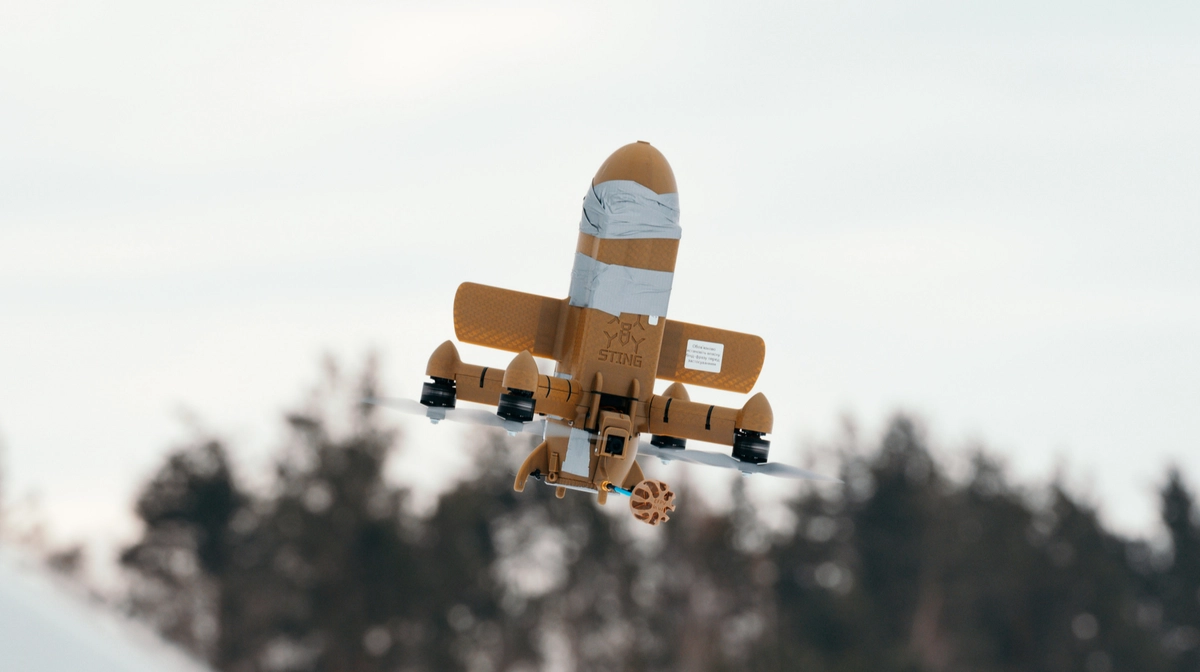
Ukraine says it has operationalized remote control for interceptor drones from thousands of kilometres away, with over 10 manufacturers already integrating the system. The Defence Minister said the capability has enabled confirmed downings at distances of hundreds and thousands of kilometres and is intended to improve interception effectiveness while reducing operator risk. The announcement underscores continued defense-tech innovation, though the direct market impact is likely limited outside the defense sector.
This is a meaningful shift in the economics of point defense: remote piloting turns interceptor drones from a scarce, front-line human resource into a more centrally managed software-and-network problem. The second-order winner is not just the drone maker, but the stack around it — secure comms, edge networking, EW-resistant datalinks, autonomy software, and battlefield sensor fusion — because once control can be abstracted away from the launch site, scaling becomes constrained by software integration and bandwidth resilience rather than pilot proximity.
The competitive dynamic likely accelerates consolidation among smaller drone vendors. Over 10 manufacturers adopting the same control layer suggests a de facto standard is forming, which usually compresses hardware differentiation and shifts pricing power toward whoever owns the middleware, command architecture, and anti-jam stack. That is bullish for firms exposed to military-grade communications, encryption, and battlefield software, while pure airframe suppliers risk becoming interchangeable unless they control the software layer.
The key risk is that this advantage is tactical, not permanent. Remote operation increases survivability, but it also increases the attack surface for electronic warfare, spoofing, latency degradation, and backend cyber compromise; adversaries will respond by targeting the control network rather than the aircraft. Over the next 1-3 months, the market should focus on whether this translates into materially higher intercept rates in sustained contested conditions, not just demo success; over 6-12 months, the real test is whether the system holds up under mass salvos and degraded connectivity.
The contrarian take is that the headline may overstate how monetizable the hardware layer is. The value accrual could flow disproportionately to defense primes and network-security vendors that provide the secure architecture, while drone manufacturers see margin pressure as the standard gets commoditized. In other words, this is less a simple bullish call on drones and more a thesis on defense digitization and distributed air defense becoming a software-defined procurement category.
AI-powered research, real-time alerts, and portfolio analytics for institutional investors.
Request TrialOverall Sentiment
moderately positive
Sentiment Score
0.45
