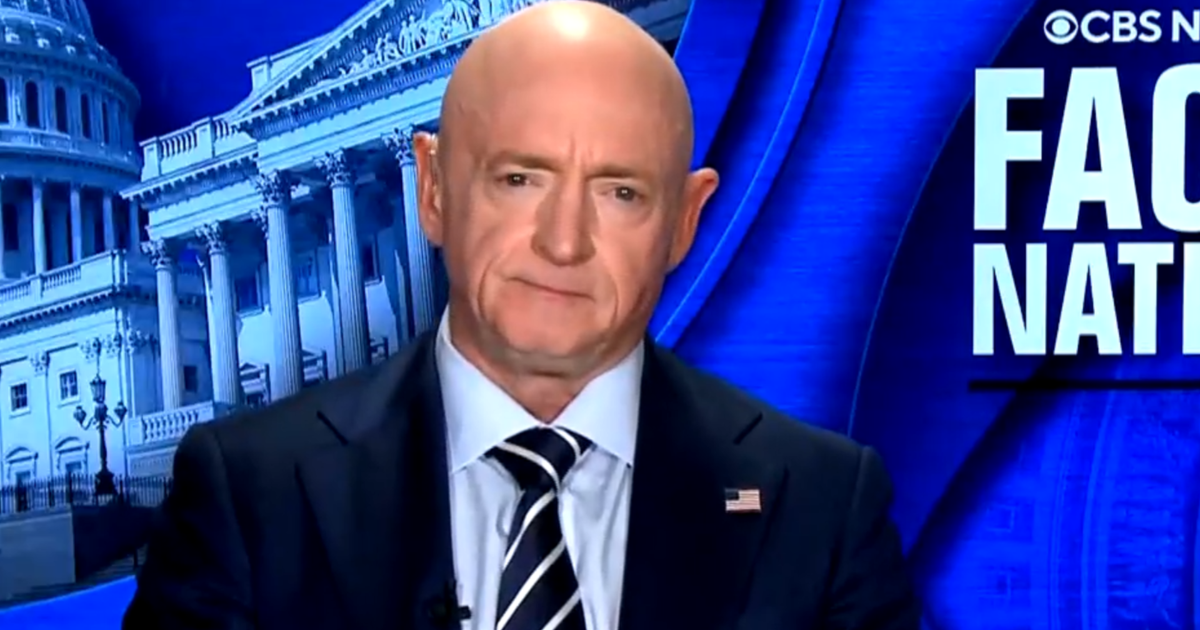
Sen. Mark Kelly warned that the President's incendiary rhetoric is escalating threats to lawmakers and could intimidate military and congressional oversight, while criticizing a lack of briefings on the legality of U.S. strikes on suspected drug boats—actions for which allies including the U.K. and France have expressed legal concerns and the U.K. has curtailed intelligence sharing. Kelly also condemned a leaked Ukraine proposal he says favors Russia, urged clearer White House communication, and called for congressional involvement on any security guarantees or treaties, signaling heightened political and geopolitical risk that could affect defense policy and allied cooperation.
Market structure will likely favor large, diversified defense primes (e.g., LMT, RTX, GD) that can absorb intelligence-sharing friction and win reallocated budgets; expect relative order-book resilience and potential modest pricing power allowing 1–3% revenue upside over 12–18 months versus smaller integrators that rely on coalition-enabled operations. Supply/demand for ISR, stand-off sensors and secure comms should tighten if partner intel is curtailed, pushing near-term capex and subcontracting into firms with vertical scale and classified-cleared workforces.
Tail risks include a low-probability (5–10% over 12 months) allied rupture or legal injunctions that pause kinetic cooperation and cause 3–8% revenue deferrals for contractors exposed to coalition ops; immediate risk (days) is volatility spikes in defense equities and USD funding flows, short-term (weeks–months) is program delays and hearings, long-term (quarters–years) is higher compliance/O&M costs compressing EBITDA by ~1–2%. Hidden dependency: contractors’ backlog quality is tied to classified intel access — deterioration shows up as longer PO conversion times rather than immediate cancellations.
Trade implications: favor 1–3% portfolio longs in LMT and RTX for 6–12 months, paired with a 1% hedge in longs of GLD or 7–10yr Treasuries (IEF) to hedge political tail risk; use 3–6 month ATM+10% calls on LMT sized at 0.5–1% notional to express upside while limiting downside. Relative-value: long LMT vs short UAL (airlines) 1:1 for 3–6 months to capture defense upside vs travel sensitivity; take profits at +20–30% and stop-loss at -10%.
Contrarian view: the consensus bullish defense pivot may be overdone because legal/political constraints can reduce kinetic demand — look for mispricings in mid/small-cap integrators (take selective short positions if backlog conversion lags by >6 months). Historical analogue: post‑2014 rallies faded once fiscal and legislative friction surfaced; key catalysts to watch are Congressional hearings, classified-briefing frequency, and UK/French public statements over the next 30–90 days which will reprice risk premia.
AI-powered research, real-time alerts, and portfolio analytics for institutional investors.
Request DemoOverall Sentiment
moderately negative
Sentiment Score
-0.45
