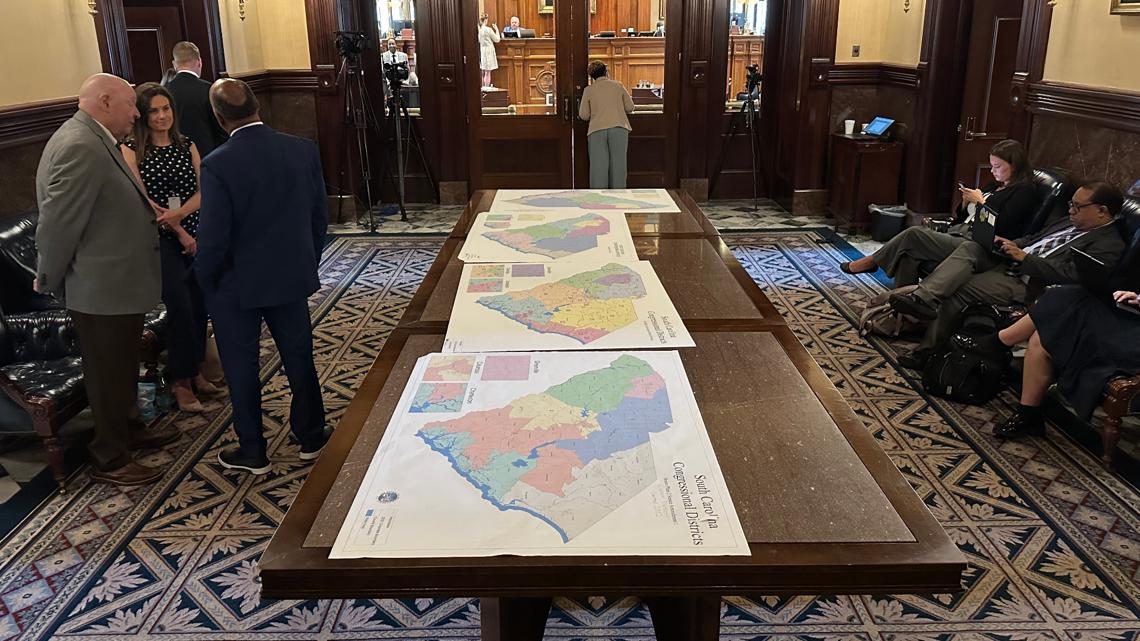
South Carolina lawmakers are fast-tracking new congressional maps that could trigger a second ballot for some voters and invalidate votes already cast under old district lines. The proposal would redraw all seven U.S. House districts, with a separate primary potentially held on Aug. 18 at an estimated cost of more than $5 million. The article is primarily a political/process update with limited direct market impact.
The market implication is not the maps themselves but the operational chaos premium: if the legislature forces a redraw mid-cycle, the real casualty is electoral certainty, which typically widens the expected litigation window and increases the odds of procedural remedies rather than clean political outcomes. That means the first-order political gain for one party can coexist with a second-order drag on turnout quality, donor efficiency, and local campaign spend as campaigns re-budget around a second primary and potential ballot invalidation.
The most interesting second-order effect is on the vendor ecosystem tied to election administration and compliance. A rushed remap raises near-term demand for legal services, election software, print/mail logistics, and voter-communication contractors, while pressuring county budgets and increasing the probability of reimbursement disputes. If the state bears incremental costs, that can become a catalyst for municipal cash-flow stress and headline risk around governance competence rather than policy substance.
From a risk lens, the key time horizon is days to weeks: the immediate catalyst is the final Senate vote and any court challenge that follows. The tail risk is a stay or injunction that freezes implementation after ballots have already been cast, creating confusion that undermines trust and could raise the probability of lower participation in the next election cycle. Over months, the more durable effect is likely not partisan seat gain but a precedent that other states may attempt to copy, increasing the structural volatility of the redistricting process.
The contrarian view is that this is probably more disruptive than investable in a directional sense: political map changes usually redistribute attention and spending rather than create persistent alpha. The cleaner trade is to own the friction around process, not the political outcome itself, because the uncertainty and administrative burden are the part most likely to monetize immediately.
AI-powered research, real-time alerts, and portfolio analytics for institutional investors.
Request DemoOverall Sentiment
neutral
Sentiment Score
-0.05
