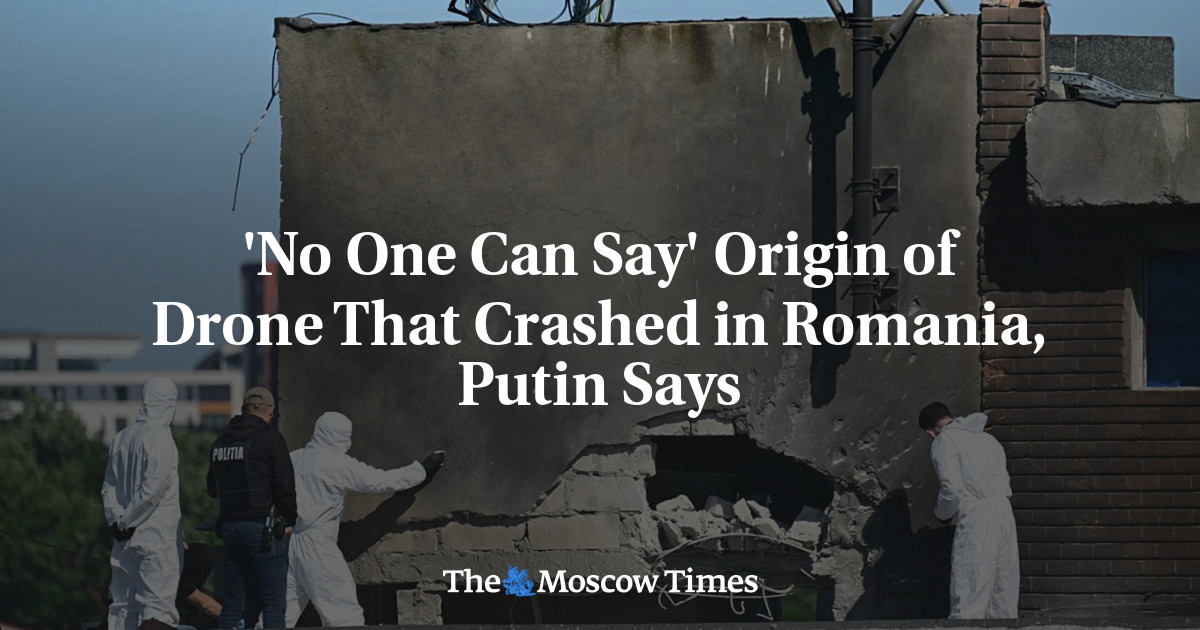
Romania closed Russia’s consulate in Constanta after a Russian drone crashed into an apartment building in Galati, wounding two people and marking the first time a stray drone has hit a residential building in Romania. Bucharest summoned the Russian ambassador, declared the consul persona non grata, and asked NATO for faster anti-drone capabilities, while NATO signaled "absolute solidarity" and Russia vowed a response. The incident heightens regional security risk along NATO’s eastern flank and could increase pressure for additional air-defense deployments.
This is less about one drone and more about a new threshold in NATO-adjacent risk: a residential strike inside a member state materially raises the probability of a forced policy response, even if military retaliation is still unlikely. The first-order market effect is not broad Europe beta; it is a repricing of regional security premia in Romanian and Black Sea-exposed assets, especially where funding costs, insurance, and civil aviation disruptions can compound quickly. The most important second-order effect is that every additional “accidental” incursion increases the odds of faster anti-drone procurement and NATO interoperability spending, which tends to be sticky once budgets are allocated.
The near-term catalyst is political, not kinetic: whether Bucharest invokes Article 4 or secures an alliance package for anti-drone capabilities. That matters because consultations can translate into procurement urgency within weeks, while the actual hardware and deployment cycle is months, creating a gap where defense primes benefit from order visibility before revenues show up. In contrast, any de-escalatory signal from Moscow would likely be ignored by markets unless accompanied by verifiable restraint on border-stray attacks; the baseline here is a higher floor for incident risk over the next 1-3 months.
The contrarian point is that the event may be underpriced as a defense budget accelerant and overread as an immediate escalation trade. The larger the public pressure in frontline NATO states, the more likely governments pull purchases forward from 2026-27 into the current budget cycle, which is bullish for counter-UAS, sensors, and short-range air defense names. The losers are not just Russian-linked assets; they also include insurers, regional carriers, and any Eastern European equities with sensitivity to transit confidence and consumer sentiment if these incidents normalize.
A key tail risk is miscalculation: a future strike causing mass casualties or a larger NATO-border breach would compress the timeline from political signaling to hard retaliation. If that happens, expect a sharp but temporary selloff in European risk assets followed by outperformance in defense and cyber. If incidents fade for 2-4 weeks, the trade becomes one of procurement momentum rather than crisis premium.
AI-powered research, real-time alerts, and portfolio analytics for institutional investors.
Request DemoOverall Sentiment
strongly negative
Sentiment Score
-0.70
