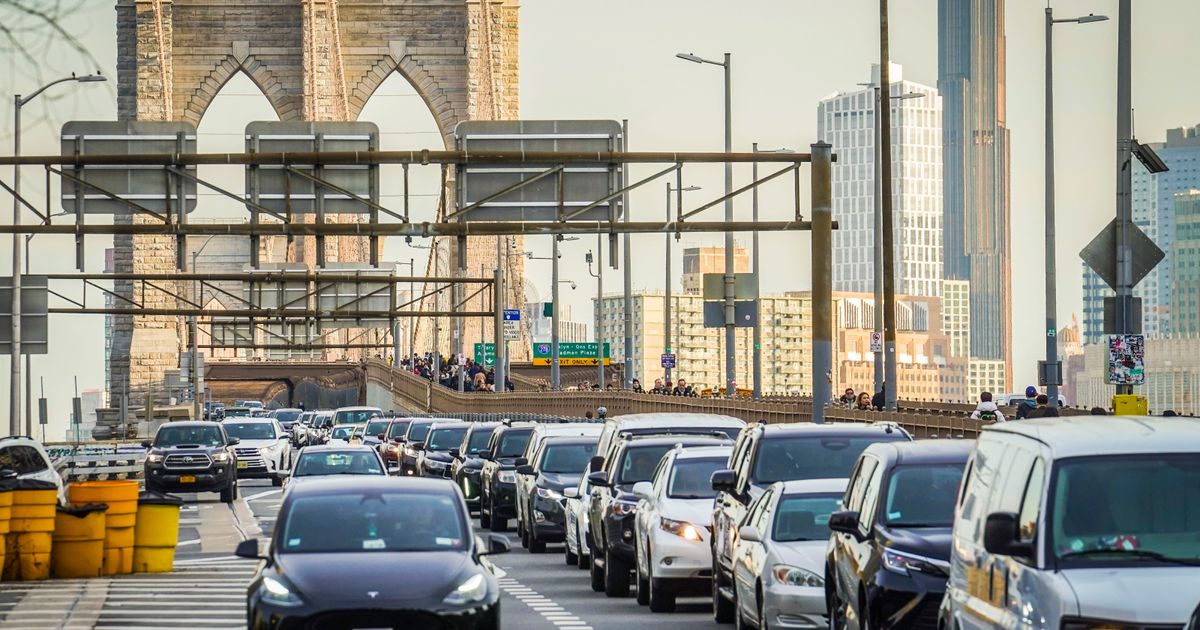
A federal judge blocked the U.S. Department of Transportation from unilaterally rescinding federal approval of New York’s $9 congestion toll, which took effect Jan. 5, 2025, preserving the program after the Trump administration attempted to revoke it. The MTA reports the toll has driven about 27 million fewer vehicles into central Manhattan, cut air pollution by 22%, improved drive times by 23%, and generated more than $550 million in revenue—outperforming projections and underwriting crucial transit investments while removing a near-term federal regulatory risk.
Market-structure: The ruling crystallizes durable, recurring $500M+ annual cash flows to the MTA and accelerates near-term capex; winners are NYC-focused construction/engineering firms, Manhattan office landlords and muni creditors, losers are toll-averse trucking/parking operators and marginal low-margin delivery routes. Expect a re-rating of midtown commercial REITs (SLG, VNO) and a multi-year procurement pipeline for contractors (J, ACM), shifting pricing power to firms supplying transit modernization and toll/clearing systems.
Risk assessment: Tail risks include a successful federal appeal or congressional intervention within 30–180 days, or state legislative rollback tied to the 2026 election—both would vaporize projected cash flows and widen NY muni spreads by 150–300bp. Hidden dependencies: revenue assumes stable traffic patterns (27M fewer vehicles currently); if telework reverses or diversion taxes emerge, collections could fall 20–40% and slow capex. Key catalysts: USDOT appeal filings within 60–90 days, MTA quarterly revenue releases, and upcoming RFPs/contract awards over 3–24 months.
Trade implications: Tactical buys: midtown office REITs and contractors for a 6–36 month horizon, and selective NY MTA muni exposure to capture spread compression; tactical shorts: regional parking/low-margin local trucking names that cannot pass through $9 per-entry costs. Options: use 3–6 month call spreads on SLG/J to limit premium outlay while capturing re-rating risk.
Contrarian angles: Consensus fears of downtown economic damage look overdone—MTA data shows foot-traffic and sales-tax upticks; mispricings likely in beaten-down office REITs and select transit suppliers. Unintended consequences: higher last-mile delivery costs may boost automated micro-fulfillment and EV delivery fleet demand (positive for AMZN logistics and battery suppliers), creating secondary investment vectors over 12–48 months.
AI-powered research, real-time alerts, and portfolio analytics for institutional investors.
Request TrialOverall Sentiment
mildly positive
Sentiment Score
0.30
