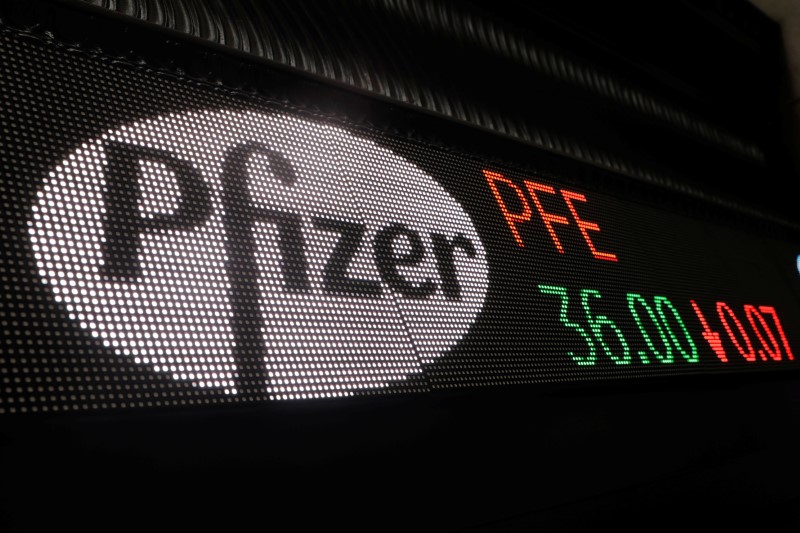
Pfizer secured settlements with all three Vyndamax generic manufacturers, extending U.S. exclusivity for Vyndamax to June 1, 2031 and reducing the risk of a revenue decline that had been expected to start in 2029. Morgan Stanley reiterated an Equalweight rating with a $28 target, while RBC stayed Underperform at $25 and Guggenheim reiterated Buy at $36 ahead of Pfizer’s May 5 Q1 2026 earnings call. Pfizer also declared a $0.43 quarterly dividend for Q2 2026, marking its 350th consecutive dividend payment.
The market is underestimating how much this settlement changes Pfizer’s earnings quality, not just its headline revenue path. Locking in a longer exclusivity window converts a looming patent-cliff overhang into a delayed, more gradual decay, which matters because investors typically pay up more for durability than for one-off upside. The bigger second-order effect is on sentiment: a stable, high-margin franchise can act as an internal funding source for pipeline execution and capital returns, reducing the probability of multiple compression into the next 12-18 months.
The main winner is clearly Pfizer, but the knock-on loser is the generic launch optionality that had been embedded in some pharma baskets and event-driven names. For the plaintiffs/counterparties, the settlement likely shifts resources toward other IP fights rather than this one, which can quietly improve Pfizer’s negotiating position in future cases. A less obvious beneficiary is any investor using Pfizer as a defensive income compounder: if cash flow visibility improves, the dividend becomes easier to defend in a risk-off tape, which can pull in yield-seeking capital and support the stock on dips.
The key risk is that this becomes a “good news, already discounted” story if the broader pharma complex de-rates on policy or pricing headlines. The real catalyst path is over months, not days: Q1 guidance and management commentary on how much of this settlement changes long-range planning will determine whether the market treats it as a temporary legal win or a structural rerating event. If the company uses the stability to reaccelerate buybacks or signal pipeline discipline, the equity can grind higher; if not, the upside may stall near low-single-digit earnings multiple expansion.
Contrarian view: the market may be too focused on the extension date and not enough on the fact that duration has value when a stock is priced like a slow-growth bond proxy. In that framework, the settlement doesn’t need to create growth to be material — it only needs to reduce uncertainty and support the terminal value assumption. The trade is therefore less about a sharp re-rate and more about removing a downside path that kept capping valuation.
AI-powered research, real-time alerts, and portfolio analytics for institutional investors.
Request DemoOverall Sentiment
mildly positive
Sentiment Score
0.25
Ticker Sentiment
