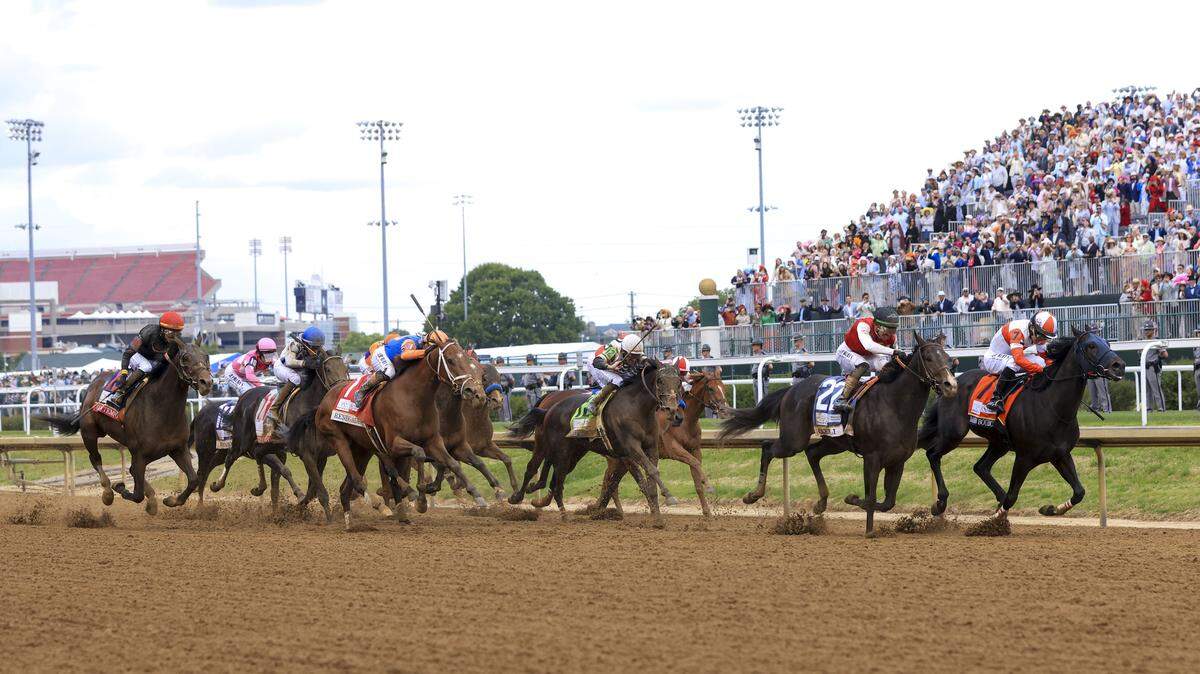
Golden Tempo won the 152nd Kentucky Derby by a neck, giving Cherie DeVaux the first female trainer victory in Derby history and Jose Ortiz his first Derby win in his 11th ride. The race featured several notable trips, including Renegade finishing second after a wide run from the 1 post and Ocelli running third after drawing in off a scratch. Results were otherwise largely a recap of finishing positions rather than a market-moving event.
The biggest market read-through is not the upset winner; it is that the Derby’s outcome was dominated by traffic, post position, and late-race real estate rather than clean separation of underlying ability. That usually compresses the handicapper’s ability to distinguish horses ex post, which is good for the host venue: volatility around narratives can boost incremental engagement, wager churn, and media value in the next 1-2 weeks. For CHDN, the event reinforces Churchill Downs’ position as the scarce, must-watch global betting product in horse racing — and scarcity matters more than one-off favorite/trip outcomes.
Second-order winner: the broader racing ecosystem around ownership, trainers, and jockey brands. A historic female-trainer win plus an Ortiz family 1-2 narrative creates a sticky media cycle that is monetizable across future cards, sponsorships, and premium hospitality. The commercial value is in follow-on attention, not the race itself; expect better-than-normal cross-selling into the next major prep and the next Derby-day advance wagering window.
The contrarian angle is that a chaotic, wide-trip finish can temporarily overstate the importance of luck and understate Churchill’s structural moat. If bettors conclude the race was too random, handle can actually rise as the public chases “value” in the next cycle. The main risk to CHDN is not event fatigue but regulatory or macro pressure on discretionary wagering; that’s a months-long, not days-long, issue. The nearer-term reversal catalyst would be a quiet, non-chaotic summer of racing that fails to sustain the storyline premium.
From a trading standpoint, this is more of a sentiment/flow setup than a fundamental rerating. The cleanest expression is to own CHDN on post-event attention and media spillover, but size modestly because the impact is mostly incremental rather than transformative. Any weakness in the stock over the next several sessions would likely be an entry point if the market has not already priced in the halo effect from Derby-week visibility.
AI-powered research, real-time alerts, and portfolio analytics for institutional investors.
Request DemoOverall Sentiment
neutral
Sentiment Score
0.05
Ticker Sentiment
