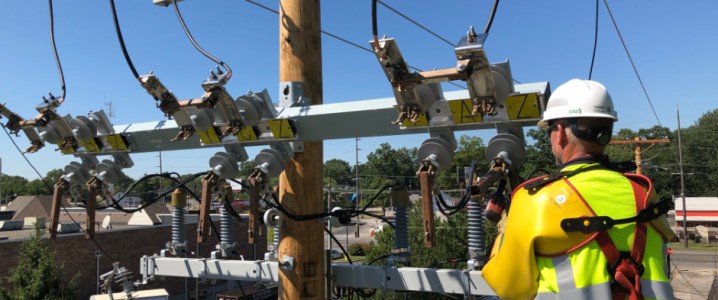
The U.S. Department of Energy is launching a $1.9 billion SPARK program to rapidly expand grid capacity by reconductoring and deploying advanced transmission technologies rather than building new lines. The initiative aims to boost transfer capacity and reliability to meet rising electricity demand from data centers, electrification and new industrial loads, and complements an existing $10.5 billion Grid Resilience program. Concept papers are due April 1, full applications May 19, with awards expected summer 2026. This should accelerate near-term upgrades for utilities and suppliers while reducing permitting timelines and consumer costs.
The push toward rapid reconductoring is a tactical capital reallocation: budget and near-term work shift from decade-long greenfield transmission projects to retrofit work that converts existing towers into higher-capacity links. That favors contractors with reconductoring crews and specialist conductor manufacturers (HTLS/ACCC) — they get faster revenue recognition, higher margins per mile and pricing power if orders cluster. Expect a 6–12 month squeeze on lead times for niche conductors and accessories, which will amplify supplier bargaining power and drive differentiated earnings beats for those names.
Second-order effects cut both ways. Increased corridor capacity will blunt LMP spikes in previously congested nodes, which is a negative for merchant generators and storage projects monetizing seasonal congestion; conversely large, on-grid industrial loads and data centers win via lower delivered cost and reliability. Also, fewer greenfield projects means less demand for ROW/legal/land specialists and less political opposition exposure, which reduces long-dated revenue optionality for developers that built their models on protracted new-line builds.
Key risks and catalysts: (1) regulatory cost-recovery and RTO approvals — if states/utilities deny pass-through, uptake stalls; (2) installation labor constraints and material bottlenecks could push nominal lead times to 9–18 months and raise project costs; (3) technological interoperability or thermal-aging surprises that force warranty provisions. Watch near-term supplier order books, utility capex guidance, RTO congestion filings and award notices as 3–12 month re-rating triggers. The consensus that utilities broadly win is overstated — the real alpha sits with specialist suppliers and service contractors, not all incumbent integrated utilities.
AI-powered research, real-time alerts, and portfolio analytics for institutional investors.
Request DemoOverall Sentiment
mildly positive
Sentiment Score
0.30
