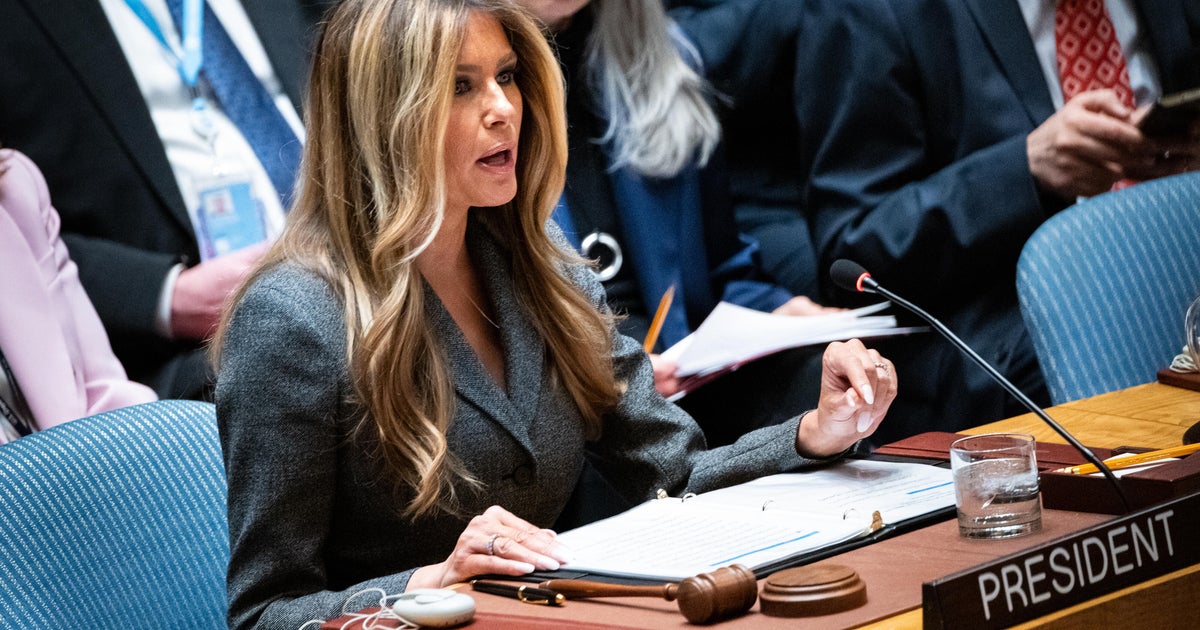
First Lady Melania Trump chaired a nearly two-hour United Nations Security Council session in New York focused on education and the protection of children as the U.S. continues military strikes in Iran following a weekend joint operation with Israel. The Pentagon reports six U.S. service members killed and numerous injured, Iran’s Supreme Leader Ayatollah Ali Khamenei was reportedly killed in one strike, and regional school closures and reports of child casualties (including an alleged strike on an elementary school in Minab) have been cited; the escalation elevates geopolitical risk that could pressure risk assets and lift defense and safe-haven demand.
Market structure: Immediate winners are defense primes (RTX, LMT, NOC) and energy producers (XOM, CVX) from higher defense budgets and potential oil supply risk; losers are commercial airlines (AAL, UAL) and regional tourism-exposed REITs due to travel curbs. Pricing power shifts to integrated oil majors and reinsurers—energy capex +10–20% discretionary upside over 3–6 months if Brent sustains >$85/bbl; airlines face unit revenue compression of 3–7% near-term if flight closures persist. Cross-asset: expect typical risk-off flows—USD and gold (GLD) bid, JPY strength, UST 10y yields fall 10–30 bps, credit spreads widen 20–60 bps in IG/100–300 bps in HY under escalation.
Risk assessment: Tail risks include full regional blockade or cyber escalation causing oil >$120/bl and global growth shock (GDP hit >0.3% QoQ), or US domestic political backlash leading to sanctions/supply-chain interruptions; probability low (<15%) but impact very high. Time horizons: days for volatility spikes and flight cancellations, weeks–months for budget reallocations and commodity basing, and 12–24 months for durable capex cycles. Hidden dependencies: reinsurance capacity, maritime insurance (P&I) surges, and EM sovereign FX stress (TRY, IRR-linked liquidity); catalysts are further strikes, OPEC+ supply moves, and US Congressional votes on authorizations.
Trade implications: Near-term trades favor tactical protection (buy VIX calls or 1–2% portfolio hedge via SPY 1–3% OTM 30-day puts) and directional energy exposure (buy XOM/CVX 3–4% positions or WTI 3-month call spreads). Medium-term, allocate 2–3% long positions in RTX/LMT for 6–12 months with stop-loss at -15% and consider short 2–3% positions in UAL/AAL funded by option premiums (buy 3-month puts or collars). FX: long USD (UUP) 1–2% if safe-haven persists; consider short emerging market FX exposure if USD rallies >2% vs basket.
Contrarian angles: Consensus may overpay defense names now—these already trade +5–15% post-news; a measured 6–12 month outperformance is likely but not immediate; consider pairing long LMT with short RTX if valuation dispersion widens. Oil reaction could be front-loaded; if Brent retreats below $75 within 4–6 weeks, energy rallies may reverse—use call spreads rather than outright longs. Unintended consequence: aggressive hedging in equities could push VIX higher than realized volatility; selling premium into that spike (e.g., 30–45 day iron condors) can be profitable once a >20% VIX spike normalizes.
AI-powered research, real-time alerts, and portfolio analytics for institutional investors.
Request TrialOverall Sentiment
moderately negative
Sentiment Score
-0.45
