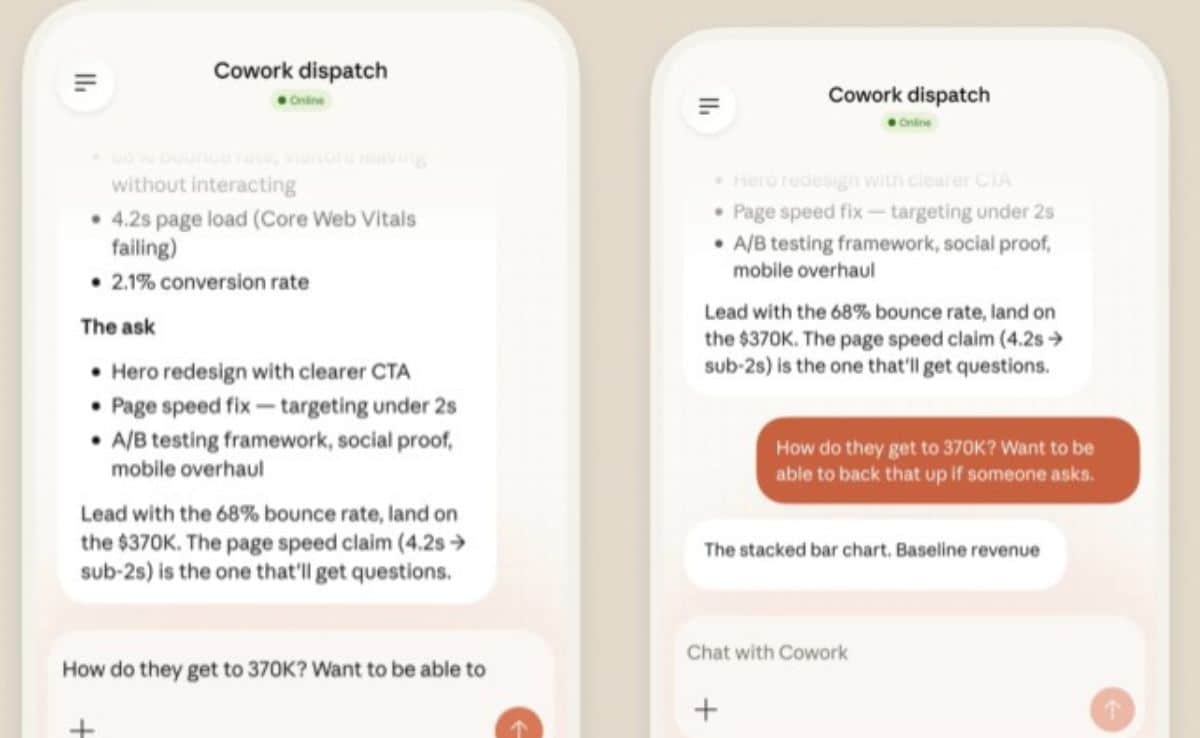
Anthropic launched 'Claude Dispatch' as a research-preview feature (initially for Max subscribers, expanding to Pro soon) enabling persistent, cross-device conversations where tasks run on the user's desktop and can be controlled from a smartphone. All processing occurs locally in a sandboxed desktop app (requires the desktop to stay open, online and awake), with user approval required for actions and files kept local, improving privacy and workflow continuity. The feature should raise product stickiness and productivity for power users (e.g., internal report generation, automating tasks), but is unlikely to produce material near-term revenue or market-moving effects.
This is a product-level move whose real market impact will be felt through hardware refresh cycles, enterprise IT policies, and security budgets rather than immediate cloud revenue shifts. Expect a two- to eighteen‑month cadence: early adopters will force patching and MDM changes (weeks–months), while corporations will bake on‑device workflows into procurement cycles that drive device replacement and endpoint security spend (6–18 months).
Second‑order winners are companies that monetize the new attack surface and the hardware uplift required to run meaningful local models—identity/access vendors, EDR/MDR providers, and consumer/edge silicon vendors. Conversely, large parts of cloud GPU demand are insulated because most real-world enterprise models remain too large or data‑sensitive to move fully offline; the real downside for cloud vendors is gradual and structural (years), not an immediate revenue shock.
Regulatory and behavioral frictions are nontrivial: organizations will resist always‑on executables that require machines to remain awake for privacy, energy, and compliance reasons, creating entry barriers that favor vendors able to offer centralized management and auditability. The quickest monetization pathway for platform builders is upselling managed enterprise features (audit logs, admin controls, SIEM integrations), which disproportionately benefits security and identity stacks rather than raw compute providers.
AI-powered research, real-time alerts, and portfolio analytics for institutional investors.
Request DemoOverall Sentiment
mildly positive
Sentiment Score
0.25
