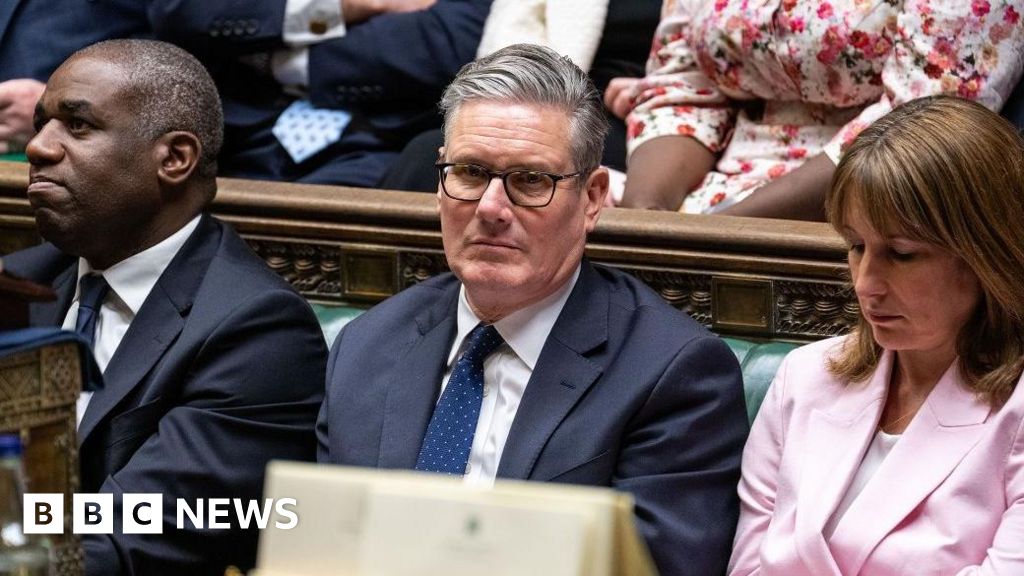
Sir Keir Starmer is under mounting leadership pressure after four ministers quit and more than 80 Labour MPs urged him to resign or set a departure timetable. He warned a leadership contest would "plunge us into chaos" as his government unveiled a wide-ranging King's Speech covering NHS reform, digital ID, jury trial limits, leasehold changes, and infrastructure/industrial policy. The story is politically significant for UK policy continuity but is unlikely to have immediate direct market impact beyond sentiment around government stability.
The immediate market read is not about the leadership drama itself but about policy throughput risk. When a governing party starts bargaining internally in public, the probability distribution shifts toward delayed implementation, watered-down bills, and higher use of procedural leverage by rebels and opposition alike; that is bearish for any domestic growth impulse embedded in the agenda. The first-order beneficiary is not an obvious long, but a relative-value short on UK policy-sensitive equities that need clean execution on housing, infrastructure, and NHS reform to rerate.
Second-order effects matter more than headline politics here. Any sustained instability raises the odds of a softer fiscal stance or policy drift as ministers prioritize internal survival over controversial spending discipline, which can pressure sterling at the margin and widen the discount on UK domestics versus global earners. In healthcare specifically, the abolition/restructuring theme creates a multi-quarter procurement and implementation overhang: vendors tied to NHS England workflows, digital integration, and administrative outsourcing may face a pause in awards even if the reform is ultimately enacted.
The contrarian view is that markets may be overpricing the chance of an imminent rupture and underpricing the incentive for all factions to avoid a full contest. If Starmer survives the next few days, the strongest bullish trade is likely a relief rally in UK beta rather than a secular policy revaluation, because the legislative package alone does not yet solve credibility. The bigger catalyst window is days, not months: either a challenge crystallizes quickly or the issue fades into a slow-burn governance discount that is harder to trade but more persistent for domestic cyclicals.
AI-powered research, real-time alerts, and portfolio analytics for institutional investors.
Request DemoOverall Sentiment
moderately negative
Sentiment Score
-0.30
