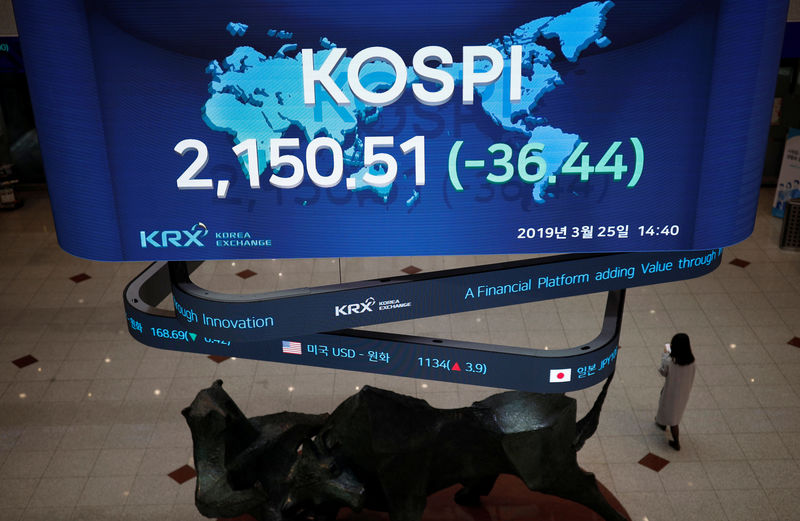
KOSPI fell 3.8% last week and foreign investors accelerated exits, selling 19.87bn won worth of shares (157.50bn won YTD) as technology led outflows. Valuation is at a stress point with 12-month forward P/E at the lowest since the GFC and the Equity Risk Barometer dropping to -1.5 (“risk-adverse territory”), while the 10Y Korea yield rose to 4.20% and the KOSPI RSI hit a multi-month low. Even so, Goldman says earnings revisions are net higher (+4.8% to NTM EPS) and, under a stress case (33% EPS downgrade, trough P/E 11.4x), implies upside with a potential KOSPI target near 8,750.
The tape is being driven more by flow and positioning than by a clean fundamentals break, which matters because markets can stay cheap longer when foreign ownership is the marginal seller. A trough-style valuation only works as a buy signal if the seller base exhausts; otherwise the discount can widen even while revisions are still positive. The first beneficiaries, if this stabilizes, are locally financed cyclicals and brokers that live off turnover, but that same cohort is the first to give back gains if outflows re-accelerate.
The bigger second-order risk is duration: rising Korean yields alongside risk-off equity flows is toxic for utility-style balance sheets and any name whose valuation depends on discounted long-dated cash flows. That makes KEP more vulnerable than the index to a prolonged bond selloff, while the better relative holders are cash-generative financials only if credit spreads do not widen. The market is also implicitly betting that tech/export earnings can absorb a stronger won; if semis roll over, the cheapness narrative loses its anchor.
The contrarian miss is that “cheap versus history” is not the same as “cheap versus the next six months.” If foreign selling persists and global growth data softens, the Korea discount can remain pinned or deepen despite oversold technicals. What would falsify the bearish momentum view is a sustained turnaround in foreign flows, a pullback in the 10-year yield below 4.0%, and a reclaim of the 50-day moving average on volume; absent that, this is a patience trade, not a buy-the-dip.
AI-powered research, real-time alerts, and portfolio analytics for institutional investors.
Overall Sentiment
mildly negative
Sentiment Score
-0.28
Ticker Sentiment
